
Sales teams have spent decades trying to figure out how to generate more qualified meetings without endlessly adding headcount.
The most effective solution may be the one that every other enterprise has turned to.
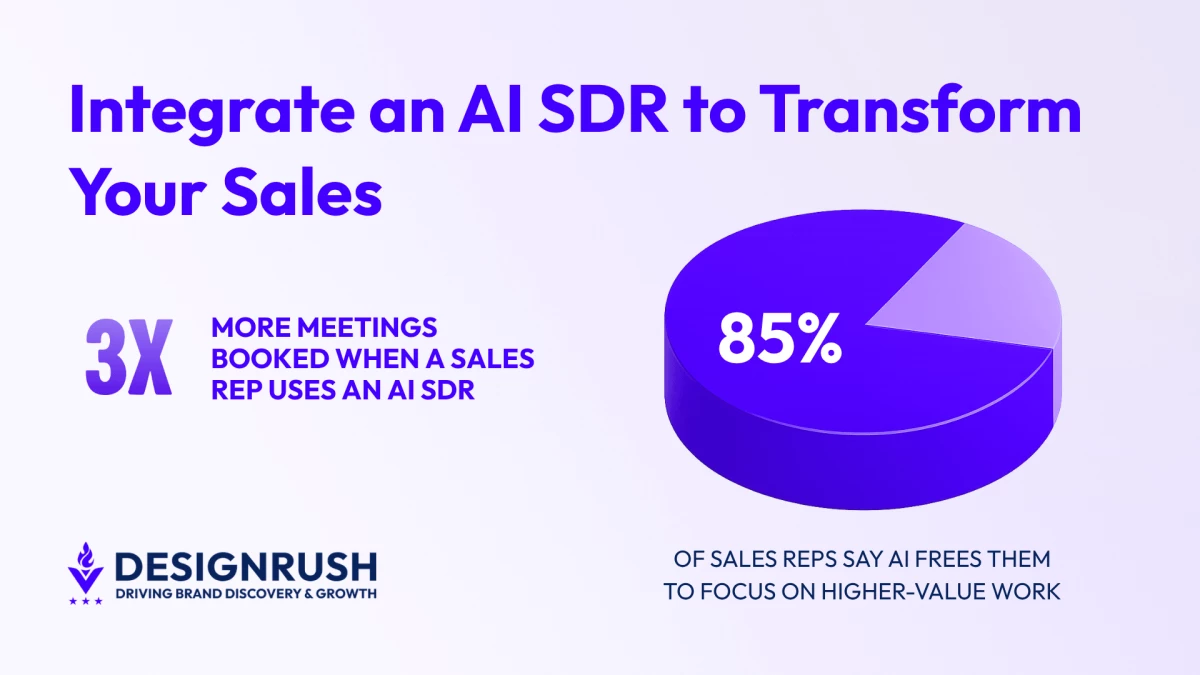
Recent research shows that sales reps using AI SDR tools are booking two to three times more meetings than those who do not, per InsightMark Research.
This is all while spending significantly less time on manual prospect research and administrative work.
That matters because sales development has long followed the pattern of hiring more people to increase pipeline.
AI SDRs challenge that equation, offering better results at a more affordable cost. And the data from InsightMark Research backs it up.
But if increasing more scheduled sales meetings was as easy as integrating SDRs, why hasn’t everyone done it?
Akhil Verghese CEO of Krazimo, a leading AI solutions provider, has helped many enterprises successfully integrate AI SDRs into their daily sales workflow.
“Most failures have very little to do with the capability of the LLM. The issues are that companies don’t use it for what its best at,” he says.
“AI has made integrating with automation tools easy. Many companies selling AI SDRs have capitalized on this to send massive amounts of emails/LinkedIn connection requests with poorly personalized messages.
"But they should focus on improving how they identify, prioritize, and engage the right prospects. If the underlying targeting, qualification, and messaging are weak, AI simply helps those weaknesses scale faster.”
Why AI SDRs Deliver Results
One reason AI SDRs have gained traction so quickly is because they target a surprisingly inefficient part of the sales process.
Salespeople often spend a remarkable amount of time not selling in order to sell.
For example, they research prospects, review company info, monitor buying signals, separate hot leads from cold leads, and other manual processes.
While all these are necessary, these tasks aren’t directly related to where revenue is won or lost.
To put this into perspective, most sales reps spend 60% of their time on non-selling tasks, according to Salesforce data.
On the other hand, 85% of sales reps using agents say AI frees them to focus on higher-value work.
Rather than replacing salespeople, AI SDRs remove many of the repetitive tasks surrounding the sales process:
- Reduce time spent on manual prospect research
- Surface buying signals and intent indicators faster
- Increase outreach consistency
- Prioritize high-probability opportunities
As a result, sales teams are better positioned to do what they do best.
After all, brands don’t hire salespersons to update spreadsheets or copy information between systems.
They were hired to uncover client needs, earn trust, interact with other people, and move opportunities forward.
And AI SDRs give them more opportunities to do exactly that.
Avoid the Mistakes That Make AI SDR Programs Fail
Many failed AI SDR initiatives can be traced back to a simple misunderstanding. Leadership treats AI as a shortcut to scale when it should be treated as a tool for precision.
According to the experts at Karizmo, that mistake tends to surface in four ways:
1. Over-automating outreach
One of the first mistakes companies make is assuming AI's greatest value lies in its ability to increase output.
The logic is understandable. If a salesperson can send 50 emails in a day, AI can help send hundreds.
The problem is that prospects experience this increase in volume differently.
After all, most decision-makers are already overwhelmed with outreach emails clogging up their inboxes. As such, they don’t wake up wishing they received more emails from vendors.
This leads to organizations generating far more activity, but seeing only marginal improvements in engagement, or worse, declines in key metrics like response rates.
2. Relying on shallow personalization
Referencing a recent promotion, company announcement, or LinkedIn post may demonstrate that research was performed.
But it does not necessarily explain why a prospect should care about the message.
Often, sales teams just end up with messages that look personalized on the surface but feel generic when read.
“This is problem because buyers have become adept at recognizing this distinction, which is one reason many automated campaigns struggle to generate meaningful engagement despite appearing highly tailored,” Verghese adds.
3. Optimizing for meetings instead of opportunities
This mistake often goes unnoticed because an increase in booked meetings look impressive during a monthly report. But booking meetings isn’t the real goal.
Sometimes, organizations become so focused on generating meetings that they stop asking whether those meetings are likely to become revenue.
In turn, sales teams spend more time on discovery calls, but less time speaking with prospects that actually fit the ideal customer profile.
4. Removing human judgment
AI SDR platforms are exceptionally good at identifying patterns, but they struggles to reliably determine whether those patterns actually matter.
This is where the often-repeated idea that "AI is here to augment human potential, not replace it" becomes relevant.
Human sellers understand context like organizational priorities, stakeholder dynamics, budget realities, and timing considerations that impact purchasing decisions.
When companies remove human judgment from prospect qualification, those factors that AI SDRs don’t account for can easily tank a deal before a meeting is even booked.
What Effective AI SDR Systems Require
Fortunately, designing and implementing an effective AI SDR system is not as complicated as some organizations assume.
Rather than asking how many more prospects can be contacted, the companies that have seen results ask how AI can help identify the prospects most likely to become customers.
In practice, successful AI SDR programs tend to prioritize:
1. Strong Prospect Data
Start by auditing CRM records, enrichment sources, and contact databases for gaps, duplicates, and outdated information.
AI can only prioritize prospects effectively if the underlying data is accurate and complete.
It’s also essential to use AI research capabilities to ensure prospect data is both accurate and rich enough for meaningful personalization.
2. Clear ICP Definitions
AI performs best when directions and tasks are clearly defined. The more precise the ICP, the more precise the prospecting.
Define the characteristics that separate a qualified prospect from everyone else.
Go beyond industry and company size to include buying triggers, pain points, budget fit, and decision-making authority.
To do this in a way that’s truly AI-native, give AI access to company information like the clients you have now, the emails involved in closing them, and the total contract value.
Then, let it determine your ideal ICP for itself. This will remove any biases you might have that could colour these definitions.
3. Intent-Based Prioritization
Configure AI SDR systems to prioritize prospects showing meaningful buying signals rather than treating every lead equally.
Website visits, content engagement, technology changes, hiring activity, and other trigger events can help identify who is most likely to convert.
4. Human Oversight
Human judgment remains essential for determining which opportunities are worth pursuing and how they should be approached.
Review targeting logic, messaging quality, and qualification outcomes regularly. Human input helps catch contextual factors, market shifts, and buyer nuances that AI systems often miss.
Not everything should be optimized for speed.
At the end of the day, roughly 100,000 companies in the world make over $100M in revenue. Far less than 350,000 in the US even make over $10M. If you send 10,000 emails a day, you hit your entire market in 35 days. Volume isn’t all its cracked up to be when it comes to B2B sales.
5. Revenue-Focused Measurement
Define success using business outcomes such as opportunity quality, pipeline progression, conversion rates, and revenue contribution. And standardize the measurement process before you deploy anything else.
Activity metrics may indicate effort, but revenue metrics reveal whether the system is actually creating value.
Scale Conversations, Not Spam
AI is making it easier than ever to get into someone's inbox.
Getting invited into their buying process, however, remains a different challenge entirely.
As more companies adopt AI SDRs, the competitive advantage will come from identifying the right prospects, engaging them at the right moment, and connecting that outreach to a genuine business need.
"Too many organizations view AI SDRs as a way to automate selling. But the real opportunity is to automate everything around selling," Verghese says.
As AI becomes a standard part of the sales stack, the ones that will see the most benefit from AI SDRs are the ones that create the most time for meaningful human conversations.
Because sales has never been about sending emails. It's about earning trust.