
7-Eleven has taken Nike to federal court, alleging that the sportswear giant copied the convenience store's iconic color scheme.
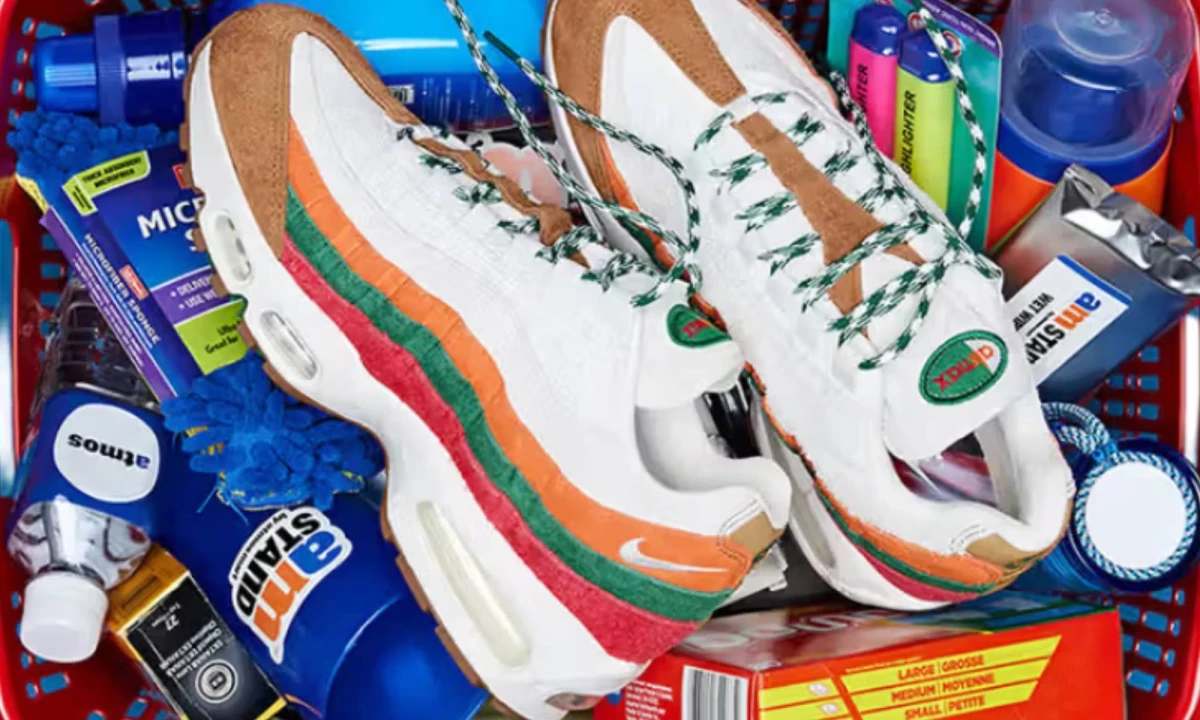
The upcoming Nike Air Max 95, quite obviously, uses the orange, green, and red stripe design.
It is scheduled for release on July 11, the same day as the annual 7-Eleven Day and Free Slurpee Day promotion.
The complaint also points to product details referencing "strolling down to the corner store" and shelf graphics printed on the shoes' insoles.
This makes the argument that the design is leading consumers to believe an official partnership exists.
"Nike has shown a callous and malicious disregard for 7-Eleven's rights," the lawsuit states.
The retailer said it attempted to resolve the dispute before filing a suit, but alleged Nike planned to continue marketing and selling the sneaker.
Nike had not publicly responded at the time of publication.
Whether or not the sneaker reaches consumers, the case shows how closely brands guard the visual identity that carries significant commercial value.
Colors Are Important Brand Assets
At the center of the dispute is whether consumers associate the sneaker's colorway with 7-Eleven strongly enough to create marketplace confusion.
7-Eleven claims the shoe's "Sport Green and Safety Orange" colors copy its registered tri-color trademark.
According to the complaint, the retailer spent decades applying the three-stripe combination across ads, footwear, and licensed products.
This long track record is what gives the brand colors legal weight, since trademark protection grows stronger the more consistently a mark is used.
Filed in the Northern District of Texas, the July 11 release allegedly strengthens the perceived connection, and 7-Eleven is asking the court to:
- Stop sales of the sneaker
- Recall distributed inventory
- Destroy marketing materials
- Award damages and Nike's profits tied to the product
In 2020, the two brands planned an official Nike SB Dunk Low collaboration connected to the Tokyo Olympics.
But it was canceled due to the COVID-19 pandemic.
As visual branding becomes easier to remix, companies face greater pressure to distinguish inspiration from trademark infringement.
Almost $98 Trillion Spent on Intangible Brand Assets
Brand identity is one of the most valuable forms of IP, making trademark protection a commercial priority.
Intangible assets owned by the world's largest companies hit a record $97.6 trillion in 2025, according to Brand Finance.
When so much of a company's worth sits in things like a logo or a color scheme, defending these marks becomes a balance-sheet decision.
With Nike's brand valued at above $29 billion, and 7-Eleven's at nearly $14.7 billion, both have real money riding on who owns these stripes.
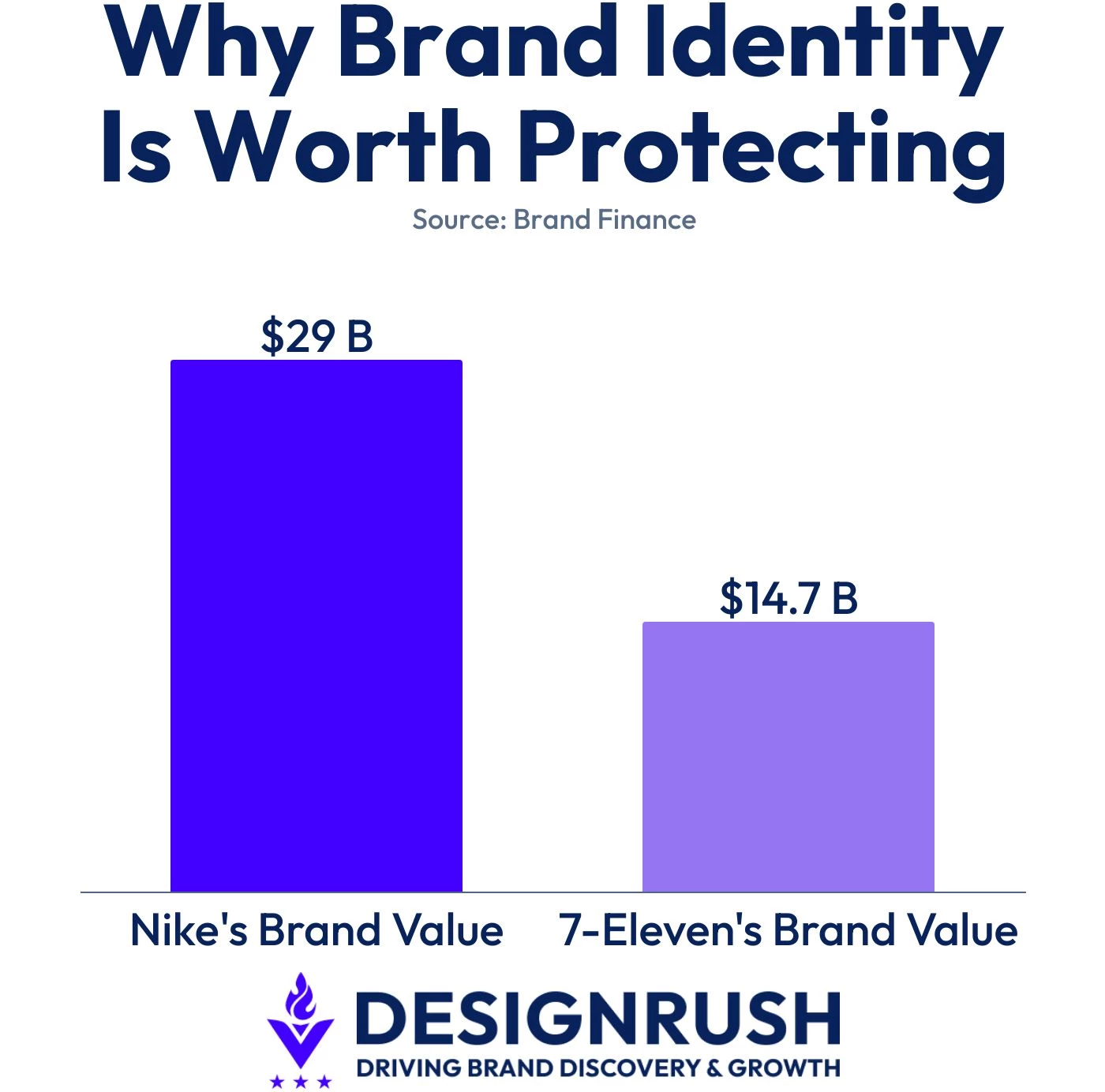
These numbers explain why protecting visual identity is essentially a business strategy.
- Distinctive visual assets gain commercial value over time. Brands should register and consistently apply CI to strengthen legal protection.
- Brand equity compounds through consistency. Marketing teams should document recurring visuals to strengthen future trademark claims.
- High-profile brands attract greater scrutiny. Teams should evaluate visual similarities before release to avoid consumer confusion.
The strongest brands are also the easiest to copy, which is exactly why they end up in court over a set of colored stripes.
Our Take: Did Nike Accidentally Validate 7-Eleven's Brand Power?
The Air Max 95's orange, green, and red stripes immediately prompted comparisons to 7-Eleven across socials.
We'd argue that this reaction alone proves 7-Eleven's brand power, since the colors triggered the name with no logo in sight.
If 7-Eleven wins the lawsuit, brands may guard distinctive color systems as closely as names and logos.
If it loses, marketers will still have to revisit where homage ends and legal risk begins.
Trademark disputes are putting brand governance under a brighter spotlight across industries.
Samsung is defending itself in a lawsuit after responding to claims it used Dua Lipa's image on TV packaging without authorization.
Strong visual identities require both creative execution and legal protection.
Explore these top reputation management companies if you're building distinctive brand assets and trademarks.