
A long-running brand character gives marketers a rare head start.
The story, the channel, and the product can all change while a familiar face carries the campaign.
System1 found that campaigns with recurring characters were 23% more likely to post huge market-share gains, and 22% more likely to see the same in profits.
And Mr. Clean just proved it.
A retirement-and-unretirement storyline pulled 66,811 Google searches, per data shared by the brand with DesignRush.
P&G rode this attention straight into the Gen Z self-care "Everything Shower" trend to launch its Shower & Tub Scrubber.
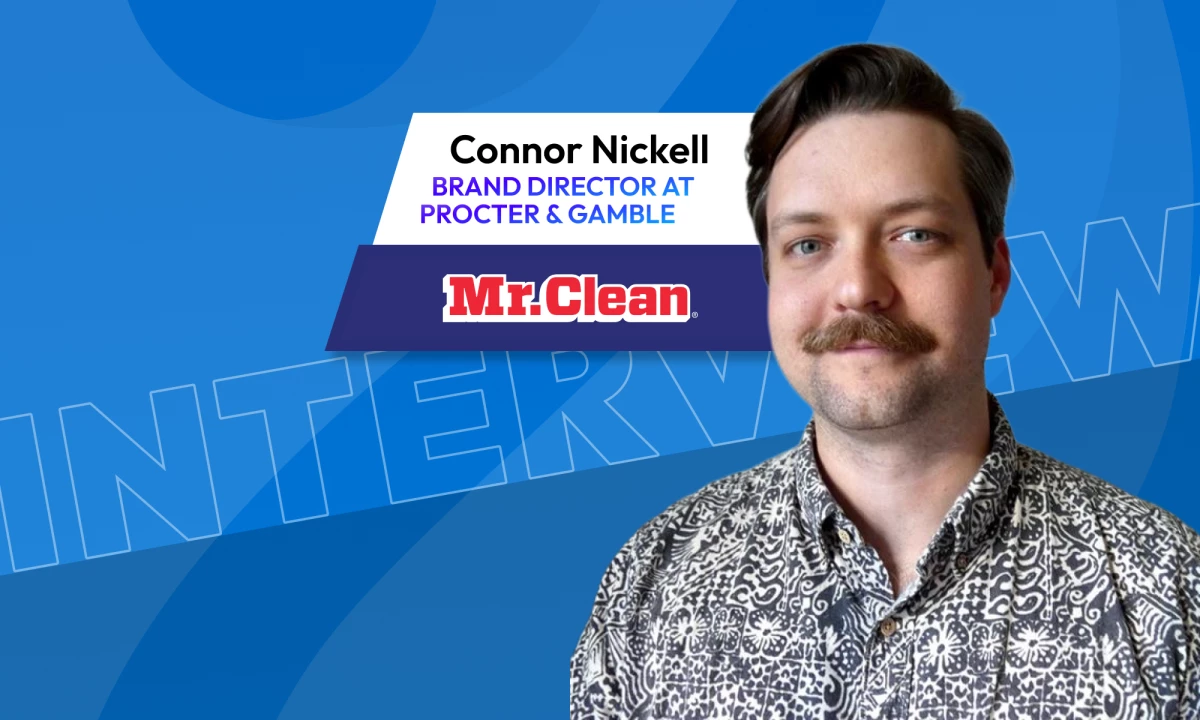
"The business case for keeping Mr. Clean at the center of our marketing is straightforward," Connor Nickell, brand director for Mr. Clean at Procter & Gamble, tells DesignRush.
"He drives attention, engagement, and product discovery."
In this interview, Nickell walks us through how P&G decides when a legacy character still earns its keep, and how it converts attention into product trial.

Who Is Connor Nickell?
Connor is a brand director at Procter & Gamble, where he leads the Mr. Clean business and helps steer its next stage.
His work spans product development, advertising, commercial planning, and long-term brand strategy.
He relaunched the Magic Eraser portfolio and grown the Shower & Tub Scrubber into a new part of the business.
Earlier in his career, he grew Febreze Plug to 4.4 million more households, a 64% jump in users.
He also mentors newer brand managers as they sharpen their commercial judgment.
70 Years and Still Recognizable
Ipsos research found that ads using mascots were six times more likely to win high brand attention, and Mr. Clean had seven decades to build this kind of pull.
"One of our biggest advantages is that Mr. Clean is a true icon," Nickell shares.
"For more than 70 years, he’s remained one of the most recognizable and trusted brand characters in America, representing the gold standard of clean."
With this kind of brand equity, Mr. Clean can headline a social storyline, a beauty billboard, or a birthday cake video, and it still read as a cleaning brand.
"What makes Mr. Clean especially powerful is that he can exist beyond traditional advertising and participate in culture," he explains.
Mr. Clean now behaves like an actual public figure, even pulling paparazzi attention at a recent campaign launch.
"Most importantly, that is attention we can convert into awareness and trial for products like the Shower & Tub Scrubber," he says.
A familiar face cuts the cost of getting a new product noticed, which is the real payoff of a durable brand mascot.
"We were able to introduce the Shower & Tub Scrubber in a way that felt culturally relevant and authentic to the beauty and self-care category, yet still unexpected for a cleaning brand," Nickell adds.
Shoppers gave the odd pairing a second look because the face was already one they trusted.
2 Million Views in 48 Hours
Mr. Clean's retirement looked like a gag, but the response gave P&G real data on how much people cared.
"Mr. Clean's retirement was no stunt," Nickell jokes. "The man needed a break after decades of cleaning innovation."
The unretirement video pulled 2 million views in 48 hours and set off 66,811 Google searches on the brand.
"Consumers were willing to engage with Mr. Clean as more than just a mascot," he reveals.
"They were invested in his story."
This reaction handed P&G a rule for how far it could push mascot-led marketing efforts.
"When the story is authentic to the brand and rooted in a real consumer behavior, audiences are willing to come along for the ride," Nickell explains.
Campaign response doubles as market research, showing a brand how much cultural room it has before it funds the next launch.
The result gave the team confidence to place the character in other unexpected settings.
"It gave us permission to push further with 'Everything Shower,' transforming a cleaning product launch into a beauty-inspired campaign complete with influencer partnerships," he adds.
"Everything Shower" is where this permission meets a harder test.
A story people loved, and a trend younger audiences are following now have to actually sell a new product.
The Product's Ticket In
A cleaning brand crashing a Gen Z self-care ritual could have felt forced, but the product is what made it fair game.
"'Everything Shower' is a ritual that naturally intersects with what our product does."
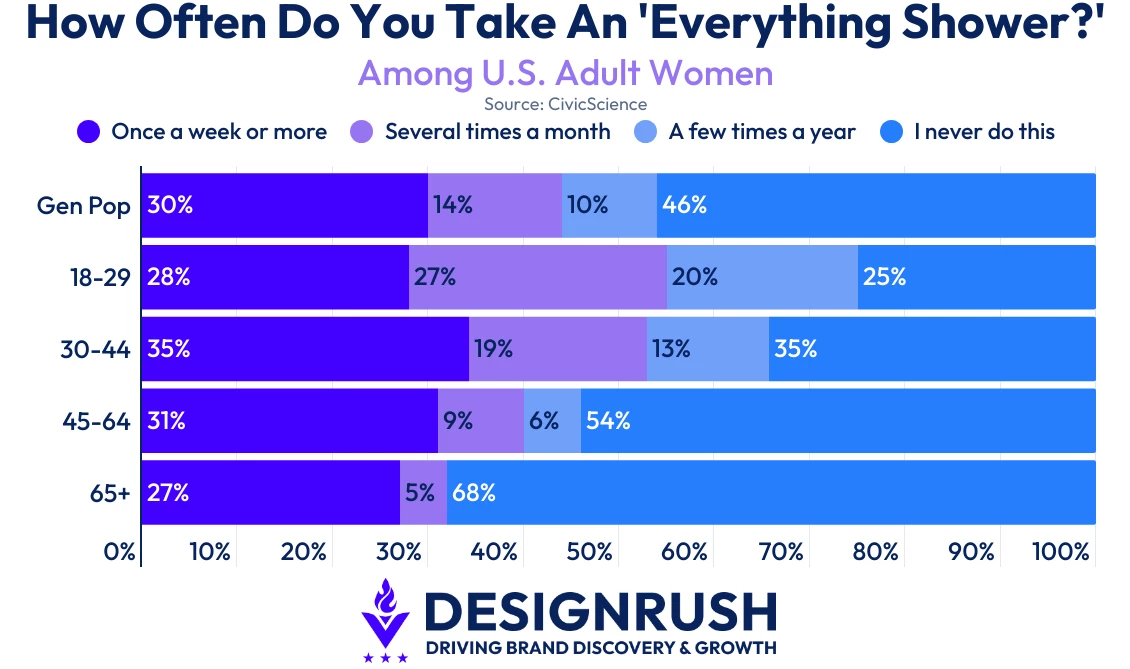
The trend stacks washing, exfoliating, shaving, hair care, and treatments into one long routine, and Nickell shares that this opened a question:
"If you're dedicating all that attention to yourself, why not extend a little of that care to the shower itself in a way that saves you time and effort in the long run?"
And adding one small, convenient step to an already long ritual is a pretty easy sell.
The tool makes good on this promise with a pivoting head for tight spots, a built-in squeegee, and Shower & Tub Foaming Magic Erasers.
"The Shower & Tub Scrubber solves a real consumer need by making it easy to clean your shower while you’re already in the space," Nickell explains.
When the product claim is real, the campaign has somewhere to go after the laughs fade, and this staying power is what a gimmick doesn't get.
Cleaning Billboards Where Luxury Lives
P&G treated out-of-home like beauty editorial, and the ads went up across SoHo, with wild postings along Thompson and Broome streets.
"We placed Mr. Clean in the heart of SoHo, a neighborhood synonymous with fashion, design, and trendsetting culture," Nickell shares.
"We intentionally put the product in an environment where the creative would feel surprising, relevant, and worthy of a second look."
A shower scrubber staged like a luxury launch certainly made people stop and pay attention.
The OAAA and Morning Consult found that 88% of U.S. adults notice out-of-home ads.
Of these, 78% have acted on one, and 51% searched the advertiser afterward.
With most people noticing outdoor ads and half looking up the brand afterward, the SoHo setting converted attention into intent.
The OOH ads were only one piece of a wider system that P&G could actually measure.
"QR scans, website traffic, sweepstakes participation, and social sharing/engagement will provide direct indicators of engagement," he points out.
"Meanwhile, earned media coverage, influencer content, and online conversation will help us understand how the campaign is resonating culturally."
The scoreboard here isn't based on only impressions but on how many people bought a scrubber after seeing one styled like perfume.
This is the number that tells P&G whether a clever placement earned its advertising budget.
The Follow-Up Problem Solved
P&G knew the hard part was what came after the viral hit that was the "Retirement and Unretirement" campaign.
"We knew there was the possibility of becoming a victim of our own success," Nickell reveals.
"When you get that much cultural lightning with one campaign, it's hard to recreate that excitement."
So the team changed the target, and "Everything Shower" went after beauty media and creators who already talk about shower products.
More than 1,000 people entered the sweepstakes in just over a week, and beauty editors started covering the launch.
The campaign is still young, so the full sales impact isn't in yet.
"We’re already seeing early indicators our message is resonating through actions like positive feedback from beauty editors and sweepstakes entries, which are already climbing.
We’re also watching search and product interest as signals of intent," he shares.
Attention is easy to measure. Whether the product ends in someone's cart is the number that actually settles this.
"Ultimately, success won't just be about how many people saw the main creative elements," Nickell says.
"It will be about how many people are using the Shower & Tub Scrubbers in their 'Everything Shower' routines."
One Job a Legacy Brand Must Own
Nickell's advice for older brands starts well before the creative brief.
"Start by stepping into the lives of the people we serve," he advises.
"Feel their day, their pressures, their hopes."
It begins with a real, familiar friction. Cleaning the shower is tiring and easy to put off, which gave Mr. Clean one specific problem to own.
"Modern relevance is about humanity," Nickell says.
"It is about showing people that we truly see them, we understand them, and we are here to help with something that matters in their world."
The usual mistake is treating relevance as louder content, more channels, or trend language.
For Nickell, none of these matters if you haven't earned trust in someone's daily life first:
"When a brand truly understands the rhythm of everyday life, people feel it. They see it in the way you show up for the small moments that shape their day."
Mr. Clean’s path from retirement to the "Everything Shower" offers four useful lessons for brands and agencies:
- Treat a mascot as a commercial asset. Recognition carries more value when the character can create product discovery, trial, and a repeatable story.
- Use campaign response to judge cultural permission. Search, views, conversation, and participation can show how far audiences are willing to follow a familiar character.
- Enter trends through product truth. The Shower & Tub Scrubber gave Mr. Clean a real function inside the "Everything Shower" routine.
- Build conversion into the creative system. OOH, QR codes, creators, earned media, and sweepstakes activity gave P&G several routes from attention to action.
The 66,811 Google searches proved that people still care about what Mr. Clean does next and that a 70-year-old face can still command attention.
Just remember, the mascot only pays off for brands that keep giving him real work and let him move with the times.