
Forty percent of enterprise applications will use task-specific AI agents by the end of 2026. That percentage was less than 5% just a year ago, according to Gartner.
Spending suggests companies are racing to meet that deadline. Whether deployment matches that spending is a separate question.
Meanwhile, PwC found 79% of companies are adopting agents, and 88% of executives are planning bigger AI budgets because of it. Only 35% have adopted it broadly.
Sixty-eight percent claim that on any given day, half or fewer of their staff members deal with an agent.
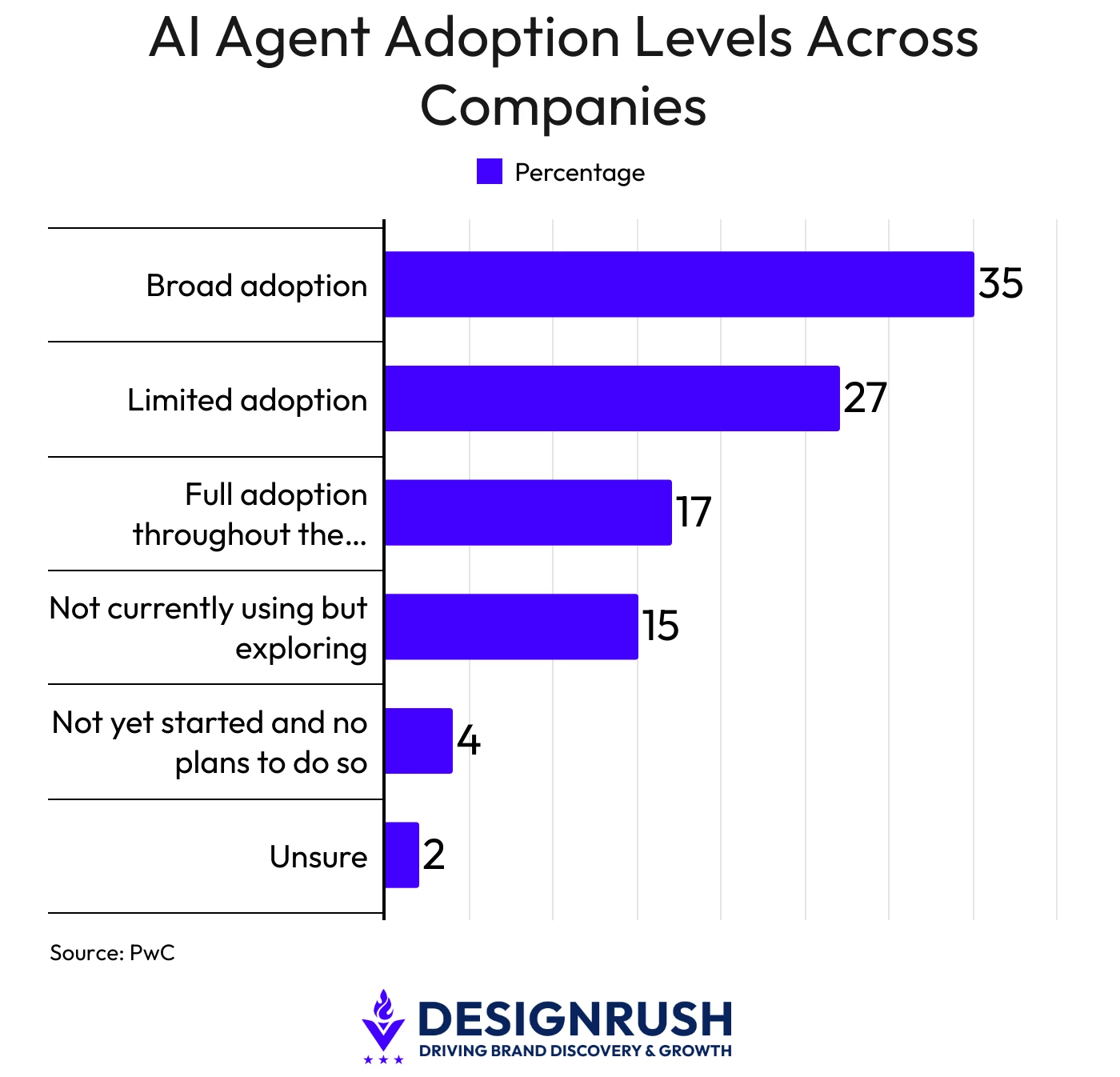 When taken as a whole, the adoption headline overstates the extent to which the majority of enterprises have truly advanced toward production-scale AI.
Every month that gap between spending and deployment stays open, the enterprises still stuck at pilot stage fall further behind. Competitors who already closed it are setting the pace now.
Why Is Enterprise AI Adoption So Shallow?
Most of the 79% adoption figure PwC reports comes from companies running a single agent inside one team or workflow, not agents working together across a business.
Enterprises need to pay closer attention to what happens once a single agent has to work alongside others, according to Bytes Technolab, an AI-First Digital Product Engineering Partner.
"A team gets one agent running smoothly, feels confident, adds a second and a third without stopping to ask how they'll actually talk to each other," says Mitul Patel, founder and CEO of Bytes Technolab.
That's usually where things start to break.
What Breaks When Agents Scale
A single agent failing is easy to spot and fix. Multiple AI agents interacting introduce failure modes that often go unnoticed until they've already cost something.
| Failure Mode | What Causes It | What It Costs |
| Duplicated work | Agents don't know what other agents already did | Wasted compute, redundant output |
| Policy drift | Each agent configured separately, by different teams | Inconsistent decisions across the business |
| Security blind spots | No single owner for data moving between agents | Compliance risk, undetected exposure |
| Shadow AI sprawl | Dozens of disconnected agents with no central visibility | Loss of control over what agents are doing |
Knowing these failure modes in advance is the difference between budgeting for them and discovering them mid-deployment, when they are far more expensive to fix.
Companies are "tired of AI point solutions that don't talk to each other and just create chaos," OpenAI said in a note on the next phase of enterprise AI.
"That admission carries weight because it comes from a company building its own orchestration layer for enterprise customers, not a vendor with something to sell against the problem," Patel says.
"When the model provider itself flags the chaos, it confirms the issue sits above the model layer, in how agents are coordinated."
And that's exactly where most enterprise AI budgets are not currently being spent.
Why Do Failed Agentic Projects Get Canceled?
Escalating costs, unclear business value, and inadequate risk controls top Gartner's list of reasons. All three trace back to the same root cause.
- Escalating costs happen when duplicated agent work compounds unnoticed.
- Unclear business value happens when nobody can trace which agent produced which outcome.
- Inadequate risk controls happen when security gets bolted onto a system built for one agent, then stretched to cover five.
Each of these is preventable at the design stage. A company that budgets for orchestration early skips the expensive lesson of discovering the cause only after a project gets shut down.
For enterprises weighing where to start, Bytes Technolab works across agentic AI, workflow automation, and production model management, the areas orchestration touches most directly.
Where Is the Real Competitive Advantage Building?
Enterprises will collectively run more than 1 billion AI agents by 2029, according to forecasts from IDC, the technology research and market intelligence firm.
Agent use among Global 2000 companies, the world's largest public firms by revenue, is projected to grow tenfold by 2027.
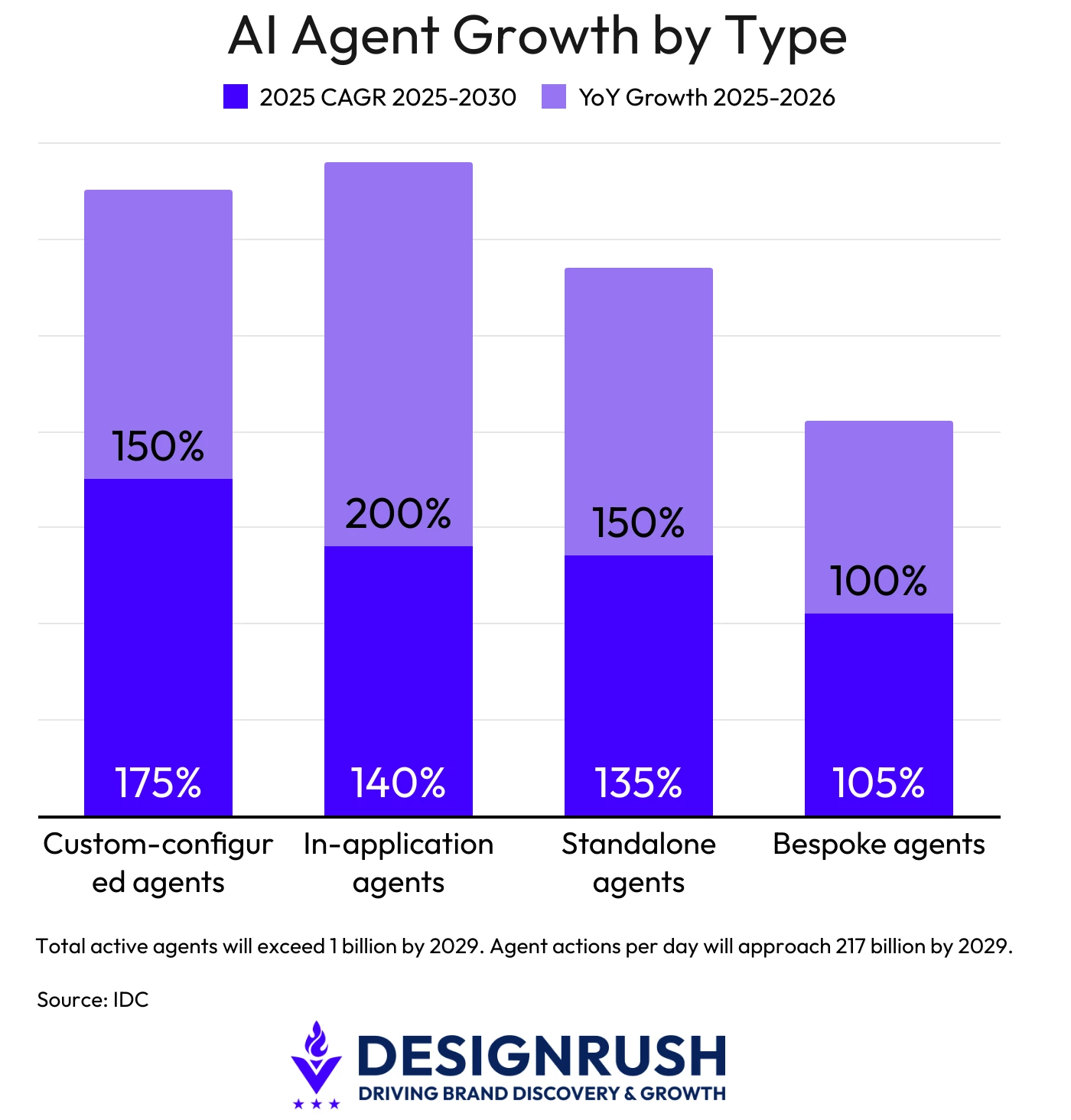 Token and API call loads will rise a thousandfold over the same period.
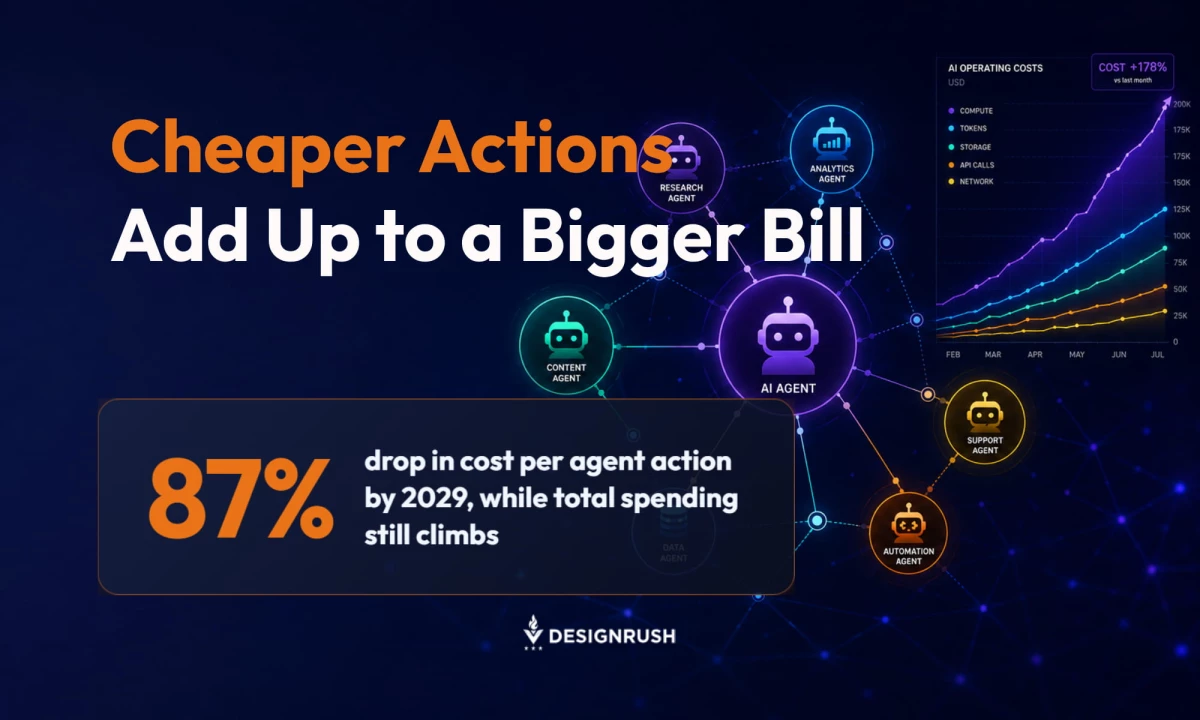
Those agents will execute more than 217 billion actions a day by 2029. Worldwide token delivery costs for supporting them will surpass $68 billion annually, per the same report.
The cost per individual action drops 87% over the same period, but the total bill still climbs.
"That surge in scale is exactly what turns vetting, orchestration, and optimization into essential IT responsibilities rather than optional add-ons," Patel explains.
Skipping that work risks limited vetting of agent options, a lack of orchestration and guardrails across agent fleets, and limited visibility into long-term costs.
Those are the exact failure modes eating enterprise AI budgets right now.
Does Orchestration Have to Be Built In From the Start?
Most enterprises make this call after the third or fourth agent is already running, when the answer costs the most.
Five agents built in isolation cannot have orchestration retrofitted onto them afterward.
Coordination logic, shared context, and guardrails need to be part of the architecture from the first agent.
Skip that step, and a multi-agent system risks becoming another entry in the 2027 cancellation count.