
Nearly half of all Google searches are looking for local information, according to statistics from Shopify.
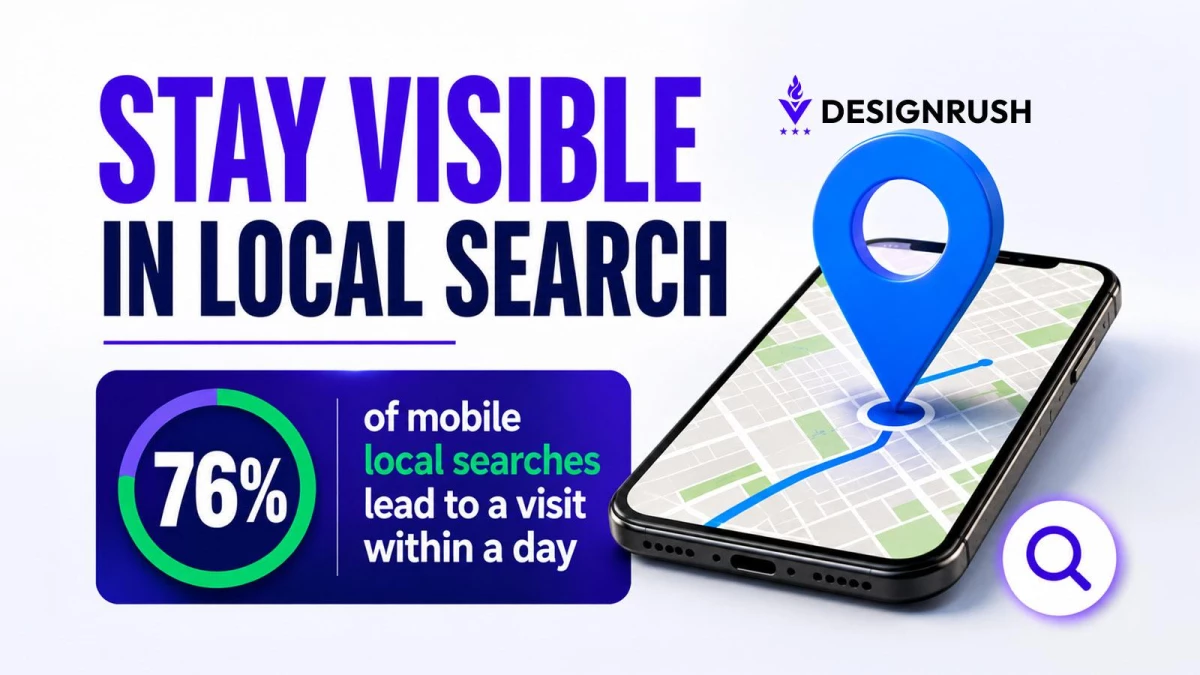
This matters because the Shopify data also showed that 76% of people who conduct a local search on mobile visit a business within a day.
Despite these figures, plenty of small businesses still treat local SEO like something to get around to only after the website is finished, socials are running, and everything else on the marketing checklist has been ticked.
The reality is that local search often reaches people at the moment when they are already considering a purchase, appointment, visit, or service.
As such, businesses that fail to appear at that moment are losing a customer who was already looking for what it sells.
And the places where that discovery happens are multiplying.
Customers can encounter a business through traditional Google results, Maps, the Local Pack, review platforms, directories, and increasingly AI-generated answers.
For Sierra Goldstein, founder & CEO of Market Minds Creative, that makes local SEO a bigger visibility problem than it used to be.
"Local SEO has never really been about one ranking or one listing. The businesses that stay visible are the ones that give search engines consistent evidence about who they are, what they offer, and where they operate," she says.
"As search becomes more fragmented, that consistency becomes even more important because businesses have less control over where the next customer discovers them."
Strengthen Your Local Search Foundation
To avoid falling behind in traditional local search, small businesses need to make sure the basic information about their business is accurate and easy to understand.
After all, search engines cannot confidently surface a business if they have conflicting information about its location, services, operating hours, or identity.
For example, a business that says it closes at 6:00 PM on one platform and 8:00 PM on another has just created a big trust problem, one that most customers won't hesitate to complain about online.
As such, businesses trying to improve their local search visibility should:
1. Keep your Google Business Profile updated
Google Business Profile remains one of the most important pieces of local-search infrastructure for businesses that rely on nearby customers. Given this, businesses should regularly review:
- Primary and secondary categories
- Services and products
- Business hours and holiday hours
- Phone numbers and website information
- Business description
- Photos
- Location and service-area information
The key operating word here is "regularly."
A profile shouldn't be treated as something that gets completed once and then forgotten.
Complete listings can answer basic questions from the get-go, which is becoming more and more important as search engines try to resolve more queries directly.
2. Strengthen local signals on your website
Websites should reinforce the information the Google Business Profile provides.
That means clearly explaining the services offered, the areas served, and the problems the business solves.
Businesses serving multiple locations can also create useful location-specific pages when those pages provide genuinely relevant information rather than simply swapping city names into the same generic copy.
Likewise, business name, address, phone number, and other fundamental details should align across the website and important local listings.
When those signals agree, search engines have an easier time connecting the business with the appropriate searches.
"Search engines have more confidence in businesses when the information surrounding them tells a consistent story," Goldstein says.
"Small businesses should focus less on checking off isolated SEO tasks and more on building a digital presence that makes their relevance obvious."
Adapt to AI-Powered Local Search
Of course, it would be a mistake to ignore how AI search and zero-click have impacted local search.
Case in point, Google's AI Overviews (AIOs) appear in 68% of local searches in the U.S., according to data reported by Search Engine Land.
This is problematic since the presence of AIOs reduced click-through rates by 34.5%, per data from Ahrefs.
However, small businesses should see it more like an extension of the local search puzzle instead of a new problem to solve.
This is why laying down a strong foundation for traditional local search matters, since that same foundation also makes it easier for AI systems to understand and recommend that business.
But getting the basics right is only the starting point. Businesses looking to compete in local AI search should also:
1. Make information easy for AI to understand
AI systems need clear information to determine whether a business is relevant to a particular search.
That means businesses should go beyond simply listing their services and locations. They should create content that directly addresses the questions customers are likely to ask before choosing a local provider.
For example, a home services company could explain which problems require emergency service, what different services involve, and which areas it serves.
This gives search systems useful information to draw from when generating answers, especially since such content directly answer common AI search queries.
2. Build authority beyond the business website
AI systems can draw from multiple sources when evaluating a business.
After all, a business that is clearly described on its own website but poorly represented everywhere else is gives AI a much thinner picture to work with.
Businesses should maintain accurate information across relevant directories and review platforms while working to earn legitimate mentions and links from authoritative websites like:
- Relevant local publications
- Industry websites
- Professional directories
- Local business directories
- Review platforms
- Community and industry organizations with an established online presence
3. Monitor how the business appears in AI search
Just like traditional local SEO metrics, businesses should monitor how AI presents their brand to users.
Regularly searching "best [service] in [city]," "[service] near me," and other relevant queries related to the business can reveal whether it's being surfaced, how it's being described, and which competitors are appearing instead.
Those observations can then inform the broader SEO strategy.
"If a business consistently appears in traditional results but rarely in AI-generated recommendations, that may indicate an opportunity to strengthen the information and authority signals surrounding it," Goldstein adds.
Make Local Search a Business Priority
With 46% of Google searches carrying local intent, local SEO is too important to remain a checklist item handled whenever someone remembers to update the business profile.
As such, the question in 2026 is no longer whether local search matters.
It's whether a small business has built a digital presence strong enough to be the one both AI and search engines trust when a nearby customer is ready to act.