
A global campaign can cross markets in seconds, but the way people read it changes at every stop.
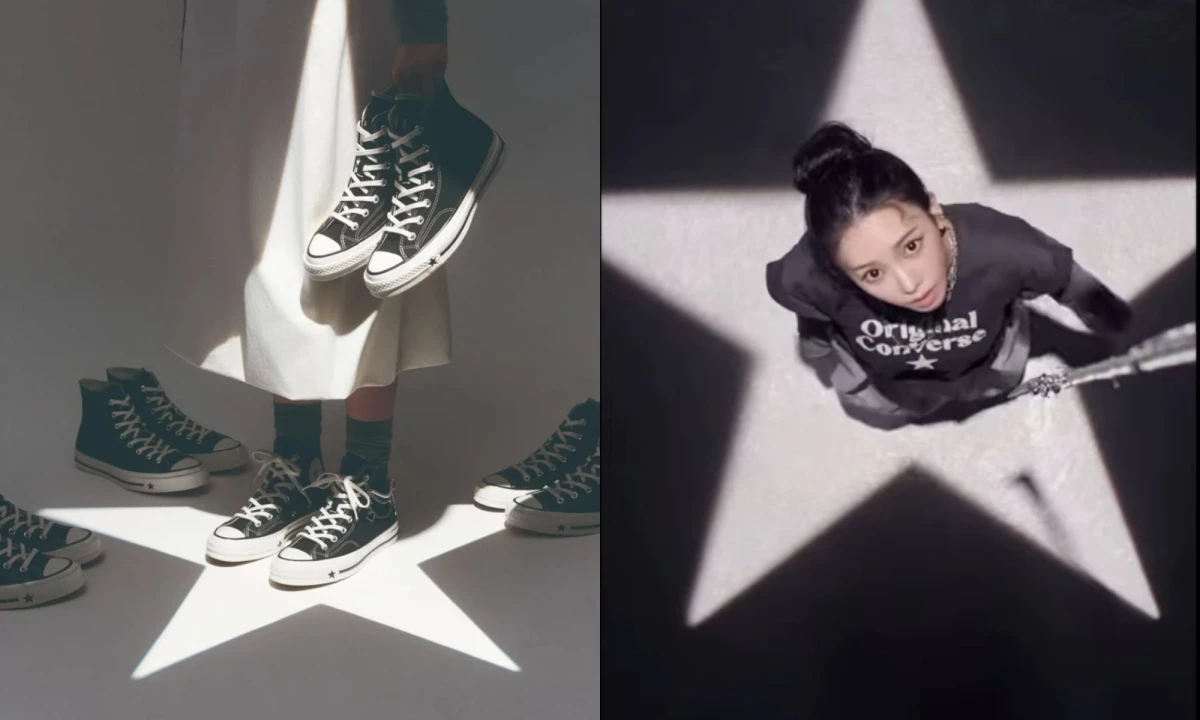
Converse pulled an image from its "Stars Align With KARINA" campaign after critics said the composition resembled KKK and lynching imagery.
The campaign features K-Pop's aespa member Karina, the brand's global ambassador, promoting the Chuck 70 X and Run Star Crush.
Converse apologized and said it was pulling the image from its channels and working to "remove it everywhere it appeared."
"We understand why this image is deeply upsetting and recognize that we got this wrong," the company said in a statement to PEOPLE.
"This should not have happened and we will do better."
View this post on Instagram
The backlash even reached Capitol Hill.
Rep. Troy Carter, D-La., condemned the campaign and questioned how the image moved through the approval process.
"An advertising campaign does not just appear," Carter said in a September 18 statement.
"It is conceived, photographed, reviewed, approved and distributed.
At every stage, someone had the opportunity — and the responsibility — to say no."
Carter's office also demanded an independent investigation.
It asked Nike and Converse to name everyone involved and set safeguards against a repeat.
"You have caused real harm, and repairing that harm will require more than an apology written by your public relations department," Carter wrote.
View this post on Instagram
Converse declined to answer questions from The Associated Press about how the ad was screened and approved before publication.
This incident shows how the approval process can become a key issue for global brand campaigns.
Karina's Global Campaign Hits a Cultural Review Gap
Karina was named Converse's global brand ambassador in June, with the Chuck 70 X campaign following her appointment.
"Stars Align With KARINA" centers on Converse's star brand symbol.
The singer appears in product imagery and a campaign film for the new sneaker, which launched globally on August 27 after earlier releases in China and South Korea.
The campaign's international footprint also means the disputed image can't be treated as a single-market social post.
A creative idea can receive approval from global teams and still require a market-level cultural read before publication.
aespa KARINA has been named the new Global Brand Ambassador for Converse. https://t.co/1XJw7vaxud
— 윈터얼트 (@wntrult) June 29, 2026
A second image drew the same reaction.
It came from the Converse x Palmes campaign and ran on a regional Converse Instagram account earlier this month.
The photo showed models on a wooden ladder reaching for sneakers that hung from a tree branch.
Converse has not commented on this image, and it appears to have been taken down.
It also has not said whether any market team read the imagery against local history before it posted.
In this instance, the ad became a major liability after viewers interpreted its lighting and product pose through the lens of KKK and lynching imagery.
Carter's statement adds another layer by questioning who created, reviewed, approved, and distributed the work.
He asked how many executives saw the campaign, whether any Black people were in the room, and whether anyone listened to them.
A global ambassador deal pushes one creative direction into every market at once, which leaves the review stage as the only place a local reading can still get caught.
Any brand strategy built on a single worldwide creative needs a stage staffed by the local market, not by headquarters.
Kantar Data Shows How Far Ad Reception Varies by Market
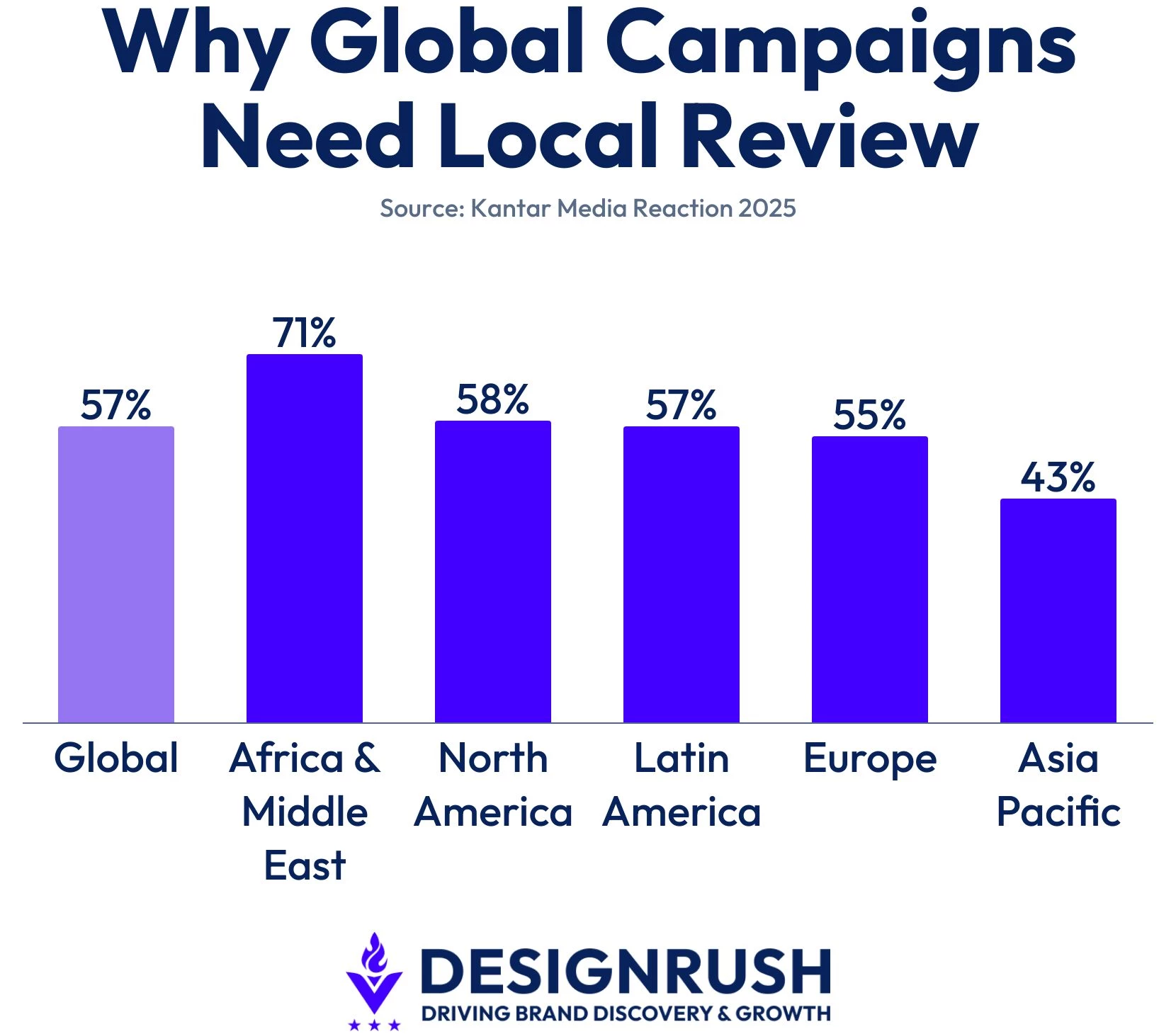
Kantar’s 2025 Media Reactions study surveyed 21,300 consumers and 974 senior marketers across 30 markets.
It found that 43% of consumers in Asia Pacific were positive toward advertising, compared with 57% globally.
Africa and the Middle East were far more welcoming, at 71%.
Converse cleared one image for markets separated by 28 points in ad receptivity, on a single global approval.
These audiences also bring different histories, preferences, and references to the same photo.
The Converse backlash points to three practical changes for global creative reviews.
- Cultural risk needs its own checkpoint. Teams should give regional cultural reviewers a formal approval stage to identify historical or social references before publication.
- Local expertise needs decision-making power. Teams should give market specialists authority to pause or revise creative to prevent concerns from becoming public backlash.
- Approval needs documented accountability. Teams should record who reviewed sensitive creative and what concerns were raised to create a clearer approval process.
Regional expertise has to sit inside the approval chain, with a named owner at the stage where brand assets get cleared for release.
Our Take: Who Should Own Cultural Sign-Off?
Global creative needs local cultural reviewers with authority to stop a creative when imagery touches race, religion, politics, or traumatic history.
We think that the owner has to be a named market lead with sign-off power over anything running in that market.
Carter's questions expose what happens when approval runs as a chain of routine checks with no one accountable at any single link.
Cultural review should be documented alongside legal, brand, and platform sign-off, with the authority to hold an asset before paid media begins.
Converse apologized within a day and still has not said who approved the image.
An apology with no name attached leaves the same people clearing the next global launch.
Carter has already asked for an independent investigation, which is how approval processes get redesigned from outside the building.
Sanex and Swatch hit the same approval gap last year, and DesignRush traced both cases back to teams working without a market-level read.
Need another perspective before a global campaign goes live?
Explore these top multicultural marketing agencies that can add market-specific cultural review to the creative process.