
llms.txt was supposed to give AI systems a clearer way to understand and access a website’s most important information.
But new research from Ahrefs suggests this method may be ineffective.
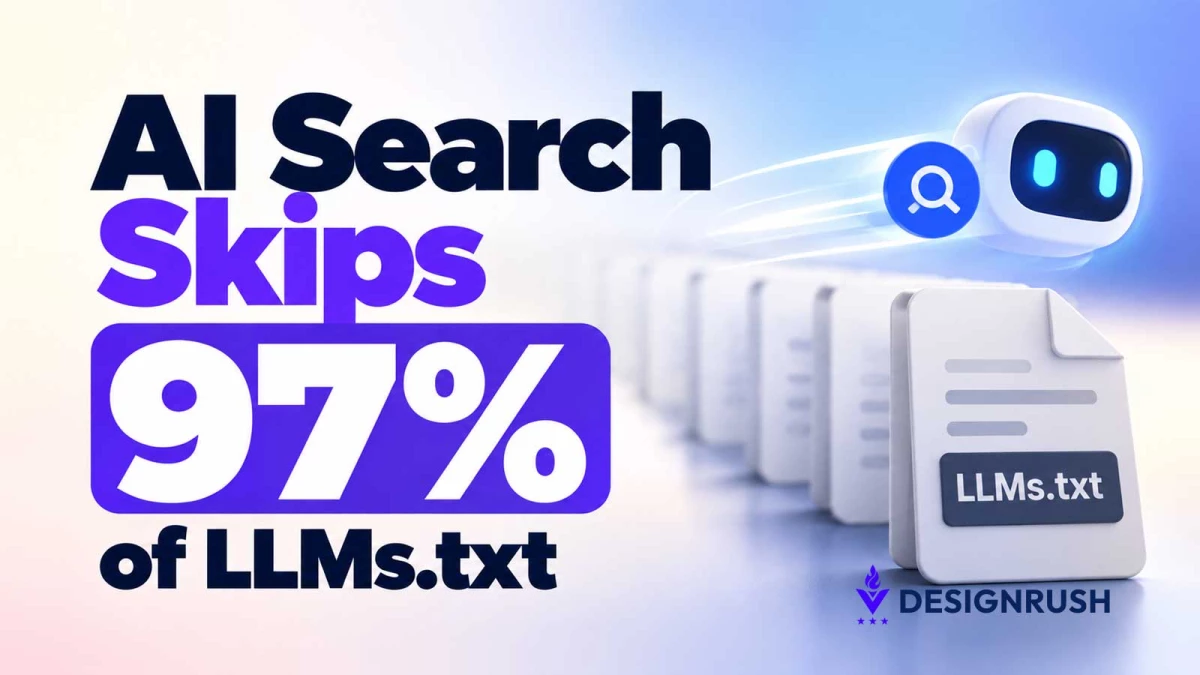
In fact, the study found that 97% of valid llms.txt files received no fetches, challenging the assumption that the file can lead to meaningful improvements to a brand’s AI search visibility.
But this doesn’t mean llms.txt has no possible use.
On the contrary, Ahrefs found that the small share of files that were fetched attracted mostly bot traffic, with AI tools accounting for 19.5% of requests among the files that received any traffic.
It does, however, challenge the idea that publishing a machine-readable file is enough to make a brand more visible in AI search.
And with more companies continuing to experiment with llms.txt, brands need to look beyond quick fixes and consider what actually gives an AI system a reason to surface their information.
According to Juan Sanchez, CEO of Baunfire, a multi-award-winning digital agency, AI visibility ultimately depends on the authority and usefulness a brand builds across its digital presence.
“AI visibility cannot be manufactured through a single technical tactic. Brands need to give AI systems a clear reason to trust and surface their information,” he says.
“That comes from demonstrating real expertise, building authority beyond their own website, and consistently creating information that is genuinely useful to the people they serve.”
Build Authority Beyond Your Own Website
Publishing information about a company and establishing that the company deserves to be cited are two different things.
A technology brand can fill its website with articles about the topics it wants to own.
That tells search engines what the company says about itself, but it doesn’t necessarily establish that independent sources associate the company with those subjects.
Third-party recognition provides another layer of evidence.
When several independent sources consistently connect a company with a particular subject, they provide additional evidence about what that company does and where its expertise lies.
For technology companies competing in crowded categories, third-party recognitions often include:
- Industry publications
- Relevant technology media
- Expert interviews
- Contributed articles
- Reviews and comparisons
- Industry directories and organizations
- Independent case studies and research
But Sanchez says that the goal here isn’t accumulating volume, but rather, the quality of these recognitions.
“A dozen weak directories are unlikely to carry the same weight as a respected technology publication that examines a company's expertise or an industry expert who independently cites its work,” he says.
A cybersecurity company, for example, can publish 50 articles about threat detection.
But the credibility factor only compounds when security publications interview its executives, researchers reference its findings, customers review its products, and industry publications discuss its work.
Make Your Website Worth Retrieving
Third-party recognition can strengthen a brand's authority, but AI systems still need accessible source material when they retrieve information.
That is where traditional SEO remains important.
After all, the technical foundations that help search engines discover and understand a website also make its information easier for other systems to process.
As such, brands pursuing AI visibility should ensure the basics are working before spending significant effort on specialized AI optimization.
In particular, experts at Baunfire suggest teams try to:
1. Strengthen traditional search foundations
A website should make its important information easy to find and understand.
That means paying attention to:
- Crawlability and indexing so important pages can actually be discovered.
- Site architecture so information is organized into logical sections and relationships.
- Internal linking so related pages reinforce one another and important content is not isolated.
- Clear information architecture so visitors and search systems can understand what each section of the site covers.
- Descriptive page elements including headings, titles, and other signals that explain what the content contains.
Google's own guidance on its generative AI search features reinforces this point.
In their guide, Google claims websites do not need special AI files or special schema markup to appear in its AI features,
In fact, the company advises site owners to continue with established SEO fundamentals.
2. Build comprehensive topical authority
The next step is moving beyond isolated articles written around individual keywords.
Technology brands should develop interconnected coverage around the subjects they genuinely understand.
That could mean explaining the fundamentals of a technology, addressing common implementation problems, and documenting customer use cases that add something to the existing conversation.
That kind of content gives readers more useful information while giving AI systems more substance to associate with the company's expertise.
More importantly, this approach builds topical authority, which is harder for competitors to replicate.
3. Make information easy to retrieve and cite
Even strong content can underperform if its most important information is buried inside vague copy.
Clear headings, logical page structures, descriptive language, internal links, and structured data where appropriate can help make important facts and relationships easier to identify.
That is where llms.txt can be put in perspective.
“llms.txt can be one part of making information more accessible to AI systems, but it works within a much larger foundation,” Sanchez says.
“AI visibility depends on the whole ecosystem working together, with llms.txt serving as one supporting element rather than being the central strategy itself.”
Build AI Visibility That Cannot Be Manufactured
As brands look for ways to influence what AI systems say about them, the market will continue producing tactics that promise a relatively simple path to visibility.
Some may prove useful. But none can replace the underlying work of becoming a source worth citing.
AI search may create new ways for customers to discover a company, but it doesn’t create a shortcut around the basic question every source has to answer:
Why should anyone trust you?