
Employee Disengagement Cost and Onboarding: Key Findings
- Employee disengagement often starts during onboarding, not in performance reviews, giving brands and agencies a chance to address issues before they affect results.
- Over-automating onboarding removes the human connection employees rely on, while companies that balance automation with real interaction build stronger teams and more consistent customer experiences.
- The first 30 days shape performance, retention, and engagement, as discussed in the DesignRush Podcast, giving businesses a clear opportunity to improve outcomes from day one.
Employee disengagement is not just a culture problem. It’s a business one.
Low engagement costs the global economy $438 billion in lost productivity, according to Gallup’s State of the Global Workplace 2025 report.
This magnitude of financial loss doesn’t happen overnight. It builds over time, often starting with employee onboarding.
A new employee’s first few days can greatly impact his or her long-term performance. Despite this fact, companies often focus solely on customers and neglect what’s going on internally.
Janell Scott is the Vice President of Talent and Delivery at Hugo Inc., a global provider of customer support, technical support, and AI-powered operations solutions.
Hugo Inc. helps brands build and manage high-performance teams across regions and channels.
“[...] what we do for this new hire, what we do for this new team member… how we invest and pour into them will be a direct line to your customer excellence experience,” Scott says.
That’s why companies that overlook onboarding risk more than disengagement. They risk inconsistent performance, weaker customer experiences, and slower growth.
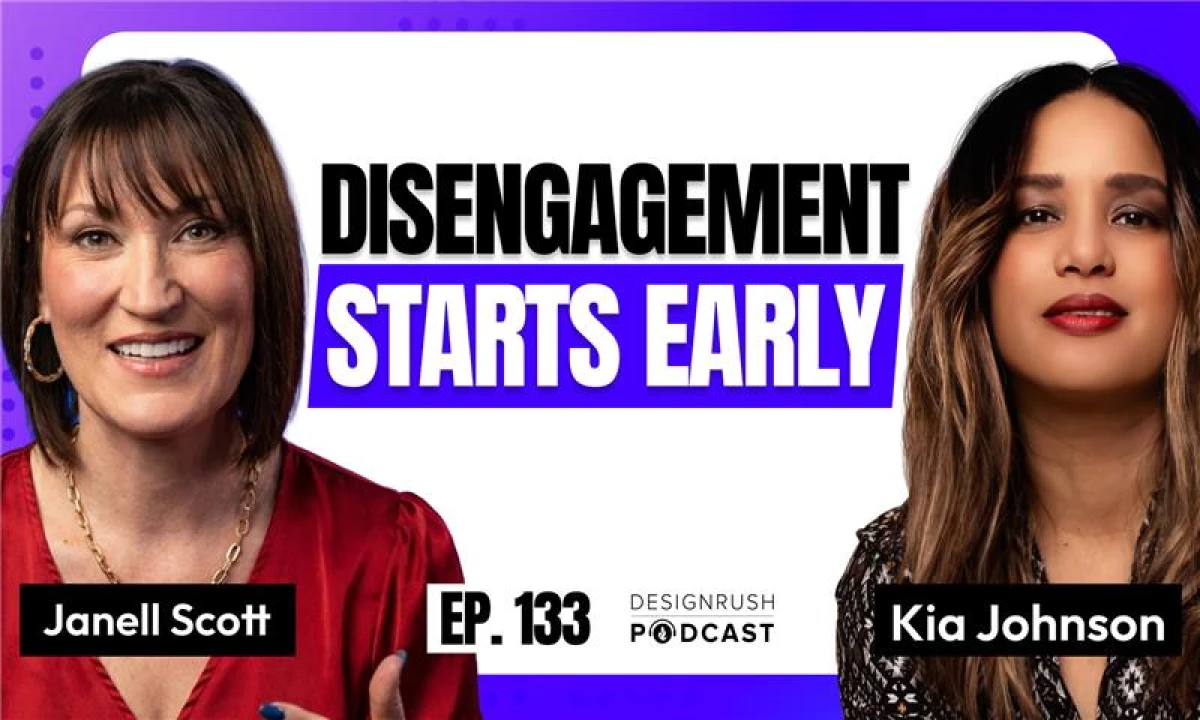
In episode No. 133 of the DesignRush Podcast, Scott breaks down why onboarding is directly related to customer experience. She also explains how ignoring it can directly impact business goals.
Watch the full episode on YouTube or listen on Spotify and Apple Podcasts.

Who Is Janell Scott?
Janell Scott is the Vice President of Talent and Delivery at Hugo Inc., where she leads talent strategy, onboarding, and operational delivery for high-performing teams at scale. With more than 16 years in the BPO industry, she has worked across sales, recruiting, and operations, giving her a practical understanding of how hiring, training, and performance connect to customer outcomes.
Why Employee Disengagement Starts Earlier Than You Think
Most companies don’t think about disengagement until it starts showing up in performance.
By then, it’s usually been building in the background for some time.
In a lot of cases, it starts much earlier than that — when expectations aren’t clear, training feels rushed, or support just isn’t there from day one.
“[...] you’re looking at how the C-suite thinks a customer interaction should go versus how it actually goes,” Scott says.
That gap doesn’t appear out of nowhere. It tends to show up during onboarding, when people are still trying to get their footing and understand how the role actually works day to day.
As Scott points out, the same three mistakes come up repeatedly:
- Mistake 1: Treating onboarding like a one-off task
- Mistake 2: Automating away the human side
- Mistake 3: Not being intentional about the first 30 days
Each of these tends to create small gaps early on that grow into bigger performance and retention issues over time
1. Treating Onboarding as a One-Off Task
Many onboarding programs are designed to get people through the first few days.
There’s usually a schedule, a checklist, and a bunch of systems to learn. Then, the support stops.
When someone’s left hanging, the gaps in their knowledge and ability to execute often don’t show up until later. And it becomes obvious that their training wasn’t sufficient to support their job function.
Scott describes that shift in a relatable way:
“It's like you put salt in the cookie recipe instead of sugar, right? It's like that first bite that's supposed to be exciting and sweet and nourishing and you've waited for it. All of a sudden turns sour, right?”
And once that first impression lands the wrong way, it’s hard to reset.
“It is going to sour your expectations. It's going to make it hard to want to take a second bite, no matter how hungry you are,” she adds.
That reaction isn’t always obvious at first, but it tends to show up later in how people engage with the work.
2. Automating Away the Human Side
There’s a push to make onboarding faster and more efficient, which often means adding more automation.
Some of that helps. Some of it creates distance.
Processes get smoother, but the experience itself can feel less personal.
“I do think that we get too automated and we lose a personal touch,” Scott says.
That’s usually what people remember. Not the system, not the workflow, the interaction.
“I think that it means the world to people to still get a personal phone call or to have a thank you card at the end of day one,” Scott says.
At the same time, there’s a mismatch in how automation is being used.
“We are so focused on the customer results that we automate too much there and we need to automate a little earlier in the onboarding,” Scott says.
So people end up with less support where they actually need it, and more structure where it doesn’t make much difference.
That tends to slow things down rather than speed them up.
3. Not Being Intentional About the First 30 Days
The first few weeks set the tone for how someone experiences the role and the company.
People are figuring out what’s expected of them, how things work, and whether they can succeed.
If that experience is unclear or inconsistent, it’s difficult to fix later.
Scott points out that many companies rely on what they’ve always done instead of adjusting as they grow.
“I don’t think that we should ever say that this is what works. And we’ve always done it this way. Those are the scary words in business,” Scott says.
Leadership presence also matters early on.
“I certainly think that we do because if we say we're going to be there and we don't show up until 45 days down the road because now we're looking at KPIs, we've missed the mark,” she adds.
By that point, people have already formed their own view of the role and the company.
What It Takes to Get Onboarding Right
Avoiding these issues doesn’t come down to adding more steps or building a more complex process.
It comes down to paying closer attention to what new hires are actually experiencing in those first few weeks.
That includes being present early, not weeks later, and making adjustments while things are still happening.
Scott treats onboarding as something that should keep evolving.
“I don’t need end-of-week feedback. I need today feedback so that I can make that improvement,” Scott says.
That kind of feedback loop makes it easier to catch issues early, before they affect performance or confidence.
As Scott explains, this kind of improvement doesn’t require major investment or executive approval to get started.
Why Onboarding Shapes Customer Experience
Customer experience is often treated as something that happens at the point of interaction.
But how those interactions play out is shaped much earlier.
“[...] the way our newest hires, the way our newest team members, the way that our veteran team members, the way that they are treated is exactly how I would want my customer to be treated,” Scott says.
For companies trying to improve performance, retention, or customer outcomes, that connection is hard to ignore.
It doesn’t start with the customer. It starts with how people are brought into the business.