
Enterprise Workflow Automation Strategy: Key Findings
- One Zenphi client scaled from a single workflow to 70+ processes in just over a year, showing that automation adoption spreads through visible results, not top-down rollout.
- Many automation projects fail early due to fragmented workflows, where disconnected systems add complexity instead of reducing it.
- Enterprise teams don’t actually want more automation. They want fewer, cleaner workflows that handle entire processes end-to-end.
McKinsey’s latest State of AI report shows a recurring pattern inside automation programs: many companies stall in pilot phases before reaching real scale.
MuleSoft’s 2025 Connectivity Benchmark Report helps explain why.
Organizations now average 897 applications, yet only 29% are integrated, which leaves workflows spread across systems that don’t connect cleanly.
Even with widespread API use, execution remains uneven.
The report also found that 99% of organizations already use APIs to automate business processes, which aligns with McKinsey’s finding that progress often slows after early experimentation.
Together, the data points to the same issue: that automation doesn’t break at the point of capability.
It breaks when workflows remain split across tools, teams, and handoffs that never fully come together.
That’s why companies evaluating platforms like Zenphi tend to focus early on whether a system can support complete workflows, scale reliably, and deliver results quickly.
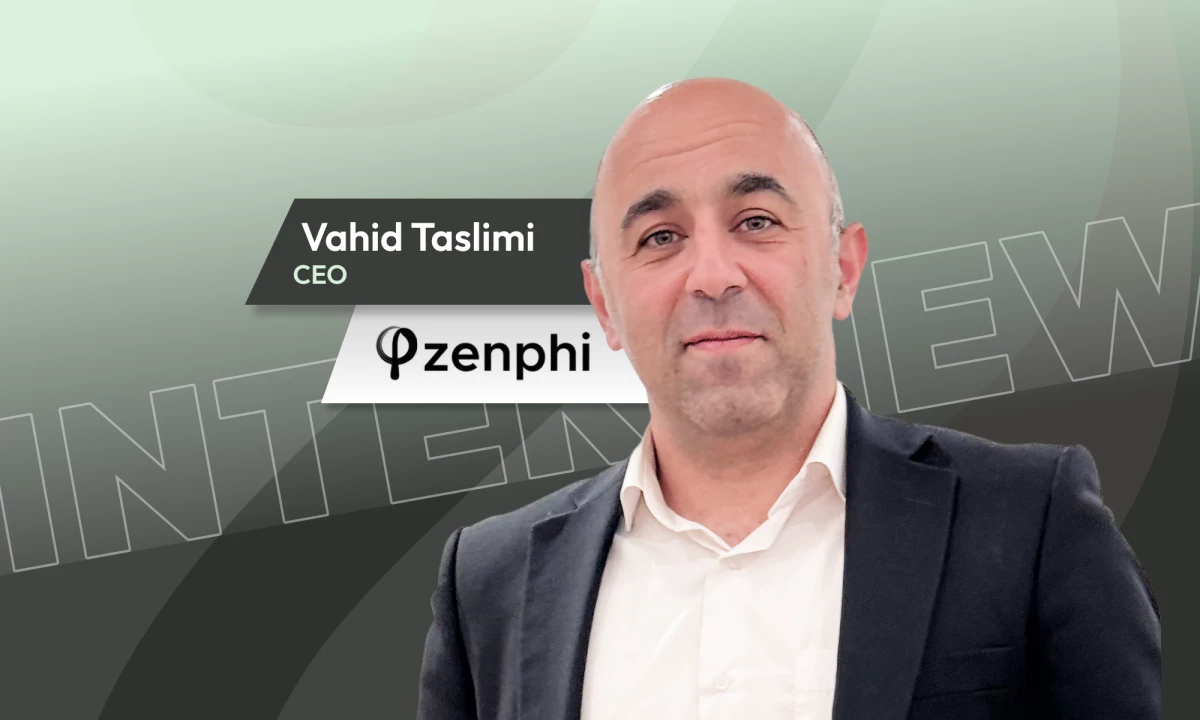
"The moment they see the combination of deep workflow logic, native Google Workspace integration, governance, AI capabilities, and simplicity, the perception changes," Zenphi CEO Vahid Taslimi says.
In his interview with DesignRush, Taslimi explains how this disconnect plays out inside enterprise teams, and why scaling automation depends on connecting workflows end to end rather than adding more tools.

Who Is Vahid Taslimi?
Vahid Taslimi is CEO of Zenphi and a software leader in process automation, AI, and enterprise product development. Before founding the company, he was VP of Product at Nintex, where he helped scale the business from 30 to 800 employees and into a multi-billion-dollar company.
His background spans engineering, product leadership, and go-to-market strategy, focused on building systems for long-term customer success.
Most Brands Want Fewer Problems, Not Automation
According to Taslimi, most companies aren’t trying to automate isolated tasks. They’re trying to fix processes that have become difficult to manage.
That includes approvals, documents, notifications, and multiple teams working within the same flow.
"Most brands aren’t looking to automate a single task; they’re trying to untangle an entire workflow," Taslimi says.
That’s where end-to-end capability becomes critical.
If teams still rely on multiple tools to complete one process, automation doesn’t simplify operations; it adds another layer to manage.
From One Workflow to 70: How Adoption Scales
Adoption rarely starts with a full rollout. It begins with one use case.
In one case, a Zenphi client came in with a single workflow that existing platforms couldn’t handle efficiently, despite already using tools like ServiceNow, BluePrism, and Appian.
Thirteen months later, that same client was running more than 70 automated processes on Zenphi.
"Automating processes with Zenphi is 10x faster and cheaper," Taslimi says.
That result changed internal behavior.
Once one team saw clear value, others followed. Not through direction, but through visible outcomes.
The pattern is consistent:
- Start with one use case.
- Prove value quickly.
- Then expand.
What Enterprise Teams Need Besides Automation
Automation at scale isn’t just about capability. It depends on control.
Over the past two years, Zenphi has focused on features designed for complex, cross-functional environments, particularly where compliance and governance matter.
This includes:
- Multi-workspace environments for team and regional separation
- Region-specific data hosting (US, EU, AU)
- Governance features such as SSO, audit logs, and usage controls
- Native integration with Google Workspace
The goal is not only to automate faster, but to do so without introducing risk or breaking internal systems.
For large organisations, functionality alone isn’t enough. Systems need to operate reliably, securely, and consistently.
Simplicity as a Scaling Strategy
Zenphi’s approach centres on reducing complexity rather than adding to it.
"The biggest lesson is simple: simplicity wins, especially in large organizations," Taslimi explains.
Enterprise teams often struggle not because platforms lack capability, but because they are difficult to use, maintain, or scale across teams.
That insight shapes how the platform is built:
- Drag-and-drop workflows
- AI integrated into existing steps
- Governance designed to be usable
- Faster time to value
If a system feels difficult to manage, adoption slows, regardless of how powerful it is.
How Real-World Use Shapes The Product
Zenphi’s development has been shaped by enterprise use rather than theory.
Three shifts stand out:
- Reducing friction at scale, with features like multi-region hosting and governance introduced in response to rollout challenges
- Changing how value is validated, using a Proof of Value model to demonstrate outcomes quickly
- Designing for orchestration, allowing workflows to connect across systems rather than operate independently
This allows Zenphi to sit alongside existing tools, improving how they work together rather than replacing them entirely.
What Brands and Agencies Should Take From This
Most automation strategies struggle to scale because they try to do too much, too early.
Zenphi takes a different approach.
Instead of designing for scale from the start, it builds momentum through a single, well-defined workflow that quickly demonstrates value and aligns teams.
That early validation creates internal demand.
"Teams need to see impact quickly. When they can validate a use case within days through a narrow, well-defined proof of value, it accelerates trust and adoption without a heavy, upfront implementation," Taslimi says.
From there, growth becomes a natural extension of results rather than a forced rollout.