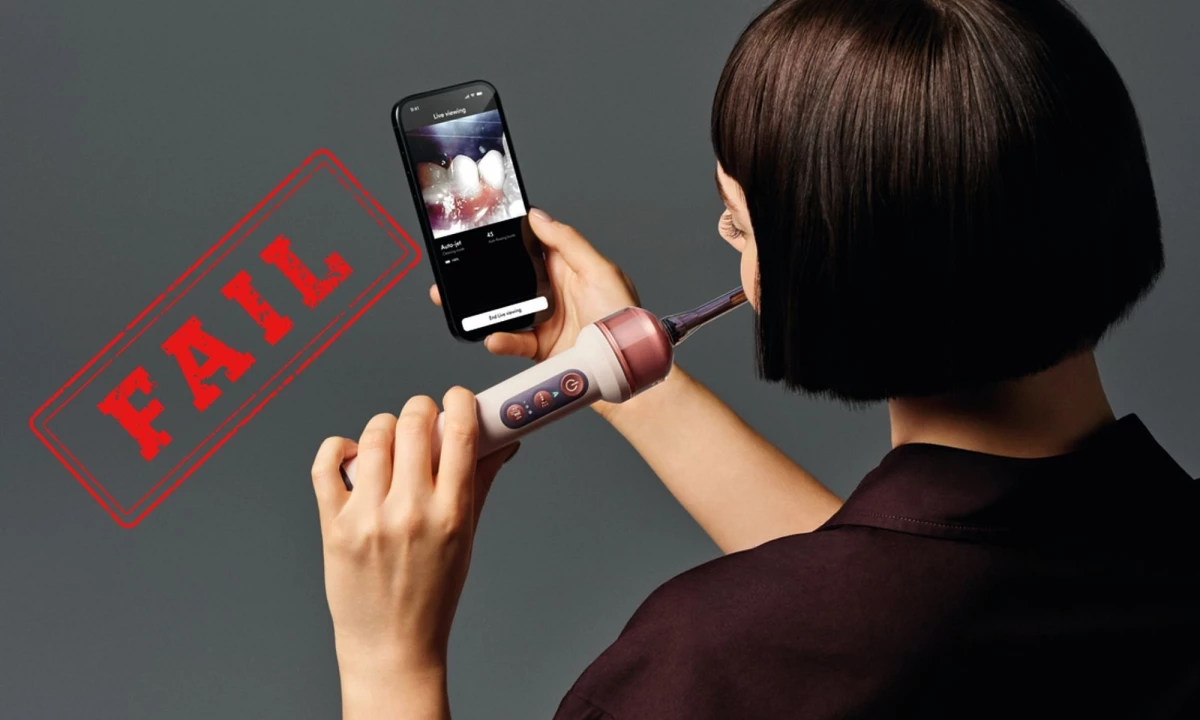

Dyson's $499 CameraJet has gone from flagship innovation to a product pulled from sale within weeks.
The toothbrush launched on September 1 with a camera, AI-powered gap detection, and a precision mouthrinse jet.
It then drew reports of devices failing within seconds of use.
Consumer Reports also reported its review unit stopped working less than 24 hours after unboxing.
Dyson now says one production batch of jet tubeshad a process issue that could allow water seepage.
"We are sorry that we have let down our loyal customers and we will do all we can to support them," Dyson said in its September 30 update.
The company isolated the affected products, resumed production, and created a temporary out-of-stock position.
Dyson spent six years on the CameraJet with 661 engineers and 38 patents, the same obsession behind its 5,126 failed vacuum prototypes.
It fell apart in weeks.
Isolating the affected products left the CameraJet out of stock across several markets, and it's back in full production and shipping to retail partners.
Few product launches put a company's engineering reputation at risk this quickly.
Water Seepage Undercuts Dyson's Innovation Formula
CameraJet's failure strikes at the product's most important design feature.
The device stores mouthrinse in a 12.5-milliliter tank, pumps it through a precision jet, and uses a camera to identify gaps between teeth.
Early customer feedback described water in the battery compartment, overheating, and devices stopping within 20 to 30 seconds.
Dyson initially described the problem only as a "component issue" before identifying the jet-tube process problem later on.
The failure creates an uncomfortable question for the brand because failure has long been part of founder James Dyson's own origin story.
Dyson developed 5,126 failed prototypes before designing the machine that became the company's first commercial vacuum.
The company has since used these failures as part of its brand story, turning persistence and engineering obsession into evidence of product credibility.
The difference with CameraJet is what happens after the failure.
Dyson's early vacuum prototypes remained internal experiments until the company found a product that consumers wanted.
The CameraJet toothbrush reached consumers first, where reports of failures became part of the product story.
Dyson can still point to the failed batches, the engineering fix, and the testing behind it to argue that the next CameraJet deserves a second chance.
The risk is that six years of work end up proving the limits of loading complex technology onto a product with one basic requirement.
Complex product design raises the odds that one physical failure discredits everything a premium price was supposed to buy.
CameraJet Failure Exposes a Trust Problem
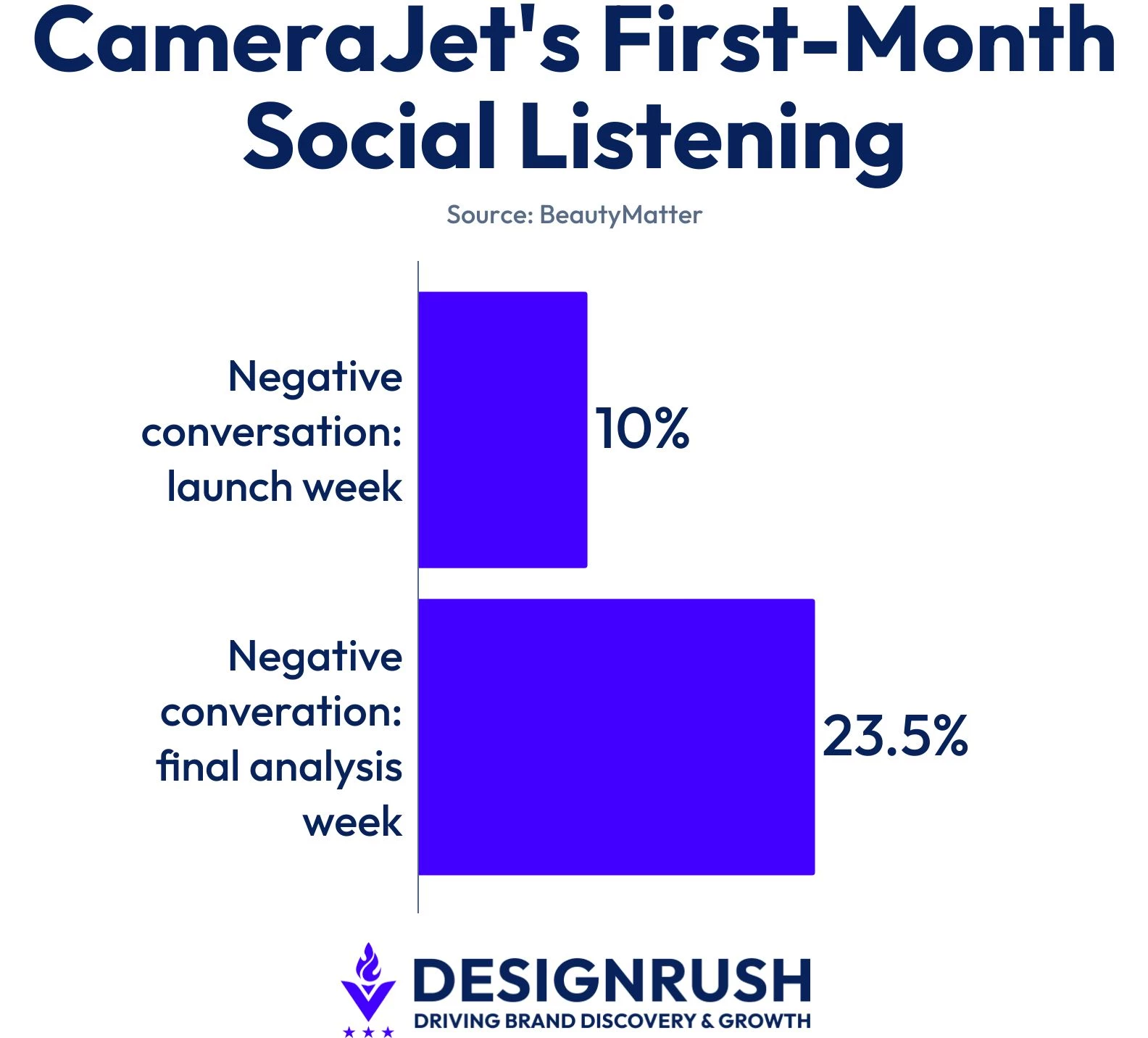
BeautyMatter's analysis found that negative CameraJet conversations rose from 10% of social posts during launch week to 23.5% in its final week of monitoring.
Negative conversation first exceeded positive conversation on September 11, the same day that Dyson suspended CameraJet sales in France.
The timing matters because the product's $499 price makes reliability part of the value proposition.
Early buyers were also among Dyson's most engaged brand customers.
A premium launch depends on these buyers becoming advocates, so a defect that reaches them first costs far more than the units involved.
Dyson's CameraJet failure shows how product ambition can create lessons in testing, communication, and customer trust.
- Premium products leave less room for reliability failures. Validate the highest-risk hardware before scaling distribution to protect customer confidence.
- Silence gives customers space to define a failure. Explain what happened and what buyers can expect to reduce speculation and frustration.
- Complexity raises the cost of a single defect. Test every connected component against real use conditions to protect the full product experience.
CameraJet shows how quickly a hardware defect can become a brand problem when consumers pay a premium price for engineering they can't see.
Our Take: Can Dyson Repair CameraJet's Reputation?
The replacement units have to work, and Dyson has to show buyers how it knows they will.
We think that Dyson can recover here, but only if it tells buyers which batches were affected and how the new units were tested before CameraJet goes back on sale.
Apple faced the same credibility test with its butterfly keyboards and took seven years to settle a class action lawsuit for $50 million.
It still named every affected model and repaired them free for four years, while Dyson has yet to identify the affected batch.
Naming the bad batch would cost Dyson far less than another month of customers filming their toothbrushes dying.
This same trust question is about to hit Meta, which is selling AI hardware that buyers haven't held yet.
Its $1,299 VR Glasses and Muse Charm keychain are still months away, and Dyson just showed what happens when the hardware underneath an AI promise fails.
Product failures can expose weaknesses in engineering, usability, and customer experience long after launch.
Explore these top product design companies to find teams that can test complex products before they reach consumers.