
Mozilla wants former Firefox users to return for a more private web, but the timing exposes a business contradiction.
The browser's independence pitch comes as Mozilla fights to protect a major revenue source.
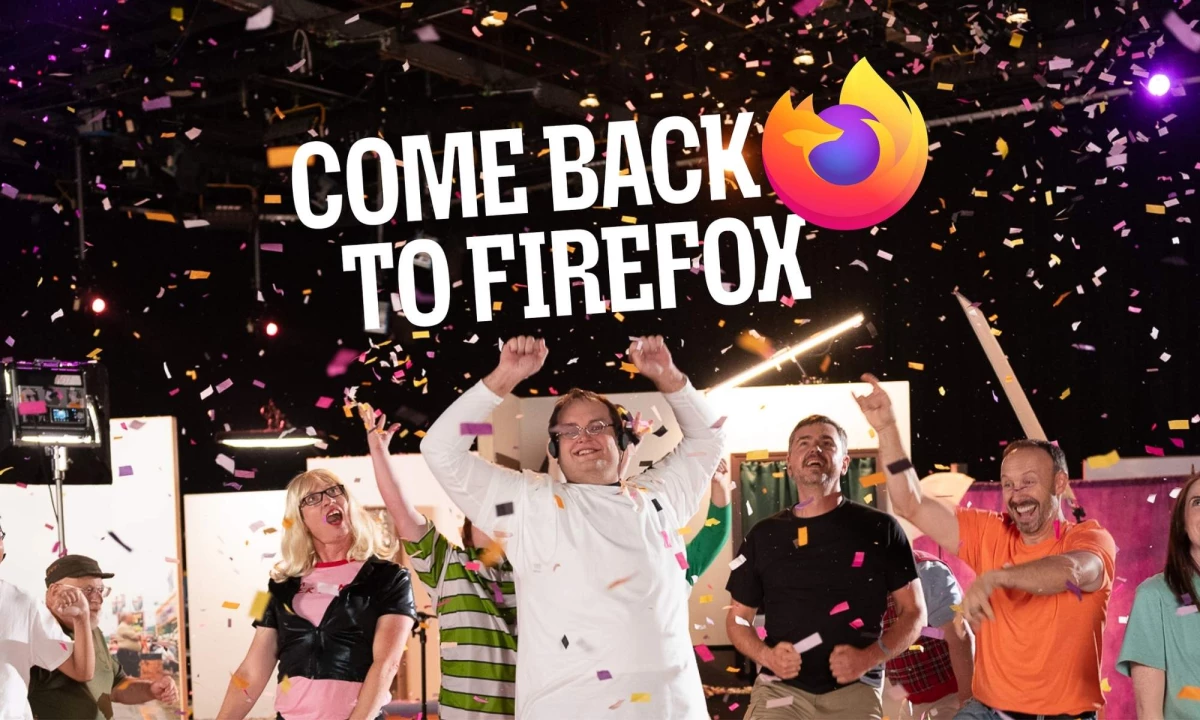
The October 25 launch of "Come Back to Firefox" reunites early internet personalities to criticize corporate tracking and unwanted AI.
Yet Mozilla warned that restrictions on Google's default-search payments could threaten Firefox's survival.
In a May 2025 testimony reported by Courthouse News, Mozilla CFO Eric Muhlheim said that Google accounted for about 85% of Mozilla's revenue.
He warned that losing the payments could lead to "significant cuts across the company" and put Firefox out of business.
Judge Amit Mehta's September 2025 remedies order still lets Google pay for default search placement.
Federal and state enforcers have since asked the D.C. Circuit to reverse this part of the order.
Mozilla weighed in with an August 2026 friend-of-the-court brief.
It warned that a payment ban could force it to exit the browser and browser-engine markets.
Mozilla CMO John Solomon says that former users will find a browser with stronger privacy and more control, including over AI.
The campaign must now make these benefits compelling while its financial independence remains under scrutiny.
Mozilla's 85% Google Dependence Complicates Its Pitch
Mozilla's audited 2024 financial statements attribute about 86% of its customer revenue to a single customer.
The audit leaves the customer unnamed, but Muhlheim's testimony identifies Google as the source of roughly 85% of Mozilla's revenue.
The audit's single-customer share rose from 85% in 2023, so Mozilla's reliance on one partner grew over the year.
Google pays Mozilla to keep its search engine as the default in Firefox.
The arrangement gives Google access to Firefox users while funding Mozilla's browser and other work.
Enforcers argue that these default-search payments help Google protect its search monopoly.
Mozilla has warned that a ban could sink Firefox, so it ends up defending the same payments that enforcers say keep Google dominant.
The campaign sells Firefox as the browser that stayed independent as Big Tech took over, yet Google funds most of its work.
Because Firefox defaults to Google Search, every former user who the campaign wins back also sends more ad revenue to Google.
Independence makes for a strong brand positioning, but it holds up only when the funding behind it can survive scrutiny.
Firefox Recruits Viral Meme Icons for Its Comeback
"Come Back to Firefox" uses internet nostalgia to give former users a reason to reconsider the browser.
The campaign reunites Numa Numa Guy, Bad Luck Brian, Overly Attached Girlfriend, Annoying Orange, and other viral personalities.
Created by independent agency We Believers, the campaign uses two 30-second commercials airing on NBC.
Directing collective Sunny Sixteen and production company nobodys helped recreate the original personalities' looks, performances, and sets.
Each appearance connects a familiar internet character with a current online frustration.
Overly Attached Girlfriend represents invasive tracking, while Dancing Matt's global travels prompt a critique of corporate surveillance.
Meanwhile, Annoying Orange takes aim at unwanted AI features. The campaign also points to Firefox's current features, including:
- Built-in tracking protection
- A free built-in VPN
- AI controls that let users decide whether to use AI features
Mozilla plans to expand the campaign to Germany, France, and the UK.
The international rollout gives the brand a chance to reconnect with former users across several major markets.
"We wanted an idea that truly belongs to Firefox," Gustavo Lauria, We Believers' founder and chief creative officer, said in a statement.
"A challenger browser that helped shape the internet's golden years and stayed independent as Big Tech took over."
The creative brand strategy gives Firefox a recognizable cultural identity and links its history to present-day privacy concerns.
Its commercial value will depend on whether the nostalgia persuades former users to download the browser and keep using it.
Browser Choice Remains a Consumer Problem
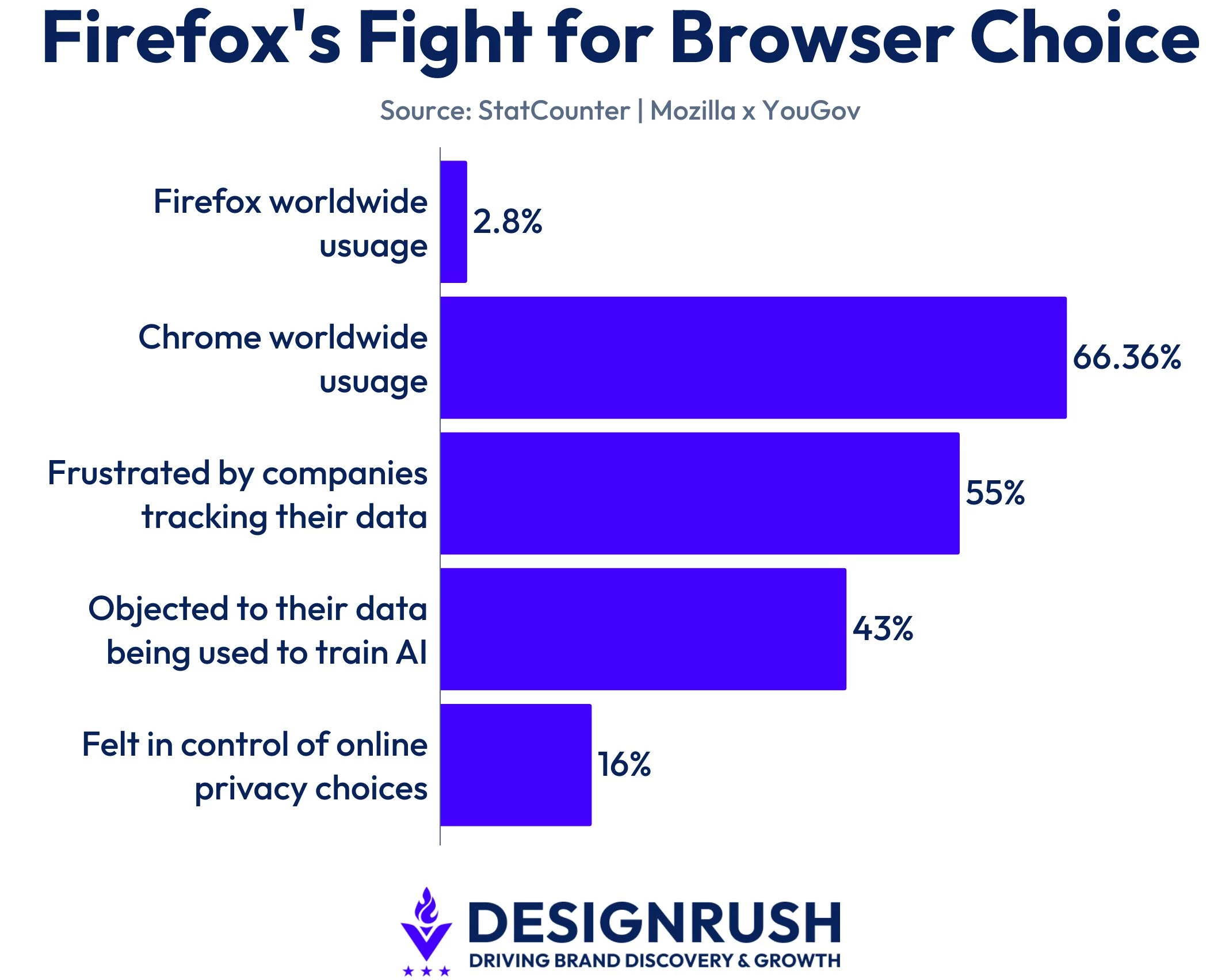
StatCounter’s September 2026 data puts Firefox at 2.8% of worldwide browser usage, compared with Chrome at 66.36%.
The gap shows how difficult it is for an independent browser to win routine use.
Consumer research points to a potential opening.
A Mozilla and YouGov survey of 2,610 U.S. adults found that 55% were frustrated by companies tracking their data without asking.
Another 43% objected to their data being used to train AI without permission, and only 15% felt in control of their online privacy choices.
These findings suggest that privacy concerns are widespread, while confidence in personal control remains low.
Three insights follow from the data.
- Privacy concerns need a practical solution. Browser companies should demonstrate useful protections to encourage trial.
- Defaults influence consumer behavior. Competitors should simplify switching to reduce adoption friction.
- Independence needs a distinct benefit. Brands should connect privacy and AI controls to everyday needs to give former users a reason to return.
Firefox's opportunity depends on turning privacy concerns into a compelling reason to change a familiar habit.
Our Take: Can Mozilla Sell Privacy While Running Ad Tech?
Mozilla acquired Anonym in June 2024 to help advertisers measure campaign results using encrypted data and aggregated insights.
We'd say Mozilla can sell privacy while running ad tech, as long as Firefox users can see a clean line between the two businesses.
Mozilla says that Anonym operates separately from Firefox and keeps user-level data hidden from advertisers, publishers, and Anonym itself.
Anonym's April 2026 Reddit partnership lets advertisers measure campaign results without handing their first-party data to Reddit.
A campaign mocking corporate tracking invites scrutiny from users who will never read Anonym's fine print.
Muhlheim himself told the court in 2025 that Mozilla's privacy focus complicates building a bigger ad business.
Mozilla's privacy credentials will depend on clear practices and evidence, especially if the Google appeal pushes it toward more ad revenue.
The browser's latest comeback campaign follows its earlier partnership with Wrexham AFC.
It used soccer’s "Spygate" scandal to promote Firefox’s privacy features.
Looking for a partner that can clarify your positioning, build consumer trust, or manage a complex reputation?
Explore these top brand positioning agencies on DesignRush.