
Apple is entering touchscreen laptops more than a decade after Microsoft made touch central to its PC strategy with Windows 8 and Surface in 2012.
Now Microsoft is helping its rival launch the feature while paying MacBook Pro owners up to $1,000 to switch to its Surface Laptop Ultra.
Apple announced the new 14- and 16-inch MacBook Pro models on Oct. 28.
The models add touchscreen controls, tandem OLED displays, and M5 Pro and M5 Max chips.
"The new MacBook Pro with PROLED XDR Display is a monumental step forward for the Mac," Apple Chief Hardware Officer Johny Srouji said in a company announcement.
"It pairs state-of-the-art tandem OLED technology with advanced algorithms in our display engine to deliver the kind of visual fidelity pros have been dreaming of."
The company sells the change as "deep integration between Apple silicon, hardware, and software."
Microsoft Word, Excel, PowerPoint, and Outlook are among the apps Apple highlighted for Touch support.
The timing creates an unusual competitive overlap.
Microsoft can keep its productivity software relevant on Apple hardware while using Surface promotions to compete for MacBook customers.
This marketing strategy puts Microsoft in two commercial positions at once.
Its software supports Apple's new interface, while its hardware business has a direct incentive to win over the same customers.
Microsoft Supports Apple While Selling Rival Surface
Apple's new MacBook Pro adds touch input to the Mac for the first time.
Users can pinch to zoom, drag content across the screen, and interact directly with creative tools.
Apple named Microsoft's four major productivity apps among the software expected to support Touch.
The list also includes Notion, Canva, Zoom, AdobeLightroom, DaVinciResolve, and Blender.
Microsoft is also promoting its Surface Laptop Ultra, which starts at $2,599.99.
Its trade-in promotion pays up to $1,000 in cash back on top of the trade-in value of an eligible MacBook Pro.
Microsoft launched the offer on Oct. 7, three weeks before Apple's announcement.
The promotion runs through Nov. 23, overlapping the touchscreen MacBook Pro's Nov. 6 release.
The bonus amount varies by Surface model and the MacBook's trade-in value.
Apple's new MacBook Pro starts at $2,899 for the 14-inch M5 Pro model.
The price puts it above the Surface Laptop Ultra's starting price, giving Microsoft a direct comparison to use in its sales pitch.
Apple also launched a non-touch 14-inch MacBook Pro with M6 on Oct. 27 at $1,999, which undercuts the Surface Laptop Ultra.
This overlap gives Microsoft a commercial incentive to support software users through whatever device they use.
It can preserve Office's place in professional workflows while marketing Surface as an alternative to Apple's premium laptops.
Microsoft and Apple Have Done This Before
In 2016, Microsoft announced Office support for the MacBook Pro's Touch Bar, a narrow touchscreen strip above the keyboard.
Microsoft launched a MacBook trade-in offer the same day as Apple's Touch Bar event, giving owners up to $650 toward a Surface Pro 4 or Surface Book.
Microsoft later extended the offer to Nov. 23, 2016, the same end date as this year's Surface Laptop Ultra promotion.
Word, Excel, and PowerPoint gained public Touch Bar support in February 2017, while Outlook support followed in March.
This four-month delay in Microsoft's Office product rollout shows why compatibility announcements need a delivery date.
Apple's new MacBook Pro could open the same gap, since Apple only promises Microsoft's Touch apps "later this year" in its fine print.
This historical parallel suggests that Microsoft can treat its partnership with Apple as a sales window for Surface while Office support catches up.
Apple's Late Entries Face a Product Test
Apple has a history of entering established categories after rivals have spent years testing demand and working through early design problems.
Its touchscreen MacBook Pro and foldable iPhone Duo offer two current examples.
The touchscreen laptop category is already established.
IDC data cited by the LA Times put 2026 foldable-phone shipments at a projected 22.9 million units, up 13% year over year.
Apple's iPhone Duo arrived at $1,999, after Samsung and other competitors had sold foldable phones for years.
The Duo arrived with strong preorder demand, with estimated delivery dates extending to late January.
However, within days of its Oct. 23 launch, it faced reports of cracked inner screens.
Apple acknowledged the issue on Oct. 26 and offered replacements, reviving comparisons with past hardware controversies.
Co-founder Steve Jobs argued in 2010 that touchscreens don't belong on laptops, so the new MacBook Pro faces a different test.
It must show that touch interaction adds enough value to professional workflows to justify its premium pricing.
It must also give buyers a reason to adopt the feature and upgrade their current devices.
Apple's late entry into hardware categories offers three lessons for brands:
- Validate product reliability before scaling demand. Test new designs under everyday conditions to reduce costly repairs and protect customer trust.
- Prove the feature earns its price. Show how touch controls improve professional workflows to justify premium pricing and encourage adoption.
- Turn early interest into lasting loyalty. Track customer satisfaction, defect rates, and repeat purchases to determine if launch demand translates into sustained sales.
Apple's success in both categories will depend on whether it can remedy Duo's "CrackGate" quickly and deliver lasting value through touch.
Our Take: What Can Apple Learn from Entering Late?
Apple's late entry into a category draws fresh attention, but its version still has to earn a place in customers' daily routines.
The lesson we'd take from Duo is that late entrants get less patience when early products come with expensive trade-offs.
Microsoft has sold touch-enabled laptops for years, so Apple must show why its implementation merits a premium price.
Microsoft's apps can help Apple sell the touchscreen Mac, while its Surface business gives buyers an alternative if Apple's execution falls short.
A strong debut can attract early adopters, but lasting demand depends on a user experience that justifies the cost.
If Office's Touch support arrives in stages again, Microsoft gets to pitch Surface against a Mac whose biggest new feature is still half-finished.
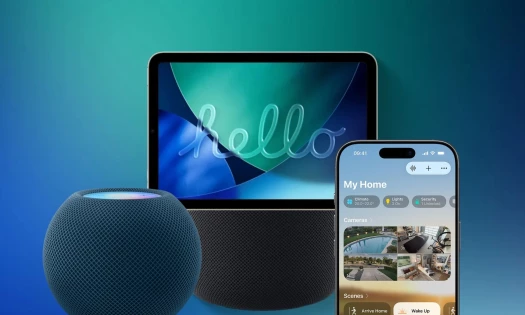
Apple's expansion into the smart home category raises similar questions about entering new markets and competing with established companies.
Brands competing in established hardware categories need a clear product advantage and a credible launch strategy.
Explore these top product marketing agencies in the DesignRush directory.