
Duolingo may have found the most awkwardly timed joke in Apple's launch history.
Six weeks before reports of cracked iPhone Duo screens emerged, the language-learning brand joked, "let's hope i don't get cracked."
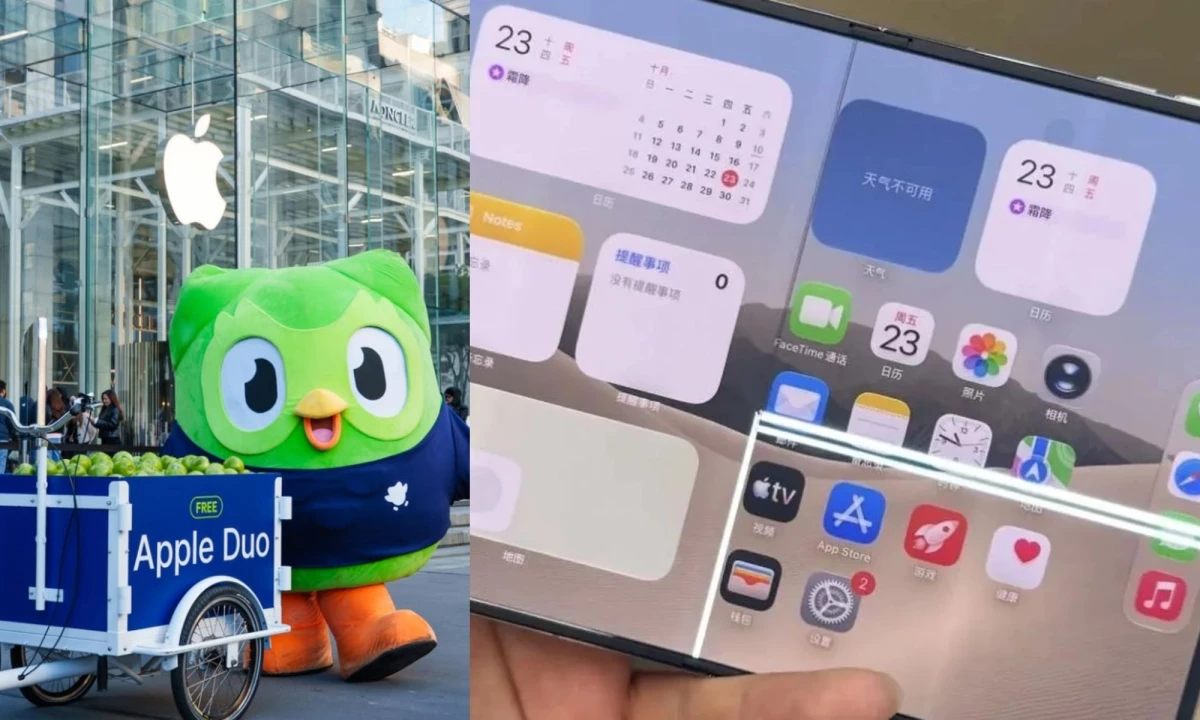
When Apple's first foldable went on sale last week, Duolingo returned with its owl and a free-apple stunt outside Apple Fifth Avenue in New York.
The timing gave Duolingo's reactive marketing an unexpected connection to Apple's hardware problems.
On October 23, MacRumors flagged what it called "CrackGate," reporting that an Australian owner's screen cracked after fewer than 20 openings.
The owner said he had the phone for about six hours, while other owners shared similar reports.
Apple's iPhone Duo debut has since faced questions about screen durability and repair costs.
iFixit's teardown identified possible stress points around the hinge, though the precise cause of the failures remains unconfirmed.
Until Apple names a cause and provides a solution, rivals and pranksters get to write the story.
Duolingo's September Joke Gets a Second Life
Duolingo's September Instagram post featured its green owl mascot stretched across an image of Apple's foldable phone.
The caption read, "let's hope i don't get cracked," making the phone's folding mechanism a joke about the brand's mascot.
The post appeared shortly after Apple's September reveal and drew over 280K likes on Instagram.
Launch-day posters revisited the same concept, with Duo appearing on the iPhone Duo's screen under the tagline "This is Duo."
The execution linked the product's name with the mascot while keeping the joke recognizable to people who saw the earlier post.
The screen complaints, now dubbed "CrackGate," added an unexpected layer to the gag.
Duolingo inadvertently predicted a hardware problem, although there is no evidence that the brand anticipated the failures.
Apple must now answer questions about a premium device whose early reliability is already under scrutiny.
Free Apples Put Duolingo in Apple's Launch Queue
Duolingo took its joke offline on launch day, setting up an apple cart outside Apple Fifth Avenue in New York.
The brand handed out green apples bearing stickers of Duo designed to resemble an apple.
Each sticker included the words "Do your lesson" and a QR code that appeared to direct people to Duolingo.
The stunt linked a familiar fruit pun to a direct path into the app as Duolingo posted photos with the caption, "I heard they're selling me today?"
It played on Apple's product launch while Duolingo's mascot continued to ride the wave of having a phone named after it.
The free apples gave Duolingo a physical presence near queues already filled with people interested in Apple.
QR codes also offered a direct route from the stunt to a lesson, connecting brand awareness with a possible app action.
The reactive campaign shows how a brand can use a competitor's launch to attract attention.
Apple's Foldable Hype Meets a $999 Repair Price
Apple's September TikTok campaign drew more than 17 million views and 12,000 comments on day one, according to audience analytics firm Siftsy.
It also found that 47.2% of these comments were positive, though price already drove 8% of the conversation.
This price concern now has a second number attached, since Apple charges $999 to replace an out-of-warranty inner screen on the $1,999 phone.
A repair bill worth half the phone makes reliability a core part of the iPhone Duo's value proposition.
The cracked screen reports may still be isolated, but visible damage gives first-time foldable buyers a reason to wait for answers.
The data points to three lessons for brands competing around a high-profile product launch.
- Attention creates an opening for competitors. Brands should monitor launch conversations and respond with relevant creative to earn attention while consumers compare products.
- Early product problems can change purchase intent. Companies should address credible reliability concerns quickly to protect consumer confidence and reduce uncertainty.
- A direct response can connect attention with action. Marketers should pair timely creative with a measurable next step to convert public interest.
When launch attention meets consumer doubt, competitors can gain visibility.
But sustained gains still depend on giving customers a convincing reason to choose them.
Our Take: Can Rivals Win When a Big Brand Stumbles Into a New Category?
A weak launch can give competitors a valuable opening, especially when it comes with high expectations and little room for early mistakes.
We'd say rivals can win buyers off Apple's rocky debut, though only until the company ships a fix.
Apple can use its scale, distribution, and brand power to pull first-time buyers into foldables, where Samsung and Google have years of experience.
"Crackgate" hands these rivals an easy durability pitch, the same opening that Duolingo used to grab attention at launch.
Viral attention can fade fast, especially among loyal buyers already locked into Apple's software and services.
A good explanation and a quick fix would give Apple the chance to build credibility with the buyers who waited.
The iPhone Duo's launch also comes as Apple expands into the smart-home category, another market where it has to win buyers from established rivals.
Will John Ternus' first major launch as Apple CEO go down as a stumble that Apple fixes fast, or will it be the start of a pattern?
Is your brand preparing to enter a new category or compete with an established leader?
Explore these top digital marketing agencies to find partners that can help you build awareness and respond to changing consumer sentiment.