-details-webp.webp)

UX Compliance: Key Findings
- The UK’s new Digital Markets Act bans dark patterns, hidden fees, and fake reviews, with penalties of up to 10% of global turnover.
- Mapping the full user journey helps teams catch compliance risks early, from misleading CTAs to hidden cancellation flows.
- Agencies like Infinum embed transparency into pricing, consent, and review systems to reduce churn and build user trust.
A sweeping new UK law is forcing product teams to rethink how they design, communicate, and measure digital experiences, or risk major penalties.
In April 2025, the UK officially banned fake reviews and hidden fees under the Digital Markets, Competition and Consumers Act, marking a defining moment in digital regulation and user experience design.
This legislative shift recognizes what UX practitioners have argued for years: manipulative design patterns erode trust, distort performance metrics, and damage long-term growth.
Under the new law, companies must:
- Take “reasonable and proportionate” steps to ensure customer reviews are genuine
- Display the full price upfront, including all mandatory fees
- Eliminate deceptive design choices that obscure cancellation paths or mislead users
Penalties of up to 10% of global turnover give new urgency to aligning UX with transparency, integrity, and compliance.
For many product teams — including those at agencies like Infinum — this shift validates years of work designing experiences grounded in clarity, consent, and user empowerment.
What was once a design philosophy is now a legal standard, raising the stakes for every digital product.
Editor's Note: This is a sponsored article created in partnership with Infinum.
And while this law applies to UK markets, its impact won’t stop at the border.
As with GDPR before it, the Digital Markets, Competition and Consumers Act could set a global precedent — one that influences future consumer protection laws in the U.S. and beyond.
For American companies, especially those operating internationally or working with UK customers, this is both a compliance wake-up call and a strategic opportunity.
Here are three concrete ways UX teams can align with this shift and build better products in the process.
- Start with journey mapping
- Bake in transparency at every level
- Shift KPIs toward long-term trust
Tactic #1: Map the Journey to Spot Risk Early
With deceptive UX designs under legal scrutiny, teams must examine every interaction where users make decisions, not just the points that drive conversion.
Mapping the entire experience helps uncover where trust may break down or where compliance risk is quietly accumulating.
Look out for:
- Fees or charges that only appear at checkout
- Buttons that mislead or obscure true outcomes
- Friction-heavy cancellation or opt-out flows
- Discrepancies between marketing promises and product realities
“Design choices are no longer just usability decisions — they’re compliance decisions. If your cancel button is hard to find or your pricing lacks clarity, you’re not just frustrating users, you’re exposing your company to legal and reputational risk,” said Nina Jelić, lead product strategist at Infinum.
Journey mapping allows teams to catch these risks early.
When used strategically, it becomes a powerful tool for designing with integrity, aligning intent with experience, and preventing short-term tactics from turning into long-term liabilities.
Tactic #2: Design for Built-In Transparency
Users don’t judge transparency based on brand values. They judge it based on how clearly, consistently, and honestly a product communicates throughout their experience.
That means transparency must be designed into the system itself.
As such, UX teams must take the time to audit these key areas:
- Pricing and fees: All mandatory costs should be disclosed upfront, not revealed at checkout.
- Permissions and data use: Consent dialogs should explain what’s being collected, why, and how it’s used without burying key information in legalese.
- Subscription flows: Free trials, auto-renewals, and cancellation terms should be clearly stated and easy to manage.
- Review systems: Customers should understand how reviews are sourced, moderated, and verified.
Design systems can reinforce these principles by standardizing ethical defaults, such as neutral opt-in copy, honest CTAs, and clearly structured forms.
Teams that prioritize this kind of embedded transparency don’t just stay compliant.
They build stronger user relationships and reduce downstream issues like chargebacks, cancellations, and negative reviews.
Tactic #3: Measure Trust, Not Just Traffic
Traditional UX metrics like clicks, conversions, or time on site can mask deeper issues when they’re propped up by manipulative design.
A deceptive free trial form may spike sign-ups, but it often leads to higher refund requests and lower retention.
Hidden fees might boost basket size, but they erode brand loyalty and increase churn.
As ethical UX becomes a compliance issue, success metrics need to evolve accordingly.
Here’s where to shift focus:
- From opt-ins to meaningful engagement: Track how many users continue engaging after signing up — not just how many entered their email.
- From short-term revenue to lifetime value (LTV): A transparent experience builds loyalty, which directly affects LTV and customer advocacy.
- From conversion rate to completion with clarity: It’s not enough that users reach a goal; it matters how they got there, and whether they understood the terms.
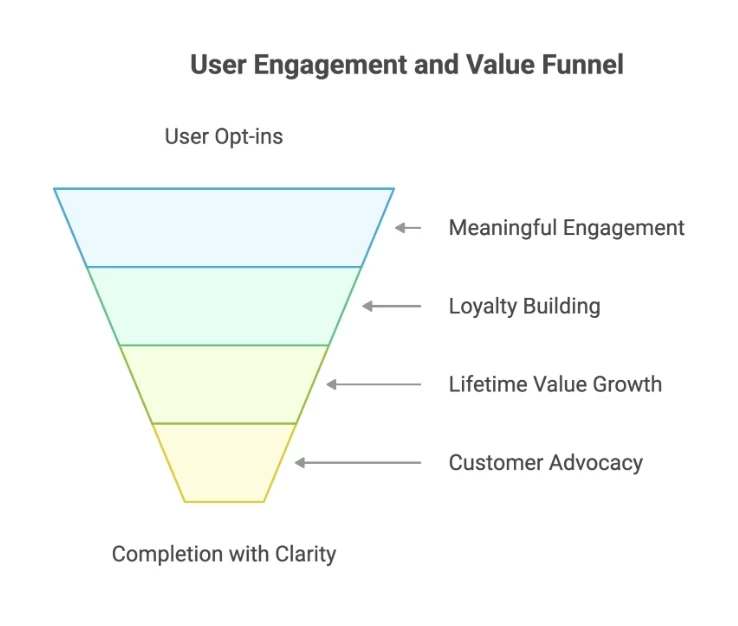
Ethical UX is a better business model. Measuring what matters ensures that growth is both sustainable and aligned with user trust.
“We’ve reached the point where metrics like ‘conversion rate’ or ‘time on site’ are incomplete. If a user clicks out of confusion or frustration, that’s not success. Ethical UX demands new KPIs — like user clarity and confidence — that reflect trust, not just traffic,” said Luka Reicher, design team lead at Infinum.
A Defining Shift for UX
For U.S. companies, this is more than a news item overseas. As with GDPR, international laws often set the tone for regulatory conversations in Washington.
Federal agencies and state lawmakers have already expressed concern over deceptive design practices, and this UK law could accelerate similar efforts stateside.
That makes this a critical moment: not just to comply, but to lead.
Product teams that align with these standards early will stand out where users are more discerning, privacy-conscious, and loyalty-driven than ever.
This is a product strategy shift, which rewards clarity, integrity, and respect for the user.
Teams that have long designed with these principles in mind, including those at Infinum, are already operating at this higher standard.
As regulations evolve, their approach offers a blueprint for others to follow.
The brands that succeed in this new era won’t be the ones that hide the fine print. They’ll be the ones that lead with it.