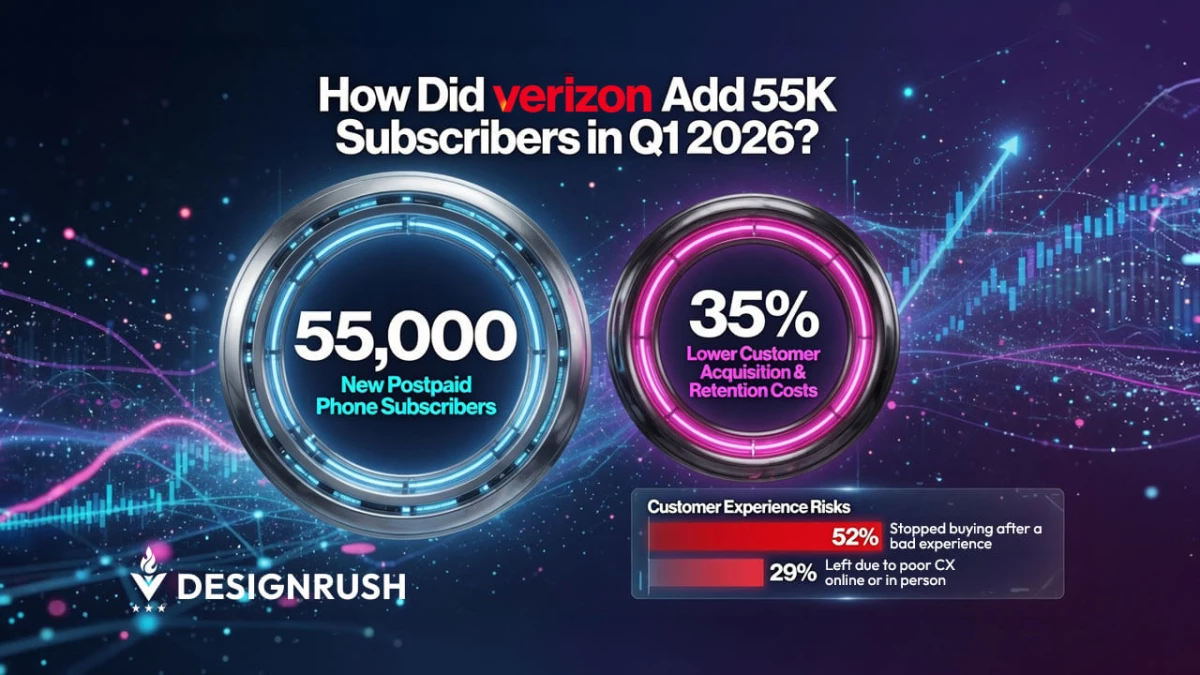

Verizon added 55,000 postpaid phone subscribers in Q1 2026, its first positive first-quarter result in 13 years, CX Dive reported.
The company’s revenue increased 2.9% year over year while its customer acquisition and retention costs dropped 35% between Q4 2025 and March 2026.
Verizon credited these results to lower churn, fewer service handoffs, faster response times, and less friction across the customer journey.
Funmi Mide-Ajala, Director of Customer Support and Digital Operations at Hugo Inc., ties this performance to how support work is structured and executed.
“When we step into a client’s support operation, we look first for the friction customers have been forced to absorb; repeated explanations, slow handoffs, unclear ownership, and delayed resolution.
"Removing these points is where retention and cost improvements usually start; often without the pricing or marketing changes most teams first reach for."
How Verizon Reduced Churn Through Customer Experience Improvements
Verizon’s Q1 2026 results show less reliance on acquisition-driven growth and more focus on customer experience improvements.
The results show up in how service moves between internal teams, especially during support interactions that cross multiple functions.
Fewer handoffs between service teams reduce repeated explanations and limit how often customers restart issues during resolution.
Fifty-two percent of consumers stopped using or buying from a brand after a bad experience, and another 29% did so because of poor customer experience online or in person, according to PwC.
Pricing and competition take some of the blame, but a large share of that loss comes from friction inside service interactions; the steps customers are forced to retake just to resolve one issue.
Fewer handoffs and faster response times cut the cross-channel delays, and the back-and-forth between teams that wear customers down before an issue is even resolved.
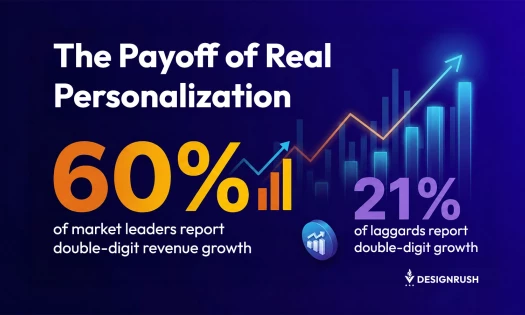
Repeat purchase is also sensitive to execution, as poor personalization reduces the likelihood of this happening by 44%, per Gartner.
For Hugo, retention starts further upstream; in how the support operation is built in the first place.
"Most support operations measure success by volume, speed, and resolution rates.”
"While those numbers matter, they don’t tell you whether the customer still trusts the business enough to come back,” says Mide-Ajala.
“We’ve seen operations hit every dashboard target while quietly losing customers because they focus on closing tickets and not fixing the parts of the journey that erode trust.”
Where Customer Journeys Break Down and Why It Affects Retention
Customer journeys break down at transition points.
Moments when customers switch channels, move between teams, or escalate an issue. Each handover is a chance for context to get lost or for the customer to repeat themselves.
“The handoff is where most journeys break,” Mide-Ajala says.
“When a customer moves from team to team without context following them, they start doing the work the support system should have handled.
"That creates churn risk because no one owns the full experience, and every transition gives the customer another reason to lose trust.”
Another common breakdown occurs in self-service systems.
Companies invest in chatbots and portals to reduce service volume.
When those systems fail, or the escalation to human support breaks down, the customer's experience drops fast. Delays, missing context, and generic responses pile up, and the customer feels every one of them.
It shows up most in onboarding, billing, cancellations, renewals, and service recovery, where customers judge whether the relationship holds up under pressure.
Seventy percent of executives say customer expectations are moving faster than their organizations can keep up with, according to PwC.
Nearly nine in 10 also report implementing AI in customer service or marketing with only about half tracking whether those systems reduce costs or improve support outcomes, leaving adoption ahead of what can clearly be shown in results.
But human interaction remains important in customer experience, with 86% of consumers saying it is moderately or very important in their brand experience, per the same PwC report.
That gap leaves leaders trying to strike a balance between how much of the customer journey to automate and how much to keep human.
"The framing of ‘balance’ is part of the problem,” Mide-Ajala says.
“It implies AI, self-service, and human support are competing for the same space, when the better question should be: for each point in the customer journey, what does the customer lose if a person isn’t involved?”
Sometimes the answer is nothing, she says.
"Checking an order status, resetting a password, updating billing information; automate those completely, and customers will prefer it. But the moment intent gets unclear or the issue touches the relationship, that's where a person changes the outcome."
AI handles routing, account updates, knowledge retrieval, and repetitive requests well.
The complex cases involving unclear intent or affecting the customer’s relationship with the brand are where earlier human involvement reduces repeat contacts and escalation.
Customer Experience Metrics That Drive Retention
Most enterprise support teams still rely on operational metrics like ticket volume, handle time, and closure rates. Those numbers track activity inside the system.
They say nothing about whether the customer stayed.
More direct indicators of retention impact include:
- Customer effort score after interaction, measuring how much work the customer needed to resolve an issue.
- Repeat contact rate by issue type, showing whether problems are resolved or re-opened.
- Post-interaction customer behavior over 30, 60, and 90 days, tracking retention, expansion, or churn.
“We watch effort score more closely than resolution rate, because it answers a different question; not 'was your issue resolved?' but 'how much work did you have to do to get there?'” Mide-Ajala says.
“When AI takes the easy contacts and makes the complex ones harder, effort score catches it before churn ever shows up in the numbers."
Retention depends on whether support systems consistently reduce friction, preserve context across interactions, and produce outcomes tied to customer behavior.
Align CX operations with those metrics and service quality shows up in revenue performance.
Without that alignment, teams optimize internal efficiency while missing signals that customers are preparing to leave.
Verizon's Q1 results show what happens when those metrics align.
The question for every other enterprise leader now is whether their support operation delivers that outcome, or just hits internal targets while customers quietly head for the door.