
Brand guidelines usually explain how a brand should look. Product teams need to know how it should behave.
That gap is where guidelines break down. When no one has defined how the brand shows up in errors, loading states, disabled buttons, and empty screens, product teams make those calls while they ship.
Gartner's collaboration-drag data puts a business number on the problem.
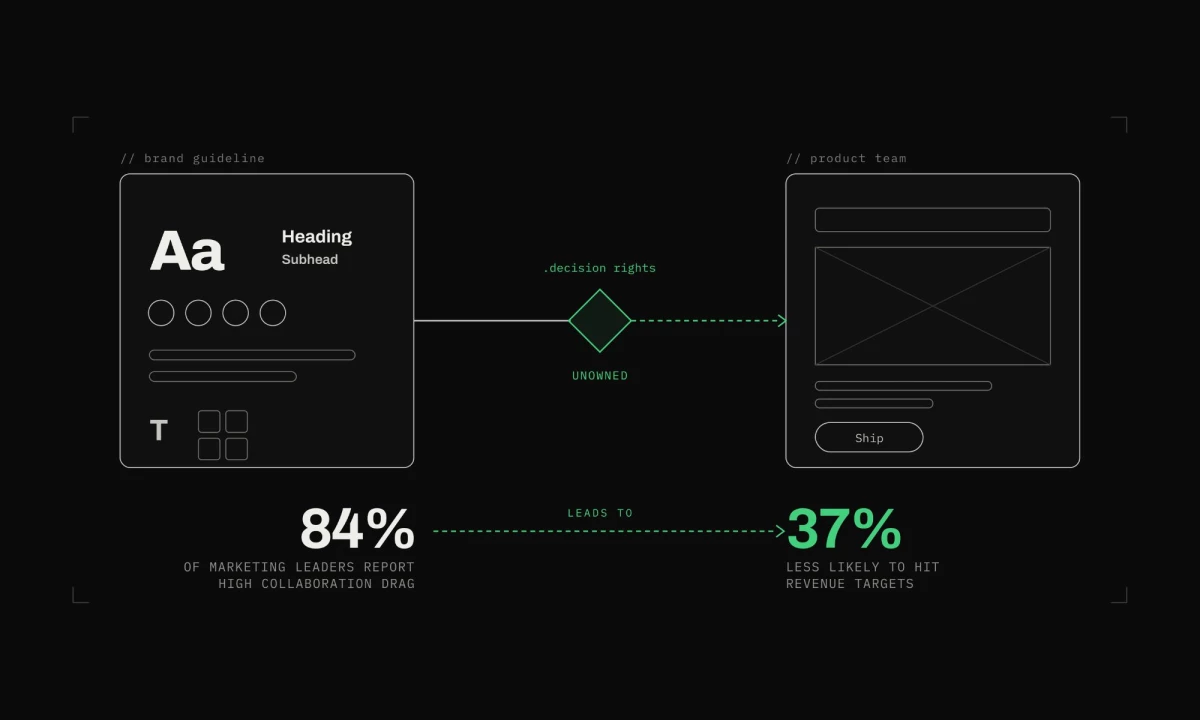
Eighty-four percent of marketing leaders and their teams report high collaboration drag across functions, drawn from a survey of 329 marketing leaders and 78 leaders from other functions.
Three drivers cause it: too many meetings, too much feedback from colleagues, and unclear decision-making authority. The third is exactly where brand and product collide.
When a guideline names no owner for the disputes it can't anticipate, that collision repeats on every release.
And it costs money. Organizations with high collaboration drag are 37% less likely to hit their revenue and profit targets.
That turns a stalled guideline from a design complaint into a number a CFO tracks.
Guidelines Weren't Built for Sprints
Product teams work in sprints and releases, iterating constantly. A guideline built around logo usage, color values, and type rules doesn't fit that rhythm.
So teams ship whatever's fastest. And fastest defaults to generic once no one has made the harder call in advance. The gap opens well before the deadline.
It compounds across releases. Each sprint that ships without a behavioral decision sets a small precedent the next sprint inherits, right or wrong.
Three or four releases in, the product has a de facto style guide no one wrote and no one can trace to a decision.
Where Brand Decisions Need to Happen
One way to close that gap is to move brand decisions earlier, into the product design itself, before a guideline gets written.
The ANML Functional Branding Method™ works this way. It embeds brand decisions inside product delivery instead of layering them on after launch.
In practice, that means defining how the brand behaves before turning it into a finished visual system.
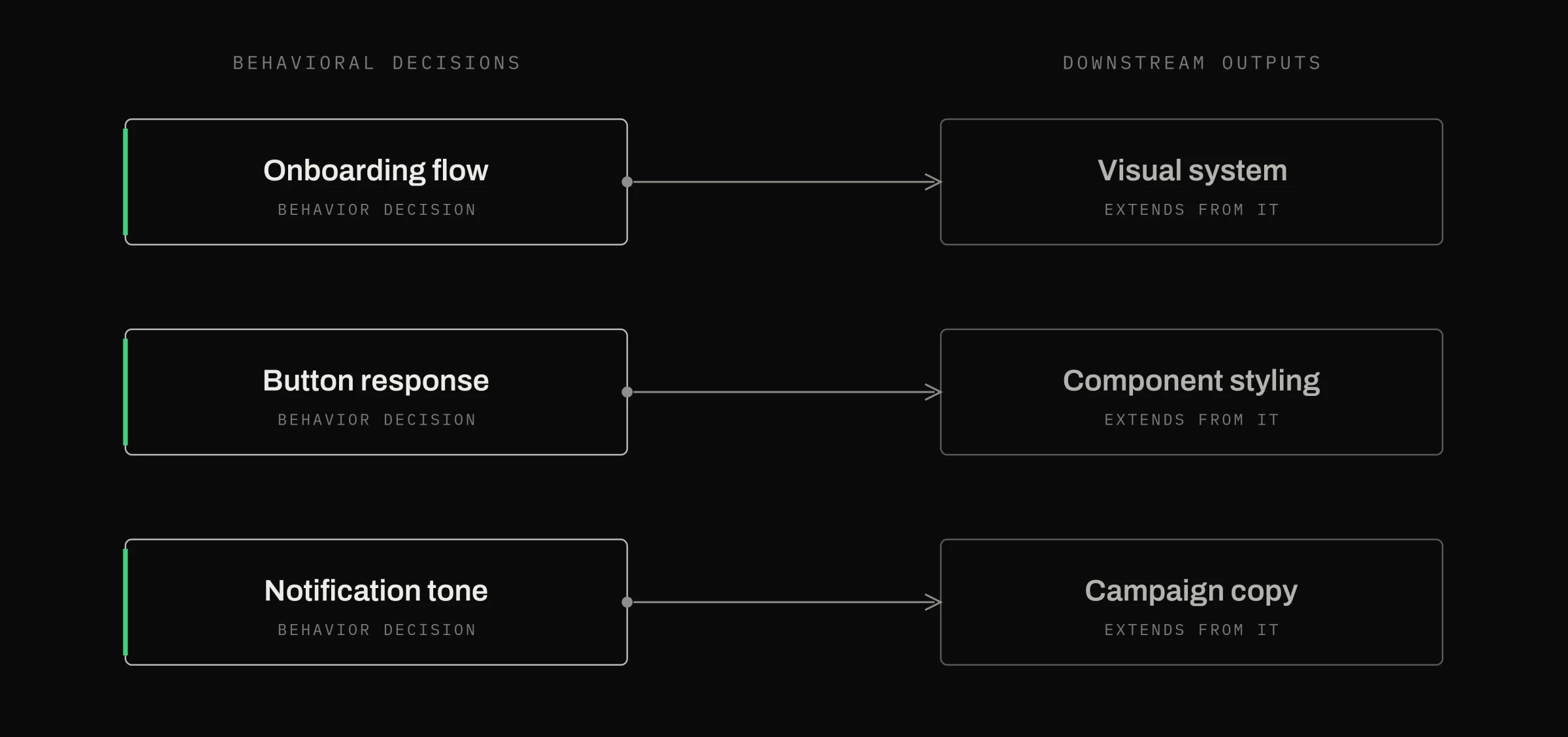
The onboarding flow gets defined before the visual system. How a button responds comes before component styling. The tone of an in-product notification comes before campaign copy.
Visual identity extends outward from those decisions instead of being layered on after the fact. A hex code tells a designer what the primary color is.
It doesn't tell an engineer what that color should mean when a button is disabled or when a system fails.
That's a product decision, and engineering makes it by default when brand hasn't made it first.
The Cost Hiding in Plain Sight
Most companies still file guideline adoption under design or productivity.
Gartner's data puts it next to missed revenue and profit targets, in the same category as a stalled launch or a slow sales cycle.
A guideline no one consults doesn't fail loudly. The cost still shows up, buried in a missed revenue number no one traces back to the source.
The business experiences it as slower launches, extra review cycles, and work that has to be redone.
No line item ever reads "unclear ownership." It just says "missed target," and that's all next quarter's plan has to work with.
What a Behavioral Handoff Includes
Without a documented handoff, an edge case the guideline never covered comes up, and a designer or product manager improvises an answer on the spot. The next release inherits it.
Before a product team writes a line of code, brand and product should agree on three things:
- Error tone. What the product says when something goes wrong, not just when everything works.
- Wait states. What loading and empty states communicate about time, progress, and next steps.
- Decision rights. Which calls product can make on its own, which come back to brand, and who resolves disagreement.
Decision rights is the one most handoffs skip, because it feels like a governance problem for later, not a launch blocker for now. That's backward.
Settling decision rights up front is what keeps the same argument from happening twice.
Who Should Own Decision Rights?
The instinct is to escalate ambiguous calls to whoever's most senior, a CMO or a VP of Product. That usually slows things down, because seniority doesn't guarantee fluency in both functions.
Take a dispute over what a disabled button should communicate. A senior executive brought in to settle it often needs the same context a mid-level designer or product lead already has.
Briefing them in just adds the step decision rights was supposed to remove.
A second instinct does more damage: waiting for everyone to agree before anyone decides. Consensus feels like good collaboration.
Instead it lets every stakeholder assume someone else will make the call, until no one does and the decision stalls by default.
The better filter is standing plus fluency, someone close enough to both functions to rule without a briefing.
Name that person by name, not by role. That's what keeps the brand from being reinterpreted release by release.
Brand guidelines don't fail because product teams ignore the brand. They fail because the brand never gave product teams enough to use.