
Most design system practitioners trust the systems they've built. Most teams still work around them.
That's the useful tension in Zeroheight's 2026 Design Systems Report, now in its fifth year and based on 147 practitioners: 91% report moderate to high trust in their system, but only 38% say it's widely or fully adopted.
So the issue isn't belief. And it's probably not component quality. It's sequence, and the authority to make the system matter.
Foundations Are the Easy Part
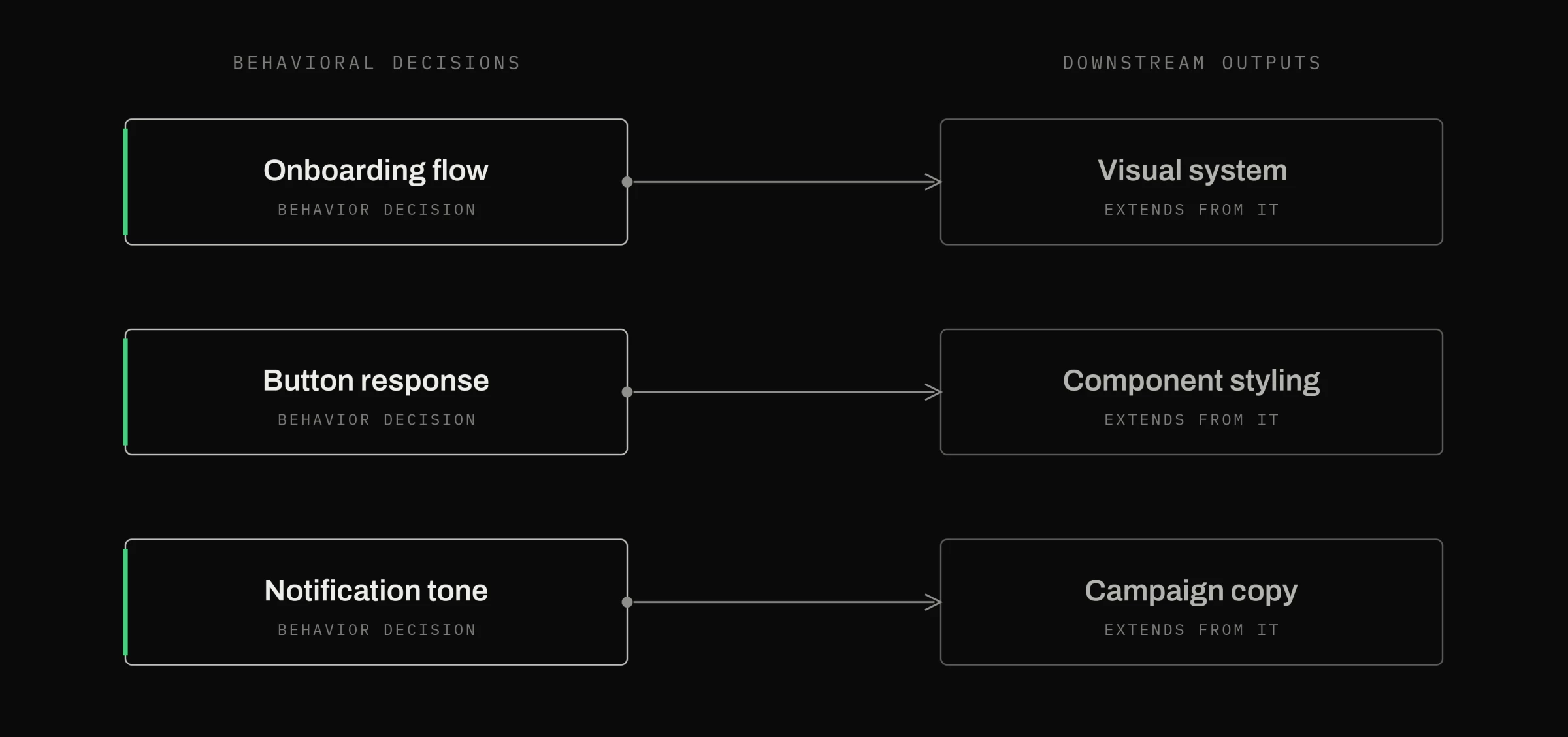
Good design system work does not start with components. It starts with principles, then behaviors, then shared ownership. Components are the expression of those decisions, not the strategy.
Foundations feel like progress because they can be finished. Color, type, spacing tokens, a component library. You can check them off.
The Zeroheight data shows exactly that: 93% of systems have foundations in place. Only 56% have documented UX patterns.
Patterns are the behavioral rules of the product:
- How errors work,
- How loading states communicate progress,
- How navigation choices repeat,
- How users recover when something goes wrong.
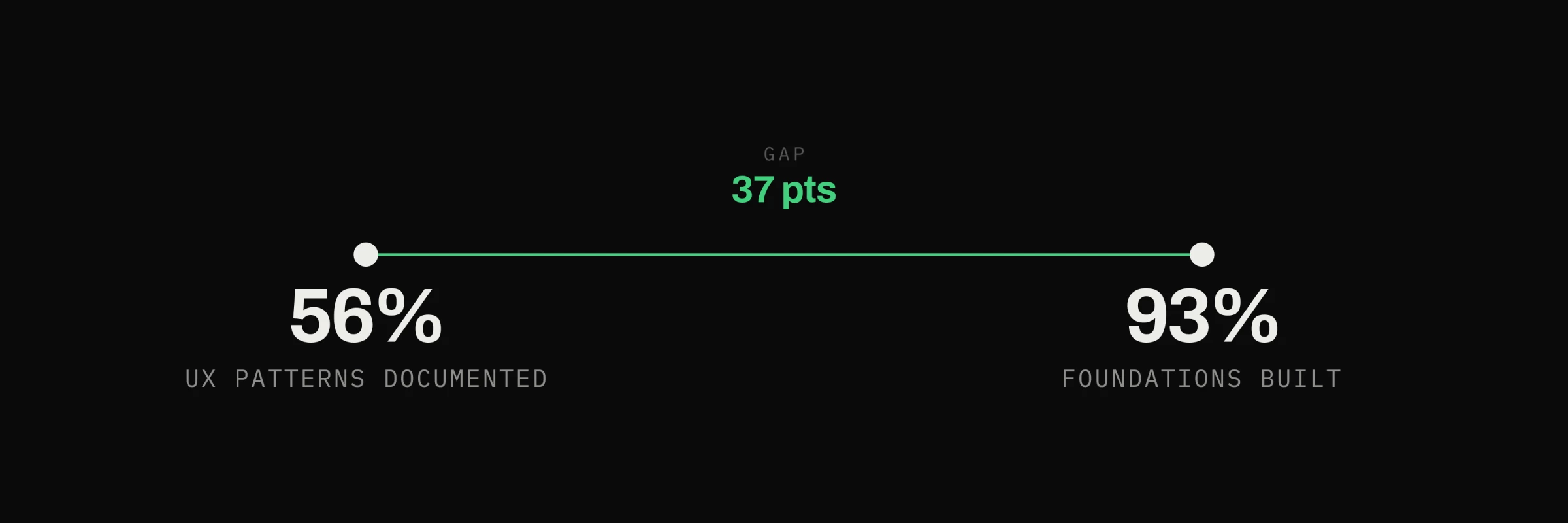
Fig. 3 · Coverage by layer. Source: Zeroheight 2026.
That gap between 93 and 56 is the space between what's easy to build and what actually changes how people work.
Foundations get finished because they're a checklist. Patterns stall because they require a decision, once, about how the product behaves, instead of leaving it to whoever builds the screen that week.
We saw the same logic on a redesign of the Logitech for Business homepage. The team left the existing components and navigation in place.
The fix happened one level up, in how people moved through the page. Paths to key content got shorter.
The business offering moved front and center. Both calls were made once, then applied everywhere the pattern repeated.
It's experience-led thinking applied to the system that has to hold the experience together at scale.
What the Governance Numbers Measure
Here's the tell. Among teams whose systems are well adopted, only 24% credit governance.
Among teams whose systems stalled, 55% blame weak governance, and 73% point to the lack of a company mandate.
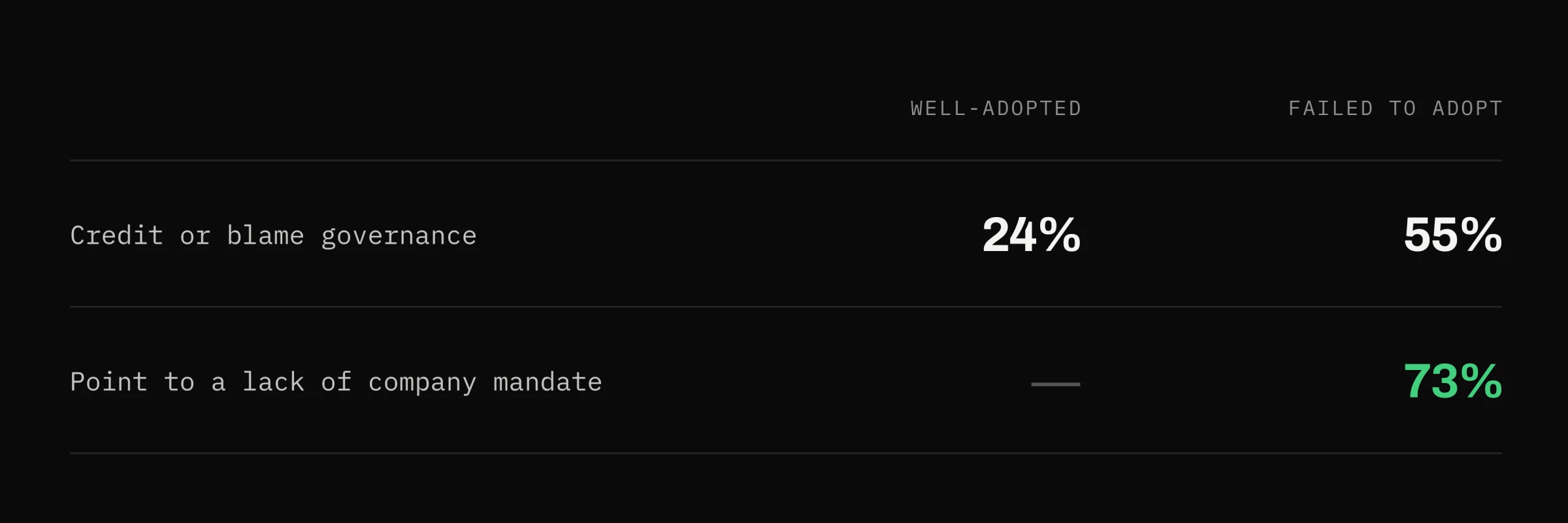
Fig. 4 · Governance: credit vs. blame. Source: Zeroheight 2026.
People barely mention governance when things go right. They bring it up constantly when things go wrong.
That asymmetry suggests governance is often treated as a repair mechanism. Teams reach for it once they realize no one agreed, early, on how the product should behave.
A team with clear patterns rarely invokes governance, because there's nothing left to argue. A team without them settles the same argument one thread at a time.
We've watched this play out beyond design systems too. When ownership is unclear, people default to commentary instead of decisions, and nothing closes.
Where the Real Capacity Loss Hides
When a system stalls, the instinct is to ask for more people. The data says that's usually the wrong fix.
Almost everyone already has a team. Even companies under 100 employees run a dedicated design system team 71% of the time. That climbs to 88 percent past 5,000 employees.
If team presence drove adoption, adoption should climb with it. It doesn't. Wide adoption sits at 38% across the board.
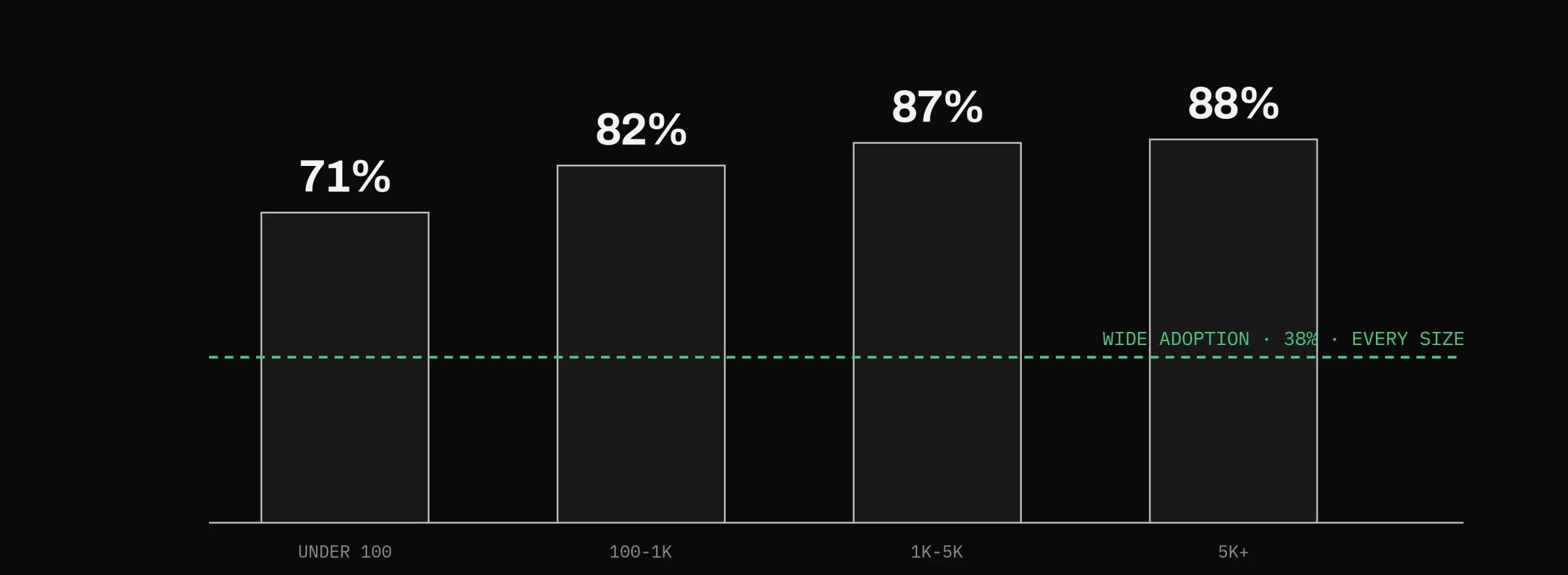
A team gets funded. The usage still has to be earned.
Roughly 61% of these teams report being understaffed, and that holds steady at every company size. But presence and capacity turn out to be separate problems from adoption.
A fully staffed team still stalls if no one above it makes the system mandatory.
And a team without the authority to enforce its own decisions burns its hours relitigating calls that should have closed once, back at the patterns stage.
That's where capacity leaks. No headcount fixes a gap caused by unresolved authority.
Three Questions Before You Name a Component
If you're building the case for a design system, the data changes what to ask first. Before a single component:
What does this product need to be consistent about, no matter who builds the screen?
Who can close a design debate when two reasonable people disagree?
What happens to a component six months from now, when it stops matching how the product works?
The second question is the one most teams skip. It's also what the 73% mandate gap is really about.
Answering it means a written commitment from whoever can make the system non-optional, not just fund it.
A mandate doesn't mean policing every screen. It means leadership has agreed where the system is required, who can approve exceptions, and how teams resolve conflicts.
The Line Item Every Design System Budget Needs
Trust and adoption measure two different things. Trust is whether people believe the system is well built. Adoption is whether the organization made it non-optional to use.
That gap has a name: mandate. Most design system business cases ask for people, tools, and components.
Too few ask for the authority required to make the system part of how the company ships.
Fixing the sequence gets a system built well. Fixing the mandate gets it used. Most teams only budget for the first.