
Consumers now spot a borrowed typography faster than a legal team can clear one.
Clearance runs for weeks, through trademark database searches, outside counsel review, and sign-off across markets.
A side-by-side screenshot posted to Reddit takes minutes to do.
AI design tools have made replication cheap, and copycat accusations arrive within hours of a launch.
The past year delivered a $15 million lawsuit against Samsung, a $1.5 million ruling for Louis Vuitton, and a CEO exit at Cracker Barrel.
These eight recent cases show what copying, or looking like you copied, costs a company in court and in public.
Each one points to the same asset worth protecting, and that's a brand identity too specific to borrow.
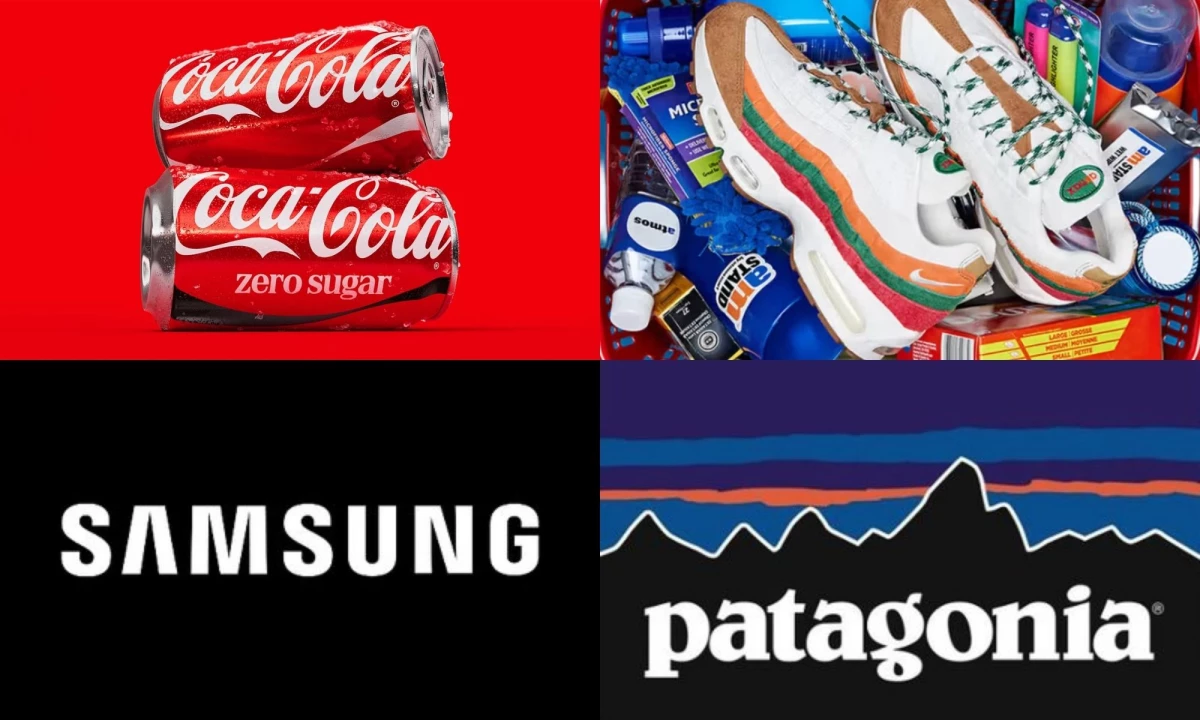
1. Coca-Cola Refreshes Into Marlboro Territory
Coca-Cola's global identity refresh sparked instant Marlboro comparisons.
Consumers matched its new serif typeface to the cigarette brand's packaging.
Typography experts later confirmed the two fonts differ, but people on social media had already reached their verdict.
Consumer perception outranks brand intent, so a visual identity that echoes a competitor's gets filed in the wrong memory slot from day one.
View this post on Instagram
2. Nike Fights 7-Eleven Over Colors
7-Eleven sued Nike over the Air Max 95, claiming the shoe used its orange, green, and red stripe combination.
The claim rested entirely on colors, and 7-Eleven argued that the palette alone had become synonymous with its stores.
Brand color stops being decoration once shoppers read it as a signature, and courts now treat a palette with that job as IP.
View this post on Instagram
3. Samsung Faces Dua Lipa's $15M Claim
Samsung faces a lawsuit after allegedly using Dua Lipa's image on U.S. television packaging without authorization.
The singer claims the placement falsely implied she endorsed the products, and she's seeking at least $15 million in damages.
Her complaint says that Samsung refused repeated demands to pull it, and quotes shoppers who said her face sold them the TV.
A face carries the same protection as a logo, which puts unlicensed likenesses in the same risk category as celebrity endorsements.
View this post on Instagram
4. Patagonia Sues Its Own Ally
In January, Patagonia sued climate activist and drag performer Pattie Gonia, arguing their name and logo resembled its own.
Critics piled on fast, accusing the company of attacking an environmental voice who shared its mission.
Patagonia posted a public response after the outcry, though the damage to its standing stuck.
Enforcement decisions carry a reputational price, so the question in the room should be whether winning the case is worth losing the audience.
View this post on Instagram
5. Louis Vuitton Beats Molly Tea in Court
A Chinese court awarded Louis Vuitton $1.5 million over bubble tea chain Molly Tea's floral logo.
The ruling found that Molly Tea infringed seven registered Louis Vuitton trademarks.
Consumers pushed back, pointing out that the four-petal motif appeared in Chinese art centuries before Louis Vuitton adopted it.
Courts settle ownership while shoppers relitigate it online, which makes every logo design dispute a public argument about who owns a shape.
View this post on Instagram
6. SHEIN Keeps Running Into Dr. Martens
Dr. Martens sued SHEIN multiple times over footwear that the brand says copies its yellow stitching, chunky sole, and silhouette.
But cease-and-desist letters failed to stop the lookalikes before litigation followed.
Repeat filings attach themselves to a company's reputation, putting every new product design that SHEIN releases under a microscope.
7. Under Armour Angers an Indie Golf Label
Gumtree Golf & Nature Club accused Under Armour of lifting its creative identity, naming its typography, apparel labels, and campaign concept.
The founder's posts spread across social media and drew close to a million impressions.
Under Armour pulled several promotional posts while the story ran.
Small creative communities now work as watchdogs, so a large brand borrowing from a small one gets named publicly before its campaign finishes rolling out.
8. Cracker Barrel Loses a CEO to a Logo
Cracker Barrel stripped down its 47-year-old logo last August as part of a $700 million brand overhaul.
Longtime customers revolted, with President Donald Trump even posting on Truth Social that the chain should restore its old logo.
Cracker Barrel reversed course on the eighth day.
CEO Julie Felss Masino is set to step down on August 10, replaced by former Bloomin' Brands chief, David Deno.
Familiar brand assets store years of recognition, so a rebrand that deletes them hands away the exact equity a copycat would have to steal.
View this post on Instagram
Brand Recognition Tops $1 Trillion
According to the World Intellectual Property Organization, brands now represent a global investment category worth over $1 trillion.
Advancements in AI are making trusted, recognizable identities even more important as synthetic content floods the market.
Consumers increasingly rely on familiar visual cues to distinguish what's authentic from what's not, and research shows just how difficult it is to create these cues.
An Ipsos and Jones Knowles Ritchie study found that only 15% of brand assets qualify as truly distinctive.
This figure highlights why brands build recognition through multiple assets. A single design element rarely makes them stand out.
These copyright infringements provide marketers and executives with three lessons:
- Build a design system. Protect colors, typography, packaging, mascots, and campaign ideas to create multiple memory cues.
- Treat trademark checks as a creative step. Vet every visual asset before launch to avoid expensive legal disputes and public backlash.
- Use AI to accelerate execution, not originality. Human oversight is becoming more valuable as generative tools make imitation faster and cheaper.
Distinctiveness is becoming an operating function, and the companies treating brand identity as something to monitor monthly will spend far less defending it later.
Our Take: What Is Originality Worth?
Consumers have taken over enforcement, and they work faster and cheaper than any legal department.
We think that originality is worth more now than at any point in the past decade, though almost no company accounts for it on a balance sheet.
Scarcity is the whole point, since Hollywood keeps remaking its own hits for the same reason design teams keep arriving at the same clean sans serif.
Every case here started with a shopper noticing a font, a color, or a silhouette, well before any lawsuit was filed.
Cracker Barrel makes the point in reverse, shedding close to $100 million in market value in a day because customers knew its old logo that well.
The companies with real protection own assets that sit in consumers' memories, where legal action only confirms what audiences already flagged.
The strongest defense is a brand identity so specific that a copycat reads as one on sight.
Read our 23 Biggest Marketing and Branding Fails to see how poor strategy, mistimed campaigns, and identity missteps have cost millions in trust and revenue.
Want your brand to be remembered for originality?
Connect with these top branding agencies to build distinctive identities that stand out and stand up to scrutiny.