
Software Build Failure & Execution Risk: Key Findings
- 70% of software projects fail due to unclear goals and poor planning, making it critical to define success before development starts.
- The final 10% of a build often takes the longest and costs the most, a pattern software agency Designli addresses with a free Impact Week audit to surface issues early.
- 42% of startups fail because the product solves the wrong problem, showing why early user validation is essential.
Up to 70% of software projects fail, go over budget, or miss deadlines, according to the Standish Group’s CHAOS Study.
What’s behind those failures?
In many cases, it comes down to poor planning at the start, often involving:
- Unclear goals
- Vague ownership
- A lack of structured decision-making
This highlights a costly and persistent problem for founders, one that companies like Designli, a leading software agency for non-technical founders, are built to solve.
“Most founders don’t fail because of bad ideas,” Keith Shields, Co‑Founder and CEO of Designli, tells DesignRush.
“They fail because the build takes over and before they realize it, they’ve lost control of their product, their budget, and their timeline.”
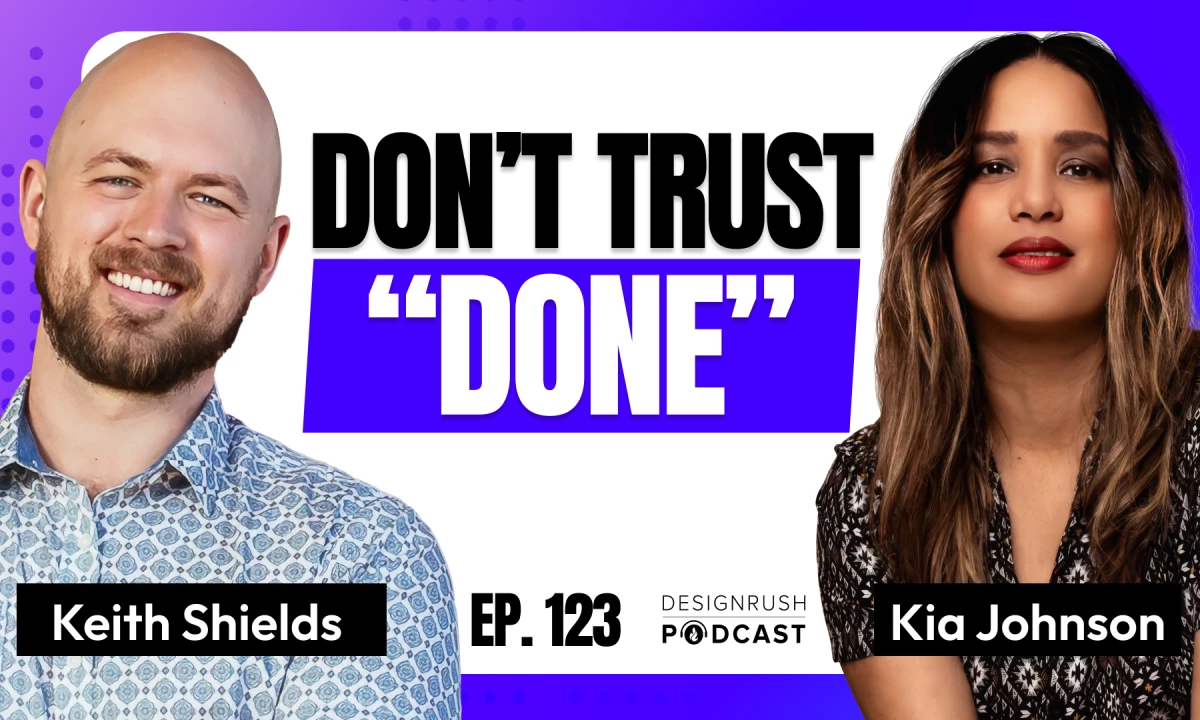
In episode No. 123 of the DesignRush Podcast, Shields explains how non‑technical founders can fall into this trap and what disciplined processes look like to prevent it.
Drawing on years of experience helping startups avoid costly build missteps, he highlights the role of clarity, early validation, and founder‑led decision-making in successful software development.
He also shares:
- Why defining “winning” before code matters
- How development is ongoing decision‑making, not mere execution
- Why the final 10 % of a build often takes the most time and money
- How early feedback can eliminate wasted effort
If you’re building software or working with a development team, this episode brings essential clarity to the process.
Listen to the full episode now on Spotify or watch on YouTube.
1. Mistake: Starting Without Defining What “Winning” Looks Like
Many founders believe that once they have a feature list, the hard part is done.
Shields warns that this is the earliest red flag in a product development process.
What founders often lack is a clear, documented vision of what success actually means (not in terms of features, but in measurable outcomes for users and the business).
“The first red flag is when a founder can't clearly explain what winning actually looks like,” Shields says.
A lack of clarity often reveals itself when conversations keep “going in circles,” Shields says.
This typically involves lots of talk around future ideas, edge cases, or long-term possibilities without focusing on what version one actually needs to achieve.
“Software doesn’t tolerate fuzzy thinking,” Shields says. “When the goal isn’t clear from the start, confusion and rework show up quickly.”
At Designli, every engagement starts with a two-week discovery phase called the Solution Lab.
In this phase, outcomes, priorities, and lean versions of features are mapped out before any code is written.
2. Misconception: Hiring Developers Solves Everything
A dangerous belief among non‑technical founders is that once developers are hired, product delivery is automatic.
Shields reframes software work as ongoing decision‑making, not simple execution. Every line of code represents a choice about user value and business impact.
“Strong product leadership teams will build something, but not necessarily the right thing,” Shields says.
Without active leadership and outcome‑focused decisions, development becomes a series of assumptions that eventually require rework.
And those assumptions don’t reveal themselves immediately.
“It actually takes quite a while to blow up on the customer, maybe six to eight months” Shields says.
“And the founder realizes that they built a really robust feature that does X thing, but that they've never gotten outside opinions on it.”
The result? Months of polished code that still misses the mark and needs to be rebuilt.
3. The Final 10 % Syndrome: Why the End Takes the Longest
One of the most common frustrations founders face is the final stretch of a build: the last 5% to 10 %, taking months with minimal progress.
Shields explains that this often signals deeper issues, like technical debt, fragile codebases, and shifting priorities.
“It’s a pretty common theme,” he says.
“‘I just need two bugs fixed, I’ll finally be ready to go.’ And you get stuck in that kind of last five, 10%.”
His team’s approach in these situations is a no‑cost code audit called Impact Week to diagnose root causes before investing more time and money.
How it works?
“We analyze the code base through the lens of what the most critical problems are and come up with a turnaround game plan,” he says.
Then, they can take the plan back to their current agency to have them approach the issue with fresh eyes. Alternatively, Designli can staff a developer to take over.
This lets founders reset with clarity, either with the existing team or a new one, ensuring they stay in control instead of chasing last‑minute bugs.
4. Feature Overload: More Isn’t Always Better
Founders frequently equate progress with adding more features, but Shields warns this mindset often slows teams down.
When product complexity increases without strategic focus, velocity drops and tech debt accumulates.
Instead, successful builds maintain focus on measurable outcomes and remove or defer features that don’t directly contribute to those goals.
“We call it the calm, confident feeling that Designli tries to help non-technical founders get to,” Shields says.
5. Skipping Validation: A Costly Shortcut
Among failed startups, 42% cite building a product no one needed as the reason, according to CB Insights.
That insight reinforces why early validation is one of the most effective ways to reduce tech debt and wasted spend.
Shields champions hypothesis‑driven development, where assumptions about users are tested quickly and cheaply before significant investment.
This approach prevents costly rework and ensures teams are building toward real value, not internal assumptions.
“Confidence is different than having evidence,” Shields says.

About Keith Shields
Keith Shields
Co‑Founder and CEO, Designli
Keith Shields helps non‑technical founders turn ideas into scalable software products without losing control. Drawing on experience leading product strategy and execution for startups, he founded Designli after facing his own agency horror stories.
Today he leads product and engineering teams to help founders achieve clarity, avoid technical pitfalls, and align development with business goals.
Why Leadership, Not Just Code, Matters Most
The core lesson from this episode is simple but profound. And it’s likely one lots of founders are getting wrong.
“Building software is a leadership responsibility, not something you delegate away,” Shields says.
Why? When leadership fades, so does clarity, speed, and control.
So, while you don’t need to write code, you do need to own the decisions that shape your product.
Keeping tabs on strategic decisions is what leads to a sustainable build, and keeps you from getting caught in an expensive build disaster.
Watch the full conversation on YouTube or listen on Spotify.