
Key Takeaways:
- Approximately 65% of agencies utilize no-code solutions, but relying on them to replace developers often leads to project slowdowns and failures.
- No-code alone creates fragile, unscalable solutions. Developer expertise is crucial to avoid costly breakdowns.
- Success in no-code depends on combining speed with technical guidance to build stable, scalable apps.
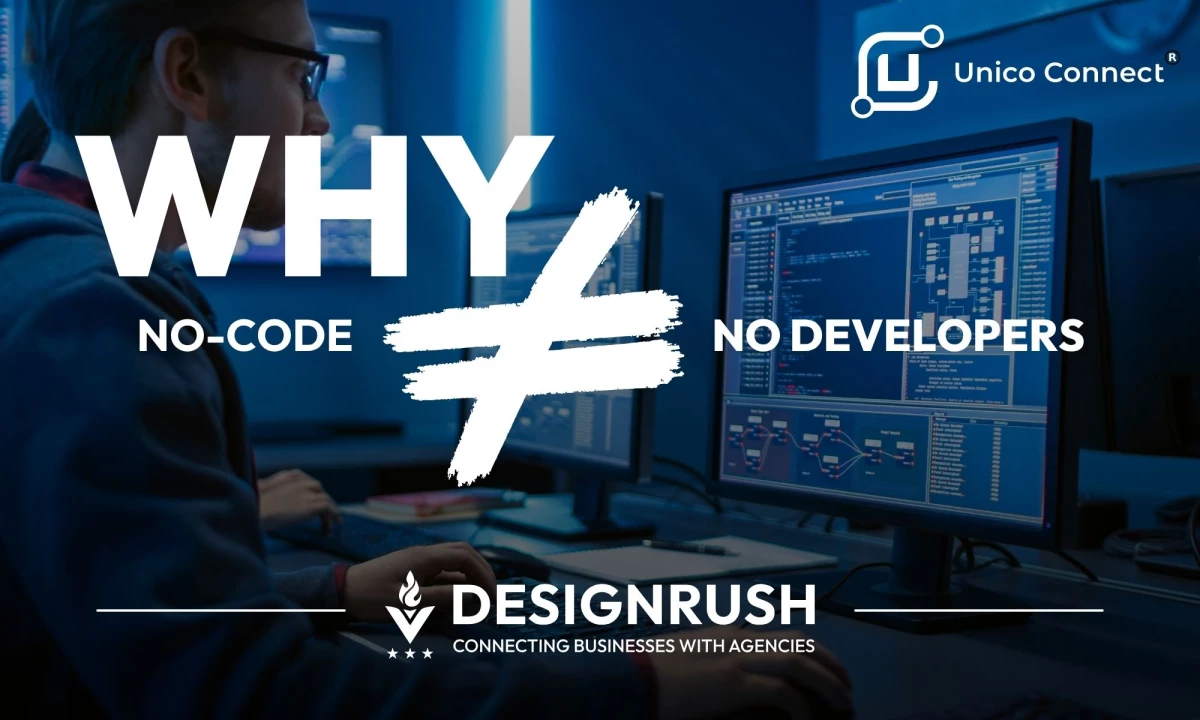
More agencies — about 65% — are turning to no-code platforms to move faster, Gartner reported in 2024. But taking developers out of the loop often creates new problems instead of solving existing ones.
Without the right foundation, projects stall, scale breaks, and clients lose trust.
What makes the difference isn’t the no-code tools themselves. It’s the expertise guiding how they’re used to deliver scalable client solutions without getting stuck in development bottlenecks.
Why Removing Developers Creates New Problems
Taking developers out of the loop can slow things down instead of speeding them up. Here’s why, according to Unico Connect, which specializes in no-code architecture and integration:
Editor's Note: This is a sponsored article created in partnership with Unico Connect.
- Lack of technical foundation causes fragile solutions: No developers means no solid technical base. No-code projects could end up fragile and hard to grow
- Limited integration capabilities restrict functionality: No-code tools alone can’t handle complex systems like AI, APIs, and cloud services. Developers ensure that everything works smoothly together
- Scaling challenges emerge early: Without custom coding, projects hit roadblocks as demand grows, causing delays and extra work
- Misalignment between business needs and tech solutions: Without developers, business needs and tech solutions often don’t line up, leading to miscommunication and missed goals
Malay Parekh, CEO of Unico Connect, said no-code should empower developers to focus on higher-value tasks, not replace them.
“Removing developers entirely risks creating solutions that break when complexity grows. Agencies that exclude technical expertise early on often face costly rewrites and stalled projects down the line. The key is blending no-code speed with developer insight to build solutions that are both agile and robust, ready to scale as client needs evolve.”
Unlock Innovation with NoCode!
— Unico Connect (@unico_connect) October 16, 2024
Join Malay as he explains how NoCode empowers teams to build smarter and faster without traditional development barriers.
Want to learn more?
Don't miss the NoCode Summit in Paris
October 16-17, 2024 | Paris, France
See you there! pic.twitter.com/smPiUPZXfP
In other words, this balance between speed and expertise is what separates scalable success from costly setbacks.
How To Avoid No-Code Pitfalls and Build Scalable Solutions
Finding the right balance starts with understanding where no-code projects typically go wrong. Unico Connect highlights the four key areas agencies must get right:
- Choose the right no-code platform for the job. Tools like Xano, Webflow, and Bubble each excel at different tasks.
- Build with a solid architecture from the start. Without a strong design, no-code projects become fragile and hard to scale.
- Integrate AI, analytics, and cloud services thoughtfully. These technologies boost power and flexibility beyond basic no-code tools.
- Foster collaboration between technical and business teams. Involving everyone ensures solutions meet client needs and expectations.
“No-code platforms are powerful, but without the right strategy and expertise, they can lead to fragmented solutions. Our role is to guide agencies in using these tools effectively to deliver cohesive, scalable applications,” Parekh added.
From education to wellness and travel, Unico Connect builds scalable platforms tailored to your needs. Let’s turn your vision into reality.
— Unico Connect (@unico_connect) December 15, 2024
Reach out today to explore possibilities.
For more details visit :- https://t.co/spOpAMjCg8#UnicoConnect#TechSolutions#AppDevelopmentpic.twitter.com/A9uSBQrh19
Unico Connect is already seeing no-code evolve beyond simple prototypes and Minimum Viable Products (MVPs).
“With platforms like WeWeb and Xano, we can prototype in days, not weeks. But what really matters is setting up a backend that scales; otherwise, you’re just building throwaways,” said Jayant Jagtap, Senior WeWeb Expert at Unico Connect.
Building fast isn’t enough. Without a solid backend, apps crack under pressure. That means modular architecture, smart backend logic, and airtight API connections — the kind that keep things running smoothly as demand grows.
Throw in automated DevOps, like streamlined deployments, CI/CD pipelines, and cloud-ready infrastructure, and you get apps that launch fast and keep pace with growing business needs.
This isn’t just tech jargon. It’s the difference between projects that break and projects that last.