-details-webp.webp)

Product Strategy: Key Findings
- Over one-third of startups fail due to a lack of market need, not technical failure.
- An effective strategy starts with user research and aligns features to business goals.
- Ongoing strategy leads to faster, better decisions as products evolve.
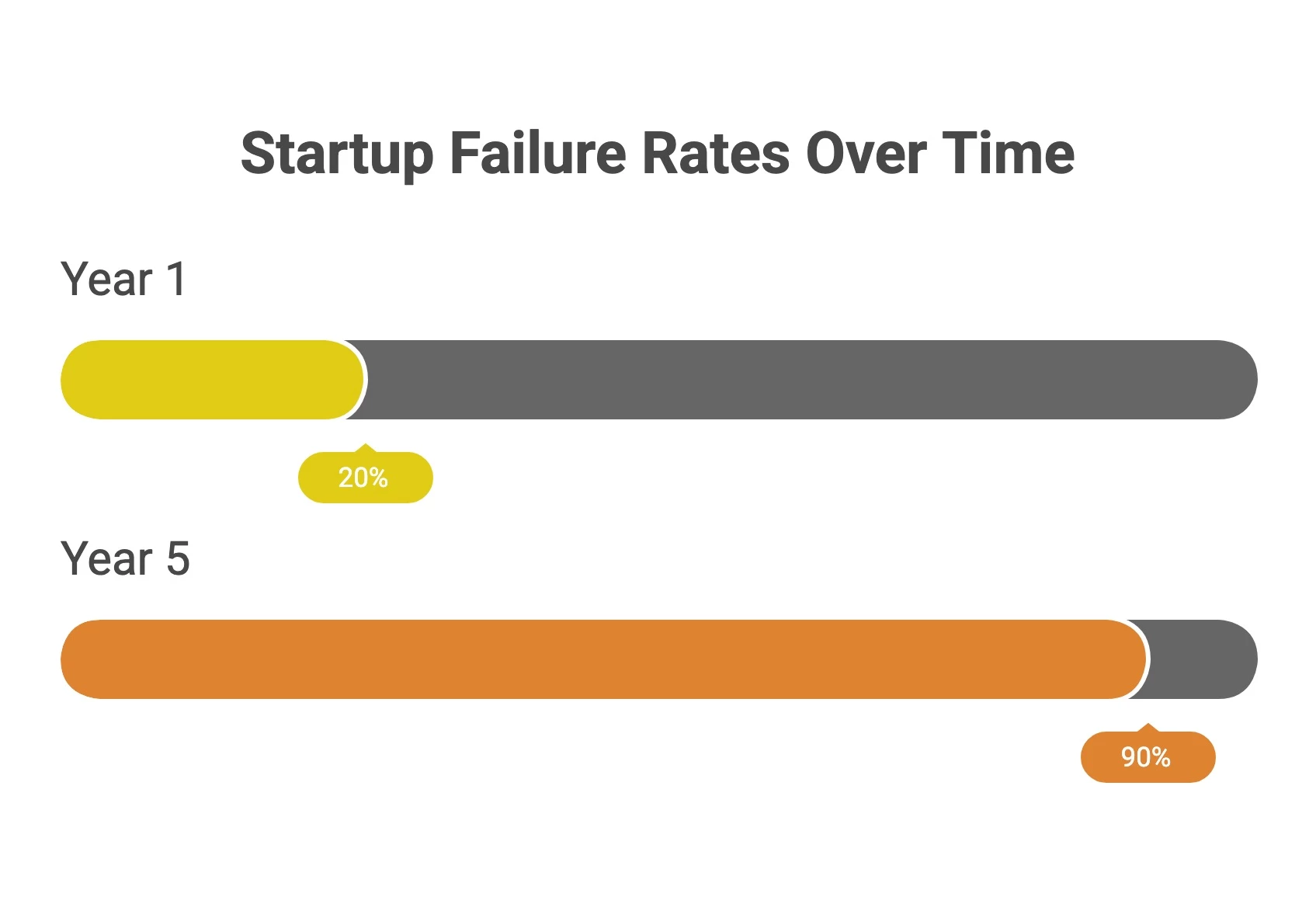
Failure rates among startups are alarmingly high.
About 20% of startups falter within the first year, and nearly 90% don’t make it past five, according to a report by Forbes.
Editor’s Note: This is a sponsored article created in partnership with Goji Labs.
The reasons aren’t always technical. Many apps are well-designed and functional, but still fail to gain traction.
Why? Because they weren’t built on a clear, validated strategy.
Quick listen: 3 strategy moves that take startups from idea to MVP — in under 2 minutes.
No defined user. No urgent problem solved. Just a cool idea in search of a purpose.
One example: Huupe, a connected fitness company, set out to build the world’s first smart basketball hoop.
The concept was bold — interactive drills, real-time feedback, seamless mobile integration — but the path to market wasn’t obvious.
Without clarity on user needs or core product value, even strong ideas risk misalignment.
Working with Goji Labs, Huupe completed a focused product strategy sprint to define their audience, test assumptions, and shape an MVP that delivered immediate value — launched in just six months.
The takeaway is simple: a strong product strategy won’t guarantee success, but skipping it dramatically increases your chances of failure.
Here are three tactics that helped guide the process.
Strategy #1: Start with user research, not assumptions
If you don’t deeply understand your users, you risk building something no one needs.
That’s why the most successful products begin not with design or development, but with discovery: talking to real people, mapping pain points, and identifying unmet needs.
In fact, CB Insights reports that over one-third of startups fail because there’s no market need for what they build.
That’s not a failure of execution. It’s a failure to validate demand before investing in development.
“If you don’t start with real user problems, you’re just guessing — and guesses are expensive,” said David Barlev, CEO at Goji Labs.
In Huupe’s case, the team dug into the needs of different audiences: athletes, coaches, and casual players.
They uncovered a consistent desire for measurable improvement, performance tracking, and real-time guidance. These findings directly informed which features were prioritized.
By validating user needs early, the team avoided wasting time on features that wouldn’t matter.
Strategy #2: Define success early, and build a roadmap that leads there
Without a shared definition of success, product teams risk drifting off course, building features that don’t move the business forward.
That’s why strategic alignment isn’t just about what to build. It’s about why you’re building it and what outcomes you’re aiming to achieve.
Effective product strategy ties development priorities directly to business goals.
Is the objective to validate product-market fit? Improve retention? Support a fundraising milestone?
These answers shape everything from scope to release plans.
Once Huupe had a clearer picture of its user needs, the team mapped that insight to business goals.
They prioritized a focused MVP: a core set of features that solved a specific problem and could be delivered quickly.
A phased product roadmap gave the team direction while leaving room to adapt as real-world feedback came in.
This approach avoided overbuilding, sped up development, and gave the team a clear way to measure progress.
Strategy #3: Treat product strategy as an ongoing process, not a one-time deliverable
Market conditions change. User needs evolve. Products that succeed long-term are built to adapt.
That’s why strategy can’t stop once development begins. It needs to live alongside the product and evolve with it.
Many teams treat strategy as a kickoff phase.
But when it's integrated continuously, it enables:
- Faster decision-making
- Better prioritization
- Stronger alignment between the product and its users
After Huupe launched its MVP, the team continued gathering data: tracking engagement, identifying friction points, and listening to user feedback.
This ongoing loop of insight informed decisions around feature expansion, usability improvements, and positioning.
Embedding strategy into the product’s lifecycle allowed the team to stay aligned with user needs and business goals, even as both evolved.
“Strategy isn’t a phase. It’s the connective tissue between what you build and why it matters, especially as your product grows,” said Barlev.
Strategy Is What Turns Ideas Into Outcomes
A strong product strategy won't guarantee success, but it dramatically increases your odds by keeping the process grounded in real needs and clear goals.
It ensures that teams ask hard questions early, align around what matters most, and stay adaptable as things change.
In contrast, skipping strategy often means building in the dark, wasting time and resources on the wrong problem, the wrong audience, or the wrong solution.
When nearly 90% of startups fail, strategy isn’t a luxury. It’s a prerequisite.