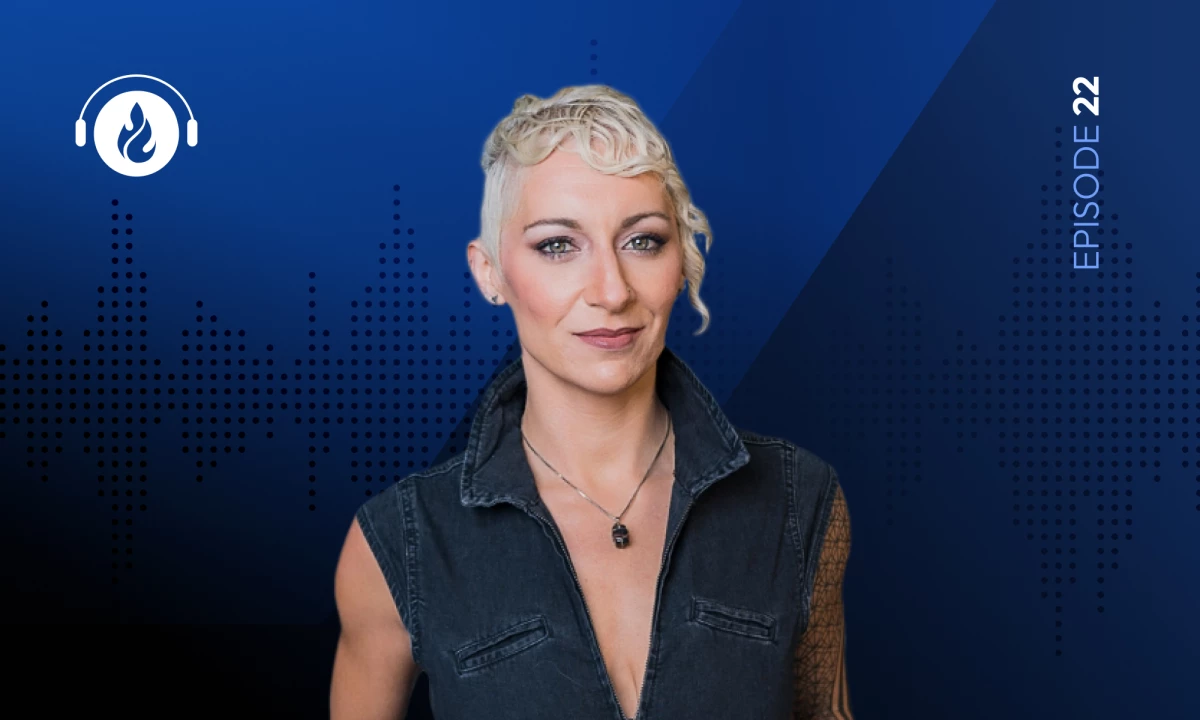

The 22nd episode of the DesignRush Podcast welcomes Lily Ray, recognized as the #1 most influential SEO expert in the world in 2022.
Join our Senior Editor Vianca Meyer and Lily as they journey through the impacts of AI on search engines, provide SEO strategy essentials, and advise SEO professionals on how to boost their careers.
Top SEO insights from Lily:
- Focus on creating genuinely helpful content, avoiding violations of Google’s guidelines, and taking advantage of areas of your true expertise.
- Consider creating less but more in-depth and interactive content, based on expertise and customer needs, with an SEO layer for visibility.
- While quick results might tempt some to deviate from Google's guidelines, it's safer and more sustainable to play the long game and adhere to white-hat SEO principles.

Who is Lily Ray?
Lily Ray is the Senior Director of SEO and Head of Organic Research at marketing agency Amsive Digital, where she leads an award-winning SEO team of 15 members and steers them toward innovative strategies and cutting-edge research. She actively shares her insights through various platforms, including articles, interviews, podcasts, and conference presentations.
Artificial intelligence (AI) is revolutionizing many aspects of business, and search is one of them.
“AI's rapid expansion brings new possibilities every day,” says Lily, highlighting that “there's a lot of speculation around products like Google SGE and Bing Chat, but things remain uncertain as Google SGE, for example, is still an experiment.”
She believes “AI's role seems to align with Google's ongoing direction — providing quick answers by leveraging their extensive data. This often means users don't need to click on websites for more information, [and] AI supports this trend.”
She adds that there are discussions about Google evolving towards a "Jarvis-like" model, providing one-answer systems without citing websites; however, human nature craves exploration and variety.
“People, especially younger generations, might accept quick answers, but humans are inherently inquisitive and prefer multiple sources and viewpoints. Singular, definitive answers from search engines might not satisfy this curiosity, ensuring the ongoing need for websites and diverse content creators,” Lily concludes.
Are you looking for a professional partner to help increase your visibility? Our DesignRush list of SEO agencies is one of the best places to start.
Will Google Reduce Reliance on Traditional Websites?
Although its inner workings are still largely cloaked in mystery, with marketers often questioning Google's transparency, Lily provides expert insights on what the search engine looks for.
“Search engines like Google are gradually reducing click-through opportunities, especially for websites with upper-funnel, informational content, or generic knowledge. However, there's still a clear need for authentic, human-generated content,” Lily explains.
Lately, Google prioritizes forums, social media, and user-generated content, reflecting user preferences for diverse content sources. Despite its efforts to answer everything through Knowledge Graph, users seek varied content like websites, images, apps, and podcasts, she remarks.
“Legally, Google faces challenges, making it unlikely that a single source will dominate information provision. The balance between quick answers and diverse content preferences remains crucial,” she concludes.

Considering AI's transformation of search engines into more personalized platforms, Lily shares how this impacts user experience, especially with the challenge of distinguishing AI-generated content from factual data:
“The critical question is whether generative AI is beneficial for users, whether its content is detectable, and whether users prefer AI-created or human-written content. Google and other search engines have stated that AI content isn't inherently bad as long as it's helpful.
However, they also maintain that auto-generating content at scale without oversight is considered spam, which is against their guidelines. This presents a nuanced message, particularly as these platforms themselves develop AI tools.”
She also believes one under-discussed aspect is the accuracy of AI tools because many do not indicate clearly which parts of their output might be inaccurate.
“There's enthusiasm for generating content with these tools, but I remain skeptical about replacing the effective work of human content creators with AI-generated material,” she notes.
Thinking of integrating AI into your B2B operations? Check out our podcast below as marketing guru and bestselling author Mitch Joel weighs in on engaging with AI:
There are different types of AI, and each has its own advantages when it comes to search.
“ChatGPT and similar AI tools have advantages for certain types of searches, offering more creative assistance than traditional search engines,” Lily says, mentioning that she uses ChatGPT more as a creative assistant for various tasks rather than starting her searches there.
“Google has spent 25 years refining its accuracy, which is nearly perfect most of the time. The risk of AI tools providing slightly inaccurate information, about 5-10% of the time, is too high for my liking.”
Lily also believes AI tools will increasingly challenge traditional search engines, but changing long-standing user habits is a significant hurdle.
Google is deeply ingrained as the go-to search method, making behavior change difficult. However, if AI tools like ChatGPT consistently offer better experiences, she thinks a shift is possible.
If that happens, what implications will it have on SEO?
Lily explains that tools like ChatGPT can enhance data analysis and strategy formulation by accelerating workflows and generating ideas.
However, based on personal experience, she says AI-generated content lacks authenticity, which could harm a brand's image, so, she wouldn’t integrate the tool in its current state.
“The key focus is on the relationship between generative AI responses and the sources of this information. The key question is: if a search engine uses my content, what benefit do I, as a publisher, get from it?” Lily asks.
Listen to the full podcast with Lily on Spotify:
She notes that Google has been proactive in ensuring that AI tools benefit publishers by incorporating links and annotations. But then, there's also monetization to consider.
“If generative AI tools are costly and result in reduced ad clicks, it could disrupt Google’s business model, which heavily relies on ad revenue.
Therefore, it's crucial for Google, advertisers and the SEO community to find a harmonious path where generative AI can coexist with traditional search mechanisms without undermining the viability of either,” she reveals.
Navigating SEO Amidst Google's Algorithmic Shifts
Given the debate about Google's healthfulness potentially diminishing search quality, Lily shares how businesses can navigate this evolving SEO landscape.
"I recommend creating content that genuinely benefits your audience and layering SEO strategies on top of that,” she says.
This means developing less but more impactful and richer content, concentrating efforts on quality over quantity.
“By focusing on what's genuinely helpful to the audience and combining that with smart SEO tactics, we can create a sustainable and effective approach to SEO.
This might mean a shift from traditional keyword-focused strategies to a more holistic approach that considers the audience's needs and the evolving nature of search engines,” she concludes.
On top of quality content, QGP Founder and SEO Lead Kosta Hristov believes that brands should also practice backlinking to stay resilient against frequent Google algorithm updates.
However, he advises leveraging reputable link-building providers to ensure the integrity and effectiveness of your link-building strategy:
"Build quality backlinks. Use reputable providers like QGP. Don’t use cheap marketplaces, because your brand is worth more than that."
Discussing the frequency of Google's updates, Lily suggests that the search engine now has multiple ranking systems in place, each with guidelines and implications.
She believes that SEO professionals must understand these varied ranking systems and how they might affect a site, concurrently advising to:
“Start with Google’s documentation. There's a wealth of information available about their ranking systems and guidelines.
This direct information from Google is the best source of truth, rather than interpretations or third-party SEO advice. Understanding the rules of the game from the source itself is vital for navigating these updates effectively.”
When it comes to SEO, developing content that drives long-term value is of key importance. Watch our podcast with Alex Birkett, co-founder of SEO agency Omniscient Digital, to learn effective tips to transform your content for better success:
Lily thinks continuous updates in Google's algorithms are becoming the norm, with specific updates integrated into core algorithms without separate announcements, resulting in ongoing volatility, making it hard to identify ranking change causes.
“The key for SEO professionals is to align closely with Google's guidelines and understand underlying trends in their communications. Those who adhere to these guidelines will generally avoid major issues with algorithm updates,” she says.
So, how should SEO professionals approach these frequent updates?
“SEO professionals should adopt a holistic approach aligned with Google's guidelines, avoiding short-lived tactics that might violate these guidelines and lead to long-term issues,” Lily advises.
Though slower, a white-hat SEO approach is more sustainable and safer, she says.
Continuous updates are the new norm, but playing the long game is key to thriving in this dynamic environment. So, businesses and SEO experts should stay observant and committed to SEO best practices and ethical guidelines to adapt.
Prioritize quality and user experience so you can ensure resilience and success amidst frequent algorithm changes.
An experienced SEO agency can assist you in doing so.
Editing by Katherine 'Makkie' Maclang