
The logo FIFA wanted hidden may have just paved the way for one of the most talked-about brand stories of the 2026 FIFA World Cup.
Levi's found a witty way to comply with the football federation's strict sponsorship protections.
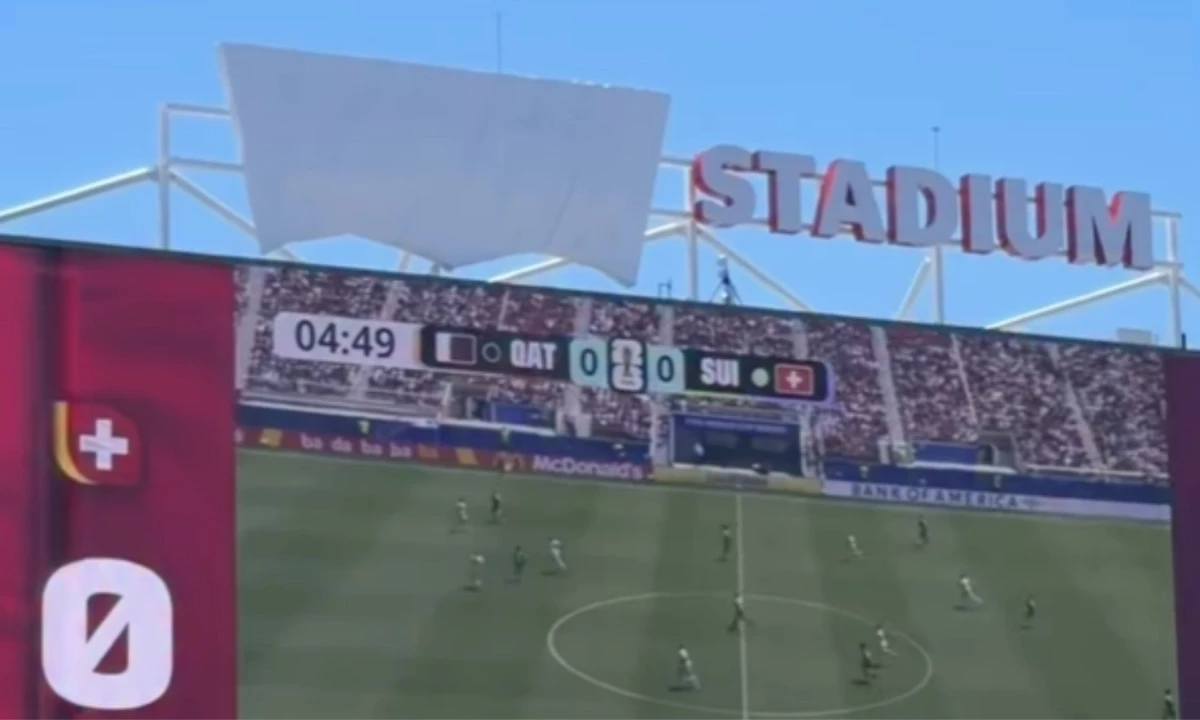
The denim company covered its logo at Levi's Stadium with a white tarp, but left the unmistakable batwing-shaped outline intact.
Fans immediately joked that everyone still knows exactly what's underneath.
View this post on Instagram
The covered logo sits on a stadium that Levi's pays handsomely to brand.
It holds a 10-year, $170 million deal for the Santa Clara venue, or $17 million a year, renewed in 2024.
And FIFA voided the stadium name and logo for the duration of the 2026 World Cup.
The rule shows the extraordinary value attached to naming rights, as well as how a brand can stay in the conversation even when it's not supposed to be there.
Levi's did not stop at the stadium.
View this post on Instagram
The company extended the joke globally, temporarily covering logos on storefronts in countries including France, the UK, Mexico, and Brazil.
What started as a compliance exercise quickly evolved into a coordinated social media campaign.
The Tarp Everyone Saw Through
World Cup venues must remove or conceal non-sponsor branding to protect the exclusivity that tournament partners paid for.
This policy led to venues being replaced by sponsor-backed names, including:
- Atlanta Stadium replaced Mercedes-Benz Stadium
- Boston Stadium replaced Gillette Stadium
- San Francisco Bay Area Stadium replaced Levi's Stadium
Gillette also joined the joke online, covering its stadium logo in shaving cream to poke fun at the same restriction Levi's faced.
Like Levi's, Gillette transformed a compliance requirement into content, proving the cover-up itself had become part of the World Cup conversation.
View this post on Instagram
The Bay Area cover-up became the brand story that others followed.
A simple tarp covered the stadium's iconic sign, but the batwing shape stayed visible.
Levi's then amplified the joke on Instagram with posts featuring the covered logo and the caption:
"Welcoming the world to the beautiful [redacted] stadium!"
The brand also swapped its social media profile image for the covered sign and posted content based on the viral "Nobody's Gonna Know" TikTok trend.
The playful response quickly drew praise from fans, many calling it marketing genius.
View this post on Instagram
Fans embraced the humor, with some even suggesting the covered logo should become merchandise.
Meanwhile, others argued the stunt gave Levi's even more brand visibility.
The Instagram post now has over 766,000 likes and nearly 9,000 comments, showing how fast social content can extend the life of a real-world branding event.
Levi's spent nothing extra and still pulled off the kind of viral marketing a paid campaign would envy.
The Million-Dollar Value of Being Recognizable
The batwing shape alone was enough for fans to identify Levi's.
A Sage Journal study examining nearly 600 assets found that visual identifiers such as logos, colors, and shapes play a critical role in brand recognition.
This is the core principle behind a strong logo design, that a shape can carry a brand without a single word.
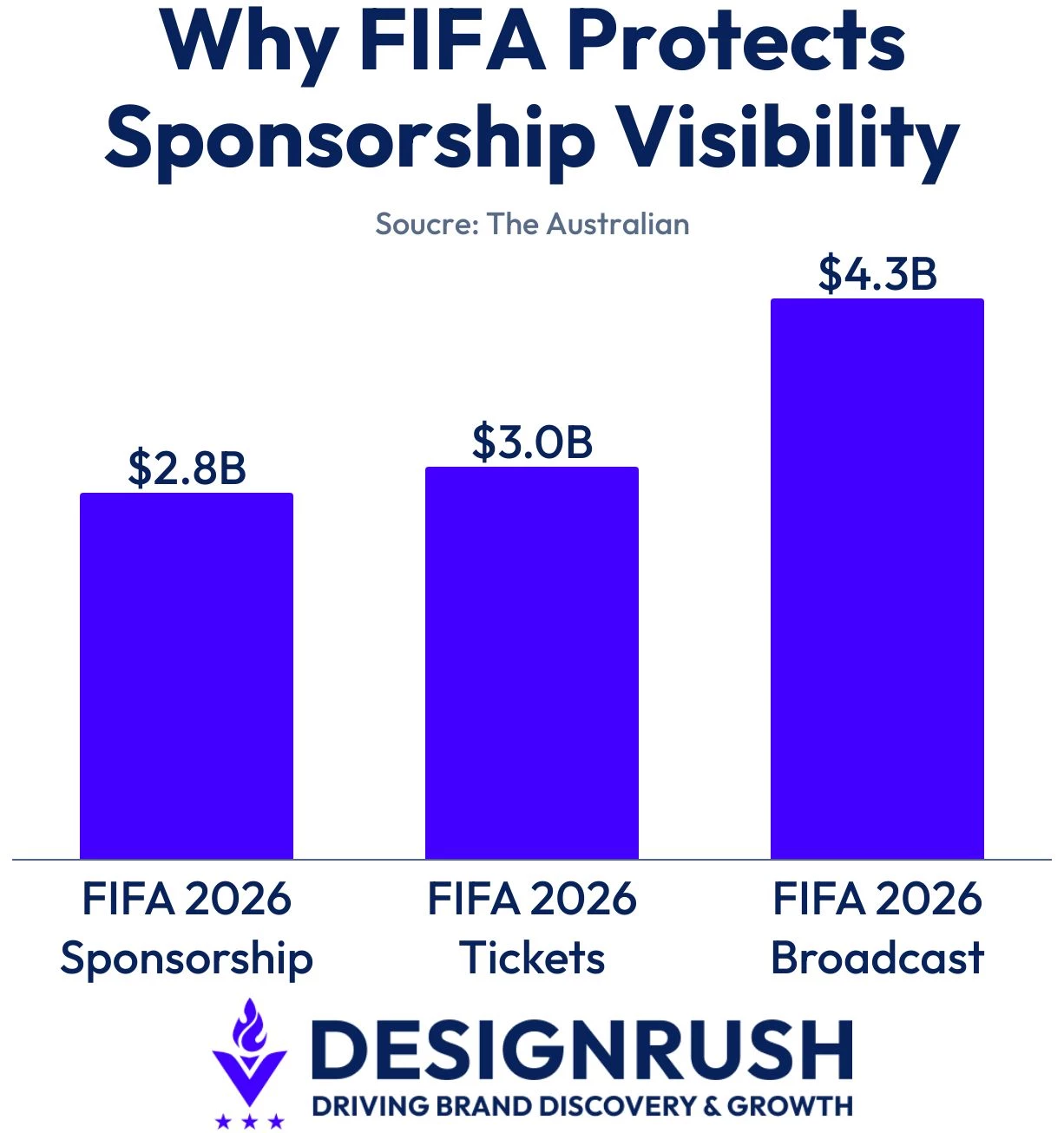
The Levi's incident also highlights why FIFA takes such an aggressive approach to brand protection.
Sponsorship is expected to generate roughly $2.8 billion in revenue for the 2026 World Cup, making it one of the tournament's largest commercial pillars.
The restrictions extended far beyond stadium signage.
Heinz bottles inside stadium and media areas were covered with black tape to conceal the logo.
This illustrates how thoroughly FIFA protects sponsor exclusivity throughout tournament venues.
View this post on Instagram
The level of scrutiny demonstrates that even everyday consumer brands become part of the sponsorship equation when billions of dollars are at stake.
Levi's willingness to joke about the FIFA rule earned organic engagement because audiences reward marketing that's culturally aware, acting as a lesson for brands.
- Distinctive assets improve memory. Invest in cues people recognize instantly, so the brand stays visible even when traditional branding is restricted.
- Exclusivity protects sponsorship revenue. Organizers police non-sponsor exposure to preserve the global visibility sponsors pay for.
- Audiences reward clever participation. Recognizable brand cues let audiences do the distribution work themselves.
Strong assets create brand recognition, sponsorship exclusivity creates scarcity, and both become commercial advantages where they meet.
Our Take: Did FIFA Accidentally Give Levi's More Exposure?
Had the logo remained untouched, most World Cup viewers would have treated it as background scenery.
Once it was covered, however, fans began sharing photos, discussing the rule itself, and amplifying Levi's response.
View this post on Instagram
We often assume visibility comes from being seen, but curiosity can be even more powerful.
The covered logo created a level of engagement that a standard stadium sign rarely generates.
The risk for FIFA is that similar incidents could encourage other brands to find creative ways of benefiting from restrictions designed to limit their exposure.
Jamal Musiala, the German player partnered with Beats by Dre, was also asked to tape over his personal headsets because of FIFA's branding rules.
Beats took it a step further by covering its Instagram profile picture, turning the restriction into another piece of social content.
View this post on Instagram
Taken together, these reactions show how FIFA's cover-up policy became part of the World Cup narrative
It gives brands a way to participate in the tournament conversation even without official sponsor status.
The incident also suggests that in an attention economy, the conversation around a brand can sometimes outperform the branding itself.
A similar dynamic appeared when brands sought creative ways to join the World Cup hype without official sponsorship rights.
For instance, Heinz and Heineken launched their first collaboration with a limited-edition six-pack for the summer tournament.
Distinctive assets helped Levi's stay recognizable even when its name was hidden.
Explore these top branding agencies to create visual identities consumers remember at a glance.