
A download tells me someone was interested. A second visit tells me the app gave them a reason to return.
For Mister Softee, and for the custom app development company that built its app, the harder question was what happened after that first visit.
On the road since 1956, the brand had 625+ trucks and 350+ franchisees spread across 18 states, so the app had to work for customers and for the people running the trucks. Chop Dawg, an app development company that has launched 500+ apps since 2009, developed the platform to handle both.
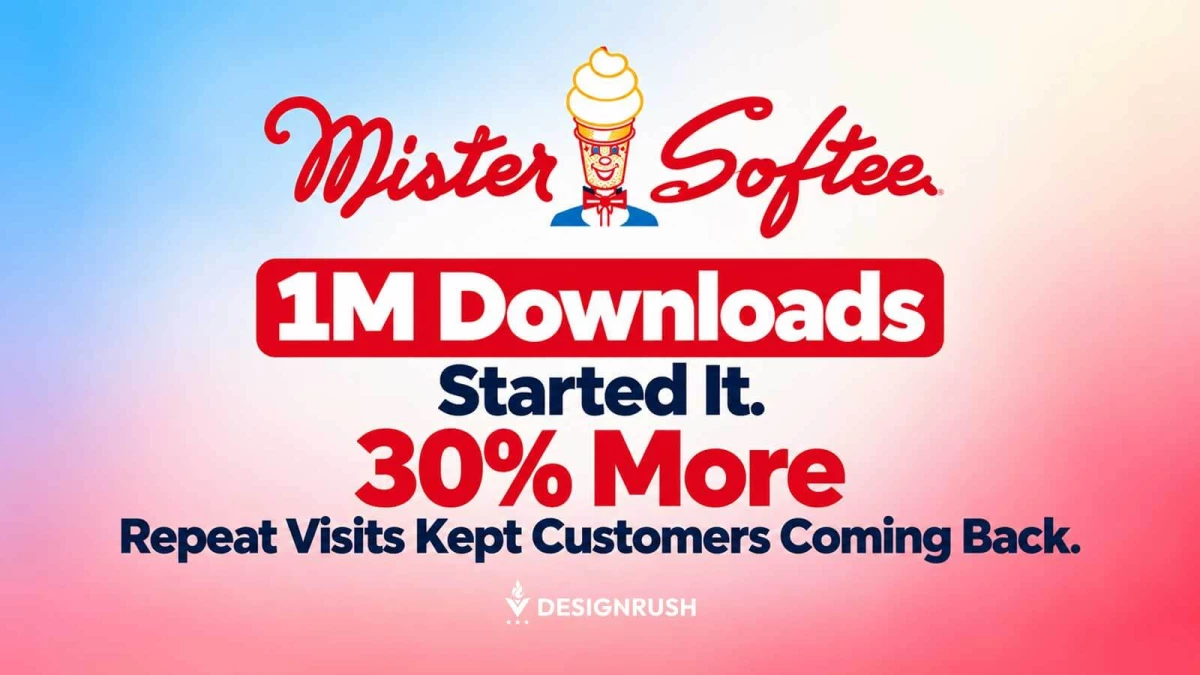
The result came quickly. According to Mister Softee, the app Chop Dawg built passed 1,000,000 downloads within three months, with 30% more repeat visits and a 35% higher average transaction value.
The locator drove the downloads. Region-based menus and timed push notifications drove the return visits and higher ticket size.
What Makes Customers Return to a Mobile App?
The real-time locator solved the immediate problem: “Where is the truck?” A live map can answer that in seconds.
But once the customer finds the truck, the locator's job is done. It's the front door.
The region-based menus and timed push notifications are the reason anyone walks back through it.
They're also the two you can attribute.
A notification goes to a specific audience at a specific time, so the visits and purchases that follow can be counted.
For me, that’s the important distinction. The feature that gets attention isn’t always the one that drives revenue.
Mike Conway, president of Mister Softee Inc., said Chop Dawg's 'passion for innovation directly translated to greater joy and convenience for our customers.'
Why Franchise Apps Need a Strong Backend
Mister Softee had to give individual franchise owners control without losing visibility at the corporate level. The backend had to work for one truck and over 625 trucks.
We handled that with:
- Role-based permissions that gave franchise owners, operators, and corporate teams access to the functions relevant to their jobs without interfering with one another.
- Truck and menu management moved into one central system, allowing operators to update routes, local menus, and regional promotions without relying on headquarters.
- Real-time analytics, which gave corporate teams a network-wide view, while operators could still track and manage activity within their own businesses.
The challenge is giving headquarters visibility without slowing down local operators or making the system harder to manage.
Chop Dawg has been building apps since launching in 2009. Products built by Chop Dawg are used by more than one billion people worldwide:
That experience has made me suspicious of proposals that spend pages on the customer-facing app and barely mention the administrative backend.
The administrative backend is the single most common thing missing from the scopes Chop Dawg inherits from other developers.
For franchise businesses, the backend is part of the product. Leave it out, and someone eventually pays for it.
The same principle applies to the real-time locator. Showing a truck on a map was only part of the job. We also had to know when the app should not show a location.
That meant accounting for dead zones and dropped signals, showing how long a truck had been parked, and giving drivers an interface simple enough to use one-handed during a rush.
How Legacy Brands Can Make a Mobile App Worth Returning To
The branding had to work just as hard as the technology. Every screen started as black-and-white wireframes so that broken logic couldn't hide behind polished visuals.
Only then did designers bring in the classic truck colors and playful references to the jingle. The entire product was assembled as a clickable, non-functional prototype, the approach Chop Dawg uses on every build before development begins.
For a legacy brand, 70 years of business can produce 70 years of ideas. But that doesn't mean they all belong in version one.
I would do the opposite. We call the first conversation “finding your oxygen”: ‘Which one or two things can this product not breathe without?’
Mister Softee’s answer was clear. Help people find the truck, give them a relevant reason to return, and make the experience feel unmistakably familiar.
The media response followed the product. CNN Business, NBC10 Philadelphia, Time Out New York, and FOX Sports Radio New Jersey covered the app.
Then a Bucks County Courier Times story emerged after a resident posted a screenshot of the tracker in a local community group.
The app turned a jingle you had to be lucky enough to hear into a notification you choose to receive. Most apps buy their installs. This one earns them every summer.
Organizations that have trusted Chop Dawg include NASA, the NFL, Siemens, the U.S. Navy, Hilton, Six Flags, Wawa, Jefferson Health, the State of Georgia, and the City of Peachtree Corners.
And 92% of Chop Dawg partners come back to build again, with Six Flags a partner since 2009 and Siemens for more than a decade.
If you have checked out at a Wawa or chased down a Mister Softee truck, you have used a Chop Dawg product.
I’d take that same approach into any legacy-brand app project, starting with the few things the product needs to do well before adding everything else.
More than 1,000,000 downloads made for a strong launch, but what happened next tells the better story: Mister Softee reported 30% more repeat visits and a 35% higher average transaction value from the app Chop Dawg built.
Give customers a reason to return. Make sure operators can keep the experience accurate. The rest can come later.
Too many features can make a first release harder to use, while also making it harder to learn what customers actually need.
The product has to earn the next visit.