
Meta is planning to spend up to $145 billion on AI infrastructure in 2026, per Reuters.
In July, Mark Zuckerberg told employees at an internal town hall that agent development over the prior four months hadn't accelerated the way he'd expected.
That admission made headlines for the obvious reason, particularly as a company spending near the top of the industry on compute is still waiting for that investment to translate into faster agent progress.
But the detail I keep coming back to is the benchmark Meta is using to define "done."
Internally, Zuckerberg has described a ‘mother test’ for agent readiness, meaning that if his mother can use it without confusion, it's ready.
And while that's a reasonable bar for a consumer product, it’s close to irrelevant for an enterprise one.
Here is the angle I think gets missed in most of the coverage. Meta may be close to solving the problem it set out to solve, but it’s not the problem enterprises are facing.
Why Consumer and Enterprise AI Agents Solve Different Problems
Meta's agent thesis is built on distribution and monetization, where agentic shopping is layered onto Instagram and Facebook, using the social graph, purchase history and personal context Meta already holds on billions of users.
The target is consumer simplicity at massive scale, wired into an advertising business that still funds the company.
Enterprise AI adoption, particularly for AI agents, is a different problem with a different definition of “working.”
It has to plug into legacy systems that were never designed to be touched by autonomous software.
It has to satisfy compliance and audit requirements that don't exist on a consumer app.
And it has to survive contact with a workflow that ten different people already have opinions about, and that nobody has fully documented.
A model that clears the "mother test" does not automatically clear a change-management review, a data governance policy, or a controller who needs to know why the AP process now behaves differently.
Why Enterprise AI Adoption Stalls Beyond the Model
If frontier model capability were the bottleneck, we would expect enterprises using best-in-class models to be running agentic AI in production.
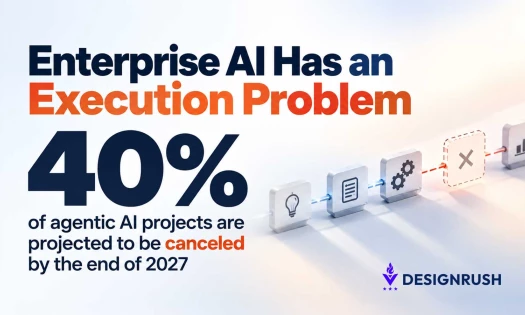
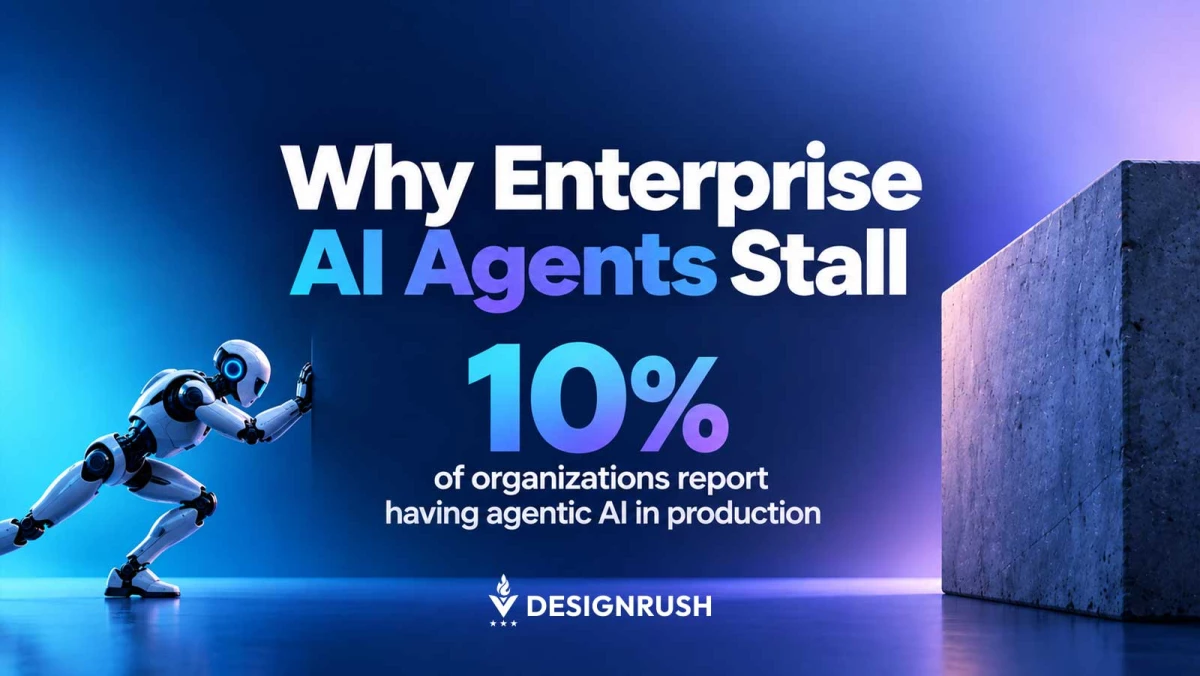
However, Gartner reported in August that only 10% of organizations had agentic AI in production. Separately, the firm projects that more than 40% of agentic AI projects will be canceled by the end of 2027.
Those numbers were already true before Meta's admission, using models from labs that are not behind schedule.
That is the tell. One might think enterprise agent adoption is stalling because the frontier model isn't good enough yet.
But in reality, almost nobody has done the unglamorous work of redesigning the workflow, the roles, and the governance around the model that already exists.
So even in the best case, where Meta ships a genuinely excellent consumer agent, tightly wired into its ad business, on whatever timeline it settles on, that breakthrough doesn't transfer.
It solves Meta's problem, but it doesn't touch yours.
What Enterprise Leaders Should Ask About AI Agents
For enterprise leaders watching this play out, I'd resist the instinct to treat "when will the agents get better" as the operative question.
The more useful question is this. Given the capability that already exists today from any of half a dozen credible labs, what would it take to move an AI pilot into reliable production inside your specific workflow?
That's a structural question, not a model question.
It involves choosing the right process to redesign, defining what "done" means for that specific workflow, and building the governance that lets people trust the output enough to actually change how they work.
Waiting for a better agent to arrive is a bet that the hard part is still ahead of you.
For most organizations I've seen, the hard part isn't the agent. It's everything the organization has to build around it.