
Reducing Technical Debt: Key Findings
- Legacy systems quietly drain IT budgets and talent, leaving companies vulnerable to downtime and cyber risks.
- Low-code modernization turns risky overhauls into continuous upgrades, allowing businesses to refactor systems without disruption or added debt.
- Treating low-code modernization as an ongoing strategy gives organizations the agility to respond faster to markets
Legacy systems from a decade ago may look reliable now, but the truth is that these quietly accumulate inefficiencies faster than credit card interest.
And with each patch, workaround, and dependency you need to apply to keep things running, the technical debt continues to pile up.
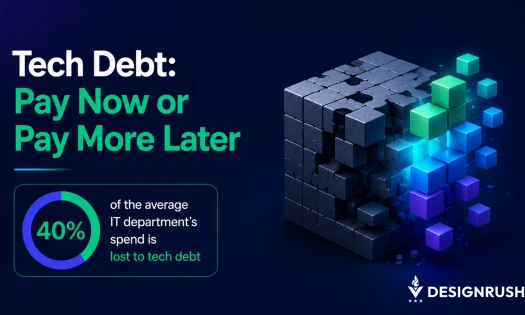
This debt has very real costs for businesses. In fact, Accenture’s 2024 Digital Core report found that technical debt remediation regularly eats up 15% of IT budgets.
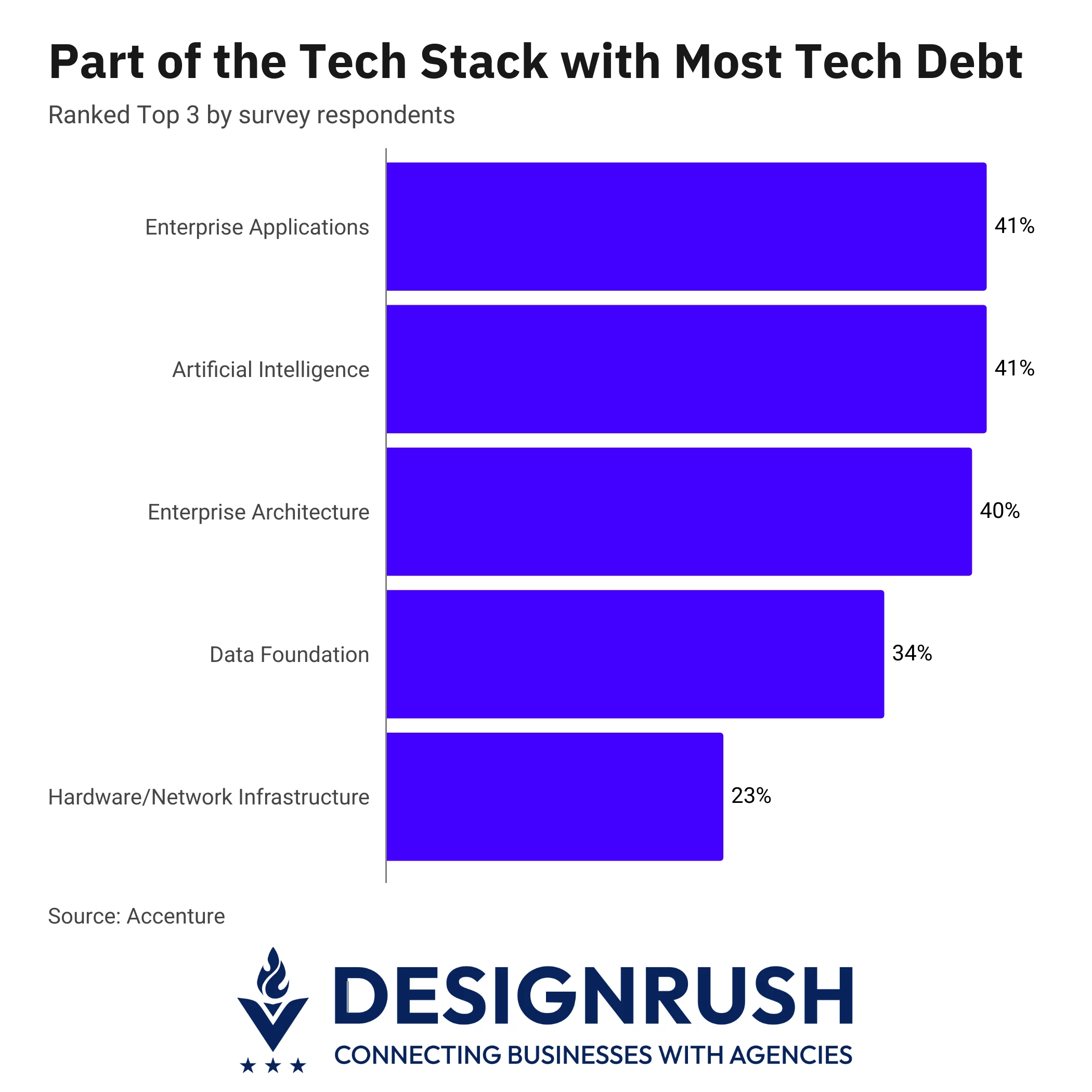
That may seem like a small amount at first, but it adds up quickly. According to the same report, technical debt costs companies $2.41 trillion a year in the US alone.
That’s why many companies turn to leading software development agencies, like Unico Connect, and low-code modernization, which address this problem without causing full disruptions associated with a full system rewrite.
The Risks of Operating Legacy Systems
“If it ain’t broke, don’t fix it” is often the mindset that companies take when it comes ot their legacy systems.
Just because it “still works,” however, doesn’t mean that any existing cracks won’t widen over time, multiplying risks like:
- Operational fragility: Bugs and instability can occur when upgrading software or when APIs shift. This leads to downtime becoming a recurring headache instead of a rare event.
- Security gaps: Unsupported technologies typically leave weak points that cyberattackers can exploit. Emergency patches to fix these take time away from actual development and innovation.
- Talent challenges: Younger developers, trained in modern frameworks, are harder to onboard, causing them to shy away from jobs tied to obsolete stacks.
"The real cost of legacy systems rarely shows up in quarterly reports. It shows up in the features that never launch, the markets competitors enter first, and the engineers who leave rather than spend their careers on obsolete frameworks,” said Unico Connect CEO Malay Parekh.
“Companies think they are saving money by postponing modernization, but what they are really doing is trading innovation for maintenance, and eventually that bill comes due."
And that’s where the real damage occurs.
What begins as a harmless “temporary fix” slowly locks entire organizations into a perpetual reactive mode.
Instead of shaping markets, businesses scramble to hold onto relevance while their faster rivals capture more and more market share.
Use Low-Code to Break the Modernization Deadlock
When the weight of legacy systems becomes unsustainable, companies often turn to modernization.
Unfortunately, traditional hard-coding approaches tend to create as many problems as they solve:
- Full rewrites stretch timelines. Years of custom coding can be derailed the moment business requirements shift.
- Maintenance becomes its own burden. Custom code often introduces new dependencies and fragile integrations that add to technical debt instead of reducing it.
- Downtime risk escalates. Replacing entire systems with hard-coded builds often requires pauses in service that customers will notice immediately.
What organizations need is a way to modernize without bringing business to a halt.
Low-code modernization offers precisely that, allowing companies to refactor incrementally, preserving critical logic while replacing outdated components.
Additionally, visual frameworks accelerate development with drag-and-drop functionality. Likewise, modularity keeps systems flexible, so upgrades can happen in smaller, safer increments.
The best part is that such changes can easily be run in the background, which allows for zero downtime.
“No downtime matters in more ways than you’d initially think,” said Parekh. “Modernization is rarely a one-time thing since models keep moving, security standards evolve, and customer demands never slow down.”
“Low code gives companies a framework where modernization is continuous instead of the old stop-start gamble traditional methods used to be.”
By reframing modernization as an ongoing process instead of a single overhaul, companies position themselves to stay competitive without the recurring shocks of technical debt.
Turn Your Technical Debt into a Strategic Advantage
Some see technical debt and modernization as a defensive strategy. In reality, they should see it more like an offensive play.
After all, the true benefit of low-code modernization is in how quickly an organization can respond to the world around it.
This means your tech stack stops being a cage and starts being a rail track towards success.
And if there is one lesson worth remembering, it’s that debt only really wins if you let the interest pile up.