
What Breaks the Pitch: Key Findings
- Clients recognize recycled decks fast, which means agencies must lead with curiosity, relevance, and real human connection to build early trust.
- Withholding strategy and hiding behind vague claims signals insecurity, while transparency and actionable insight win confidence before the contract.
- Unclear delivery processes create friction and doubt, but structured systems and high-touch communication build lasting trust and stronger partnerships.
Data shows 40% of clients in 2024 planned to switch agency partners within six months, according to the Setup.us Marketing Relationship Survey.
Research also shows that 41% of marketers want more from their agency relationships.
But what’s really costing agencies clients, often before the first pitch deck ever sees the light of day?
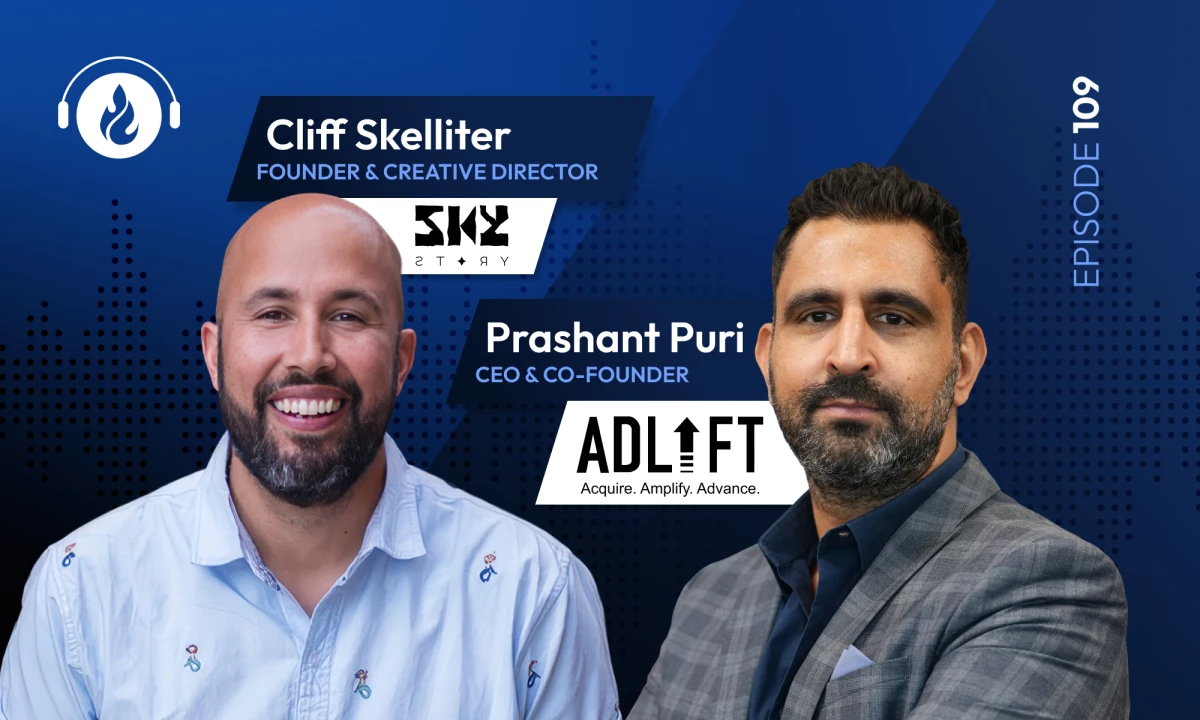
In this episode of the DesignRush Podcast, Prashant Puri, Co-Founder & CEO of AdLift, and Cliff Skelliter, Founder & Creative Director of Sky Story Creative, unpack what’s going wrong for agencies.
They explain how agencies can earn trust by leading with clarity, empathy, and results.
Rather than citing bad work, these seasoned agency pros say it has to do with broken trust, often in the form of:
- Generic presentations that feel copy-pasted
- “Secret sauce” mysticism instead of transparency
- Selling traffic and vanity metrics instead of business outcomes
- A lack of foresight and process clarity that erodes trust
Keep reading to see how these mistakes can kill trust, and ultimately partnerships, before giving your next pitch.
For the full episode, watch now on YouTube, or listen on Spotify.
Episode Chapter Summary
- 1:07 — What makes a true strategic partner
- 5:33 — Why collaborating independents beat one-stop shops
- 10:04 — Prashant’s pitch philosophy and the PayPal case
- 26:10 — Process clients notice: martech backbone and organized onboarding
- 30:58 — High-touch relationships, entrepreneur empathy, and creative flow
1. Your Pitch Looks Copy-Pasted, and Clients Can Tell
Most agencies think the pitch is about proving expertise. But clients are looking for relevance.
Cliff Skelliter shares why recycled decks and templated slides undermine confidence before the conversation even starts.
“What are we trying to do here? We’re just trying to build rapport. Once we have connection, we can build from there.”
Skelliter stresses that successful pitches begin with empathy and psychographics, not demographics. When agencies sound like they’re pitching from a playbook, clients disengage.
Instead, Cliff urges agencies to ask specific, client-centric questions.
“Even if they’re tired of answering, ask more,” he says. “That’s where the gems come out.”
2. You Hide Behind "Secret Sauce" Instead of Building Trust
Agencies often protect their process like it’s proprietary IP, but clients don’t want mysticism. They want clarity.
Skelliter puts it bluntly:
“Some people act like they have secret sauce. Relax. You don’t. What matters is asking the right questions, having integrity, and being fun to work with.”
Prashant Puri reinforces this with a story from AdLift’s pitch to PayPal. They showed up with a 70-slide deck outlining detailed recommendations, not because they had to, but because they believe every pitch should add value, regardless of the outcome.
“We go all in, so clients walk away with key takeaways, even if they don’t hire us.”
That’s abundance thinking. And that’s what clients remember.
3. You Sell Traffic, Not Outcomes
Clients don’t care about clicks. They care about growth.
“Having foresight becomes really, really critical… that’s what makes the differentiating factor,” says Puri.
He explains how AdLift evolved from traditional SEO tactics to building platforms like ContentLift and Tesseract, tools that drive backlinks and track brand visibility across AI platforms like ChatGPT and Perplexity.
By aligning with where the industry is headed, not where it’s been, agencies become indispensable.
“SEO has always been a black box,” Puri says. “We’ve spent 15 years decoding it.”
4. Your Process Feels Like a Black Box, and It Breaks Trust
Even when the results are good, unclear processes create doubt.
For this reason, transparency is essential to maintaining client trust.
“Automation and backend tools aren’t just about efficiency. They’re what build trust, because clients know exactly how we got results,” says Puri.
He also outlines how AdLift uses clean file systems, automation, and structured delivery to eliminate confusion.
Why? So, clients don’t have to guess where files live or whether work is happening, they see it.
Meanwhile, Skelliter emphasizes high-touch communication as a trust-builder:
“I end up like a psychologist for my clients sometimes. Being high-touch builds friendships, and that’s when the most creative ideas flow.”
Why Cultural Storytelling Still Wins Pitches
While tech and tools evolve, some differentiators remain timeless. One of them: authentic storytelling rooted in community insight.
Skelliter shares his framework, called interpretive design:
“Interpretive design means finding the knowledge keepers of a community — the ones who know the lay of the land. That’s how you build authentic storytelling.”
This approach, informed by Indigenous culture and lived experience, helps Sky Story Creative build brands that resonate far beyond demographics.
“People want to feel seen. We speak to the layers others overlook," he says.

About the Experts
Prashant Puri Co-Founder & CEO, AdLift
Puri is a global SEO strategist helping Fortune 500 and growth-stage brands scale with measurable ROI. He distills complex performance marketing into clear, scalable strategies and is a regular speaker at BrightonSEO, Pubcon, and Digital Summit.
Cliff Skelliter Founder & Creative Director, Sky Story Creative
Skelliter is a branding strategist and Indigenous consultant with a background in media and entrepreneurship. He blends cultural insight with creative storytelling to build brands that earn trust and drive connection.
The Future of Agency Success: AI Optimization with Human Insight
Given how fast search behavior is shifting, Puri cautions agencies still optimizing for Google.
“If optimizing for AI and ChatGPT isn’t part of your 2025 roadmap, 2026 will already be too late.”
His team has already developed tooling and tracking for emerging platforms like Perplexity. Visibility now means presence across AI ecosystems, not just on search.
But tools aren’t the only differentiator.
“We speak human. That will never change, no matter how many tools or AI platforms we use,” says Skelliter.
The agencies that win will balance systems and soul.
Final Thoughts: Preparing Your Next Pitch
Forget phony pitches or transactional interactions.
The future of landing clients is all about forging partnerships rooted in foresight, authenticity, and transparent process.
Put your best foot forward by getting clear on:
- Cultural nuance
- Tools that scale visibility
- How best to show your work
Want to learn more? Watch the full episode on YouTube or listen on Spotify.