
Anthropic launched Fable 5, Claude's most advanced AI model yet, on June 9.
Then, on June 12, the U.S. Commerce Department issued an export control directive barring any foreign national from using it.
The directive includes the publicly available Fable 5 and Mythos 5, a version Anthropic kept restricted to a small group of approved organizations.
The company concluded that the only way to comply was to disable both models for all global customers, including U.S. users.
View this post on Instagram
This incident marked the first time a leading AI company pulled a publicly deployed model offline at the direction of the federal government.
The policy story will run for months, but a more urgent question for anyone managing a marketing or creative operation is now at the forefront.
What should agencies and brand teams do when an AI tool they rely on disappears without notice?
The Order and the Jailbreak Behind It
The directive was issued by Commerce Secretary Howard Lutnick, with support from the Bureau of Industry and Security.
It cited national security concerns linked to a specific technique that could allow users to circumvent some of Fable 5's safeguards.
According to Fortune, Amazon CEO Andy Jassy flagged concerns to senior officials after Amazon researchers used Fable 5 to pull restricted information about cyberattacks.
The US government, citing national security authorities, has issued an export control directive to suspend all access to Fable 5 and Mythos 5 by any foreign national, whether inside or outside the United States, including foreign national Anthropic employees.
— Anthropic (@AnthropicAI) June 13, 2026
The net effect of…
Anthropic disputed the claims, stating it had received only "verbal evidence of a potential narrow, non-universal jailbreak."
It also stressed that no evidence of a universal jailbreak had been found.
Anthropic described the demonstrated technique as involving "a small number of previously known, minor vulnerabilities."
It also noted that comparable capabilities exist in other public models like GPT-5.5, and that it received no further details on the national security concern.
The company added that "the finding of a narrow potential jailbreak should be cause for recalling a commercial model deployed to hundreds of millions of people."
Despite its defense, Anthropic has ultimately complied with the directive.
All other Claude models, including Opus 4.8, Sonnet 4.6, and Haiku 4.5, remain available and have not been affected.
The Platform Dependency Problem
The Fable 5 suspension exposed a structural vulnerability that has been building across the industry for years.
Agencies and brand teams spent the past two years embedding frontier AI tools into production workflows.
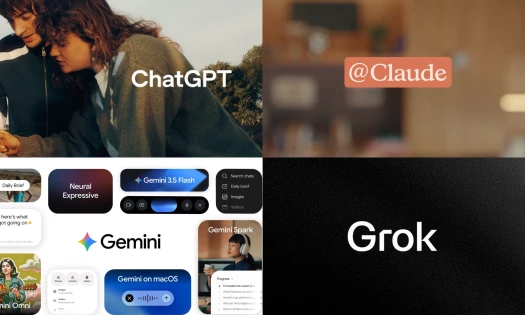
Teams now draft creative briefs in Claude, review copy in GPT, and run research and competitor analysis through other models as standard practice.
Most of these workflows assume the underlying tool will always be there, treated like electricity or running water.
"The biggest mistake businesses make is building workflows around a tool instead of a business outcome," Nutshell President Allyssa Kelley-Brown shared with DesignRush.
"AI should help teams generate leads, serve customers, and close deals more efficiently, but those processes should still work if the underlying technology changes."
However, the Fable 5 suspension shows us that this assumption doesn't quite hold in light of the current regulatory environment.
As ITECS noted, frontier AI model availability can turn into a compliance, vendor-risk, and production-continuity event all at once, with no warning for businesses.
For agencies working with global clients or running operations across multiple markets, understanding this risk profile is imperative.
Why One AI Provider Is a Liability
The response from infrastructure and developer communities is consistent across the board.
DevOps platform Clanker Cloud called the suspension a vendor-risk event that belongs in the same planning conversation as server outages and data center failures.
Snyk, a widely used developer security platform, reached the same conclusion, calling model redundancy a resilience requirement for any team building on AI.
For agencies and marketing teams, vendor-risk frameworks don't typically extend to the AI tools embedded in creative and production workflows.
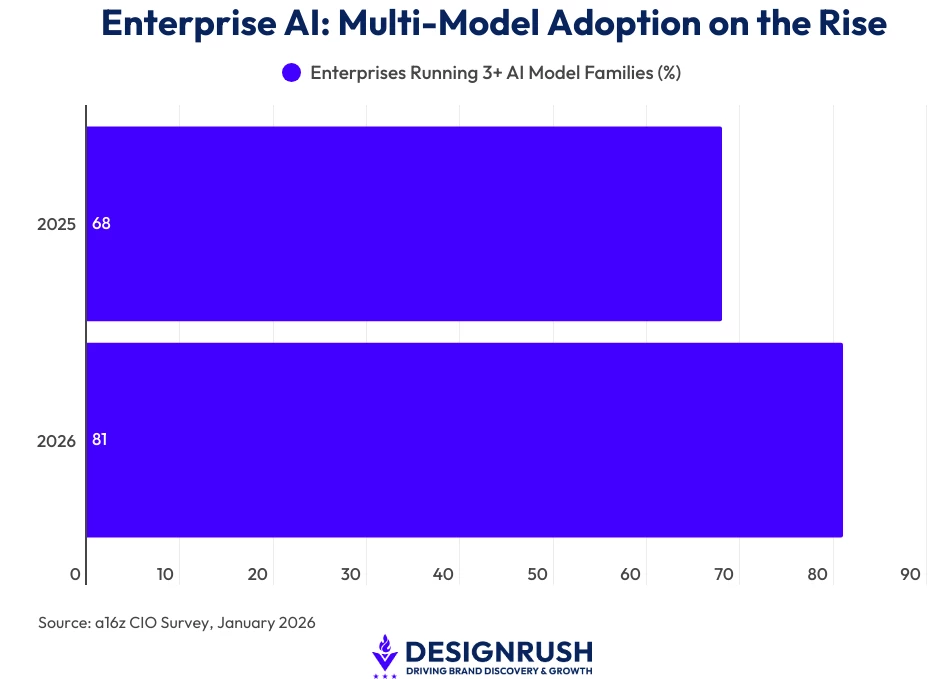
a16z's latest enterprise research found that 81% of enterprises in 2026 run three or more AI model families, up from 13% last year.
The data points to model-agnostic architecture, and the enterprises best able to absorb this kind of disruption are the ones already running multiple model families.
"The lesson here isn't to use more AI tools, but to avoid tying critical business processes to a single provider.
Teams should know exactly which workflows depend on AI and have a backup plan before they need one," Andy Fowler, CEO and co-founder of Nutshell, commented.
Fable 5 is, by most accounts, a capable and well-regarded model, and Anthropic says it is working to restore its access.
But an AI model that a government can switch off and on is exactly the risk agencies have to plan around.
View this post on Instagram
The bigger takeaway is that production workflows should be built with the assumption that any specific model could become unavailable.
It also suggests that the prompts, review stages, and quality checks around it should be portable enough to survive a provider change.
The Wider Regulatory Trajectory
The Fable 5 suspension didn't arrive in isolation.
It follows the Pentagon's February 2026 designation of Anthropic as a "supply chain risk," which was followed by the company's refusal to drop two contract conditions.
It had insisted on prohibitions against mass surveillance of Americans and fully autonomous weapons without human oversight.
View this post on Instagram
So far, the Commerce Department's June directive is the most visible consequence of this designation, and it's unlikely to be the last.
The wider trajectory is toward more regulation of frontier AI models, across national security, data privacy, and competition grounds, in the U.S. and internationally.
The EU AI Act is already classifying certain AI applications as high-risk, with the full set of compliance requirements for providers and deployers coming into force on August 2.
This means that agencies recommending AI tools to clients can no longer treat the regulatory environment as someone else's problem.
A model that a government can just suspend carries a different risk profile from one that can be deployed on-premises or through an open-source stack.
For agencies and brand teams building AI-dependent workflows, the Fable 5 suspension points to a few steps worth taking now:
- Audit which workflows depend on a single model: Knowing where your production exposure sits is the first step to managing it.
- Design prompts and templates to be provider-agnostic: The more a workflow is tied to a specific model's behavior, the harder it is to reroute when access disappears.
- Add AI platform availability to your framework: Regulatory, geopolitical, and legal disruption belong in the same risk register as data security and uptime.
Note that although this incident may be resolved quickly, the conditions that produced it aren't going away.
Our Take: Can Creative Work Really Be Model-Agnostic?
Swapping models is clean for research and data, where accuracy is all that matters.
But we think that creative work is the harder case, since it can't go fully model-agnostic the way the backup-everything advice implies.
Each model writes with its own rhythm, defaults, and instincts.
A brief tuned to Claude's voice reads differently the second you drop it into GPT.
It's like handing a familiar script to a new actor, where the words survive but the delivery changes.
The practical move is to document the creative settings behind each workflow (the tone, the examples, and the guardrails), so a model switch becomes a fast re-tune.
The teams that come through the next shutdown best are the ones who can rebuild a brand voice in a new model the next day.
So if your main model goes dark tomorrow, how long will it take before your work sounds like its old self again?
Agencies building production AI workflows need partners who understand vendor risk and model portability.
Explore the top AI development companies in our directory.