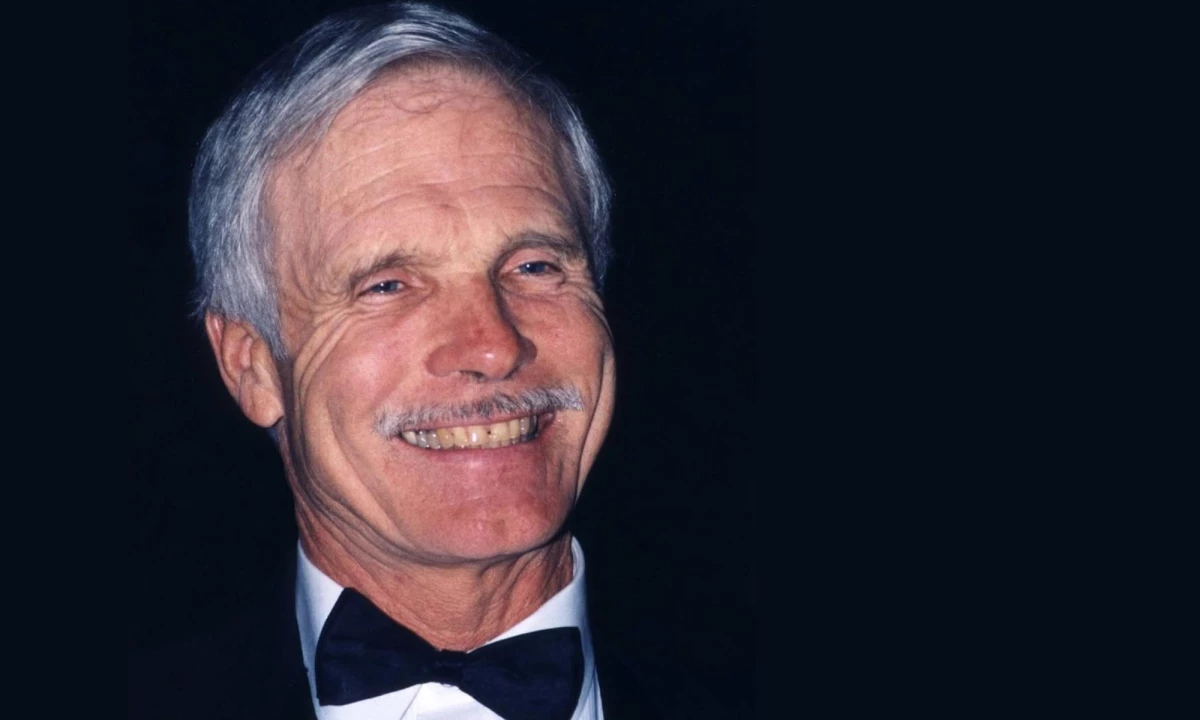

Most obituaries will focus on CNN, the Gulf War, or the $1 billion he donated to the United Nations.
But Ted Turner also changed how brands think about visibility, distribution, audience segmentation, and scale.
Long before social platforms normalized constant engagement, Turner built a media system designed to stay active around the clock.
He organized channels around sharply defined viewer identities before streaming fractured audiences into niche ecosystems.
Even the modern founder-as-marketing-engine model carries traces of the way Turner operated publicly alongside his companies.
None of what he did looked safe at the time.
He launched CNN without newsroom experience. He pushed local television nationwide through satellite distribution when competitors dismissed the idea.
He built separate entertainment brands instead of collapsing everything into a single network identity.
Many of the decisions now treated as standard media strategy were once considered financially reckless.
For marketers and agencies, Turner’s legacy remains structurally relevant to how modern brands compete for attention, organize portfolios, and build credibility across fragmented audiences.
How Turner Rewired Modern Media
Ted Turner entered media through acquisition.
In 1970, he bought a struggling Atlanta UHF television station and transformed it into the "superstation" WTBS by distributing it nationally through satellite technology.
That move alone changed cable television economics, but CNN became the defining breakthrough.
When Turner launched the Cable News Network in 1980, most broadcasters considered 24-hour news commercially impossible.
The major networks operated around tightly scheduled evening broadcasts and saw no audience demand for continuous coverage.
Turner disagreed.
CNN spent years losing money and absorbing criticism from competitors who viewed the network as an expensive experiment.
Then global events changed everything. During the Gulf War in 1991, CNN became the primary live news source from Baghdad while other networks relied on delayed reporting and pooled footage.
The network did more than cover the war. It changed audience expectations permanently.
Real-time information became normalized. Continuous coverage became a competitive necessity. News shifted from scheduled programming into a constant global feed.
Turner later expanded his influence through:
- TNT
- Turner Classic Movies
- Cartoon Network
- Sports ownership with the Atlanta Braves and Hawks
Each property targeted different audiences without diluting the others.
That structure now resembles the fragmented media ecosystems brands operate inside today.
Outside of business, Turner's environmental advocacy and $1 billion pledge to the United Nations redefined expectations around corporate philanthropy long before ESG became a boardroom standard.
Together, those decisions reshaped not just media, but the systems modern marketing still relies on.
Turner's 5 Branding Moves That Changed Media
Turner consistently moved toward spaces that competitors either underestimated or ignored completely.
What made those decisions powerful was the way each move anticipated future audience behavior before the market could fully see it.
Several of the systems brands now treat as standard practice, real-time engagement, audience segmentation, founder visibility, and purpose alignment, were visible inside Turner’s strategy decades earlier.
Here are five decisions that continue to shape modern branding and media.
1. CNN Created the 24-Hour News Cycle
The television industry did not simply doubt CNN in 1980. Many executives believed the concept itself was unsustainable.
ABC, CBS, and NBC dominated scheduled news programming and saw no reason audiences would want coverage all day.
Turner launched CNN anyway, funding the network under enormous financial pressure while critics predicted failure.
Then came the Gulf War.
In 1991, after the success of live coverage from Baghdad, the network became synonymous with real-time global news, as audiences realized they wanted it.
That advantage lasted for years.
By the time Fox News entered the market in 1996, CNN already owned the category it had created.
The broader lesson of brand equity still matters to marketers today.
Strong brands do not always win by outperforming competitors inside existing markets. Sometimes they win by defining a new audience expectation before anyone else recognizes the opportunity.
2. Distribution Became the Brand
When Turner acquired Atlanta station WTCG in 1970, he did not rebuild it around prestige programming or expensive productions.
Instead, he filled the schedule with reruns, old films, wrestling, and sports broadcasts that larger networks had largely dismissed.
The content itself was not exclusive. The availability was.
Turner’s breakthrough came when he distributed the station nationally through satellite in 1976.
He transformed a local station into a cable destination viewers across the country could access consistently.
That consistency became the brand.
Audiences returned because they knew exactly what experience the channel delivered. Turner understood early that familiarity and accessibility could build brand loyalty just as effectively as novelty.
Many modern content brands prioritize constant reinvention while weakening the recognizable viewing habits audiences actually retain.
Turner’s model showed that repeatable programming systems can scale faster than a constantly changing creative direction.
3. Turner Mastered Audience Segmentation
By the mid-1990s, Turner Broadcasting controlled CNN, TNT, TBS, Cartoon Network, and Turner Classic Movies.
Each network had a sharply defined brand identity, audience expectation, and programming style.
- CNN focused on urgency and global events.
- Cartoon Network leaned into youth entertainment and animation culture.
- TCM targeted classic film audiences.
The networks coexisted because they served different emotional and behavioral needs.
That approach now emulates how streaming platforms and digital publishers organize audiences across multiple brands, channels, and content verticals.
Too many companies still dilute brand portfolios by forcing multiple audiences into a single identity system.
Turner avoided that trap by treating audience segmentation as a strategic advantage rather than a branding complication.
4. Purpose Worked Because It Was Consistent
In 1997, Turner pledged $1 billion to the United Nations, one of the largest philanthropic commitments ever made by a private individual.
Turner had already spent years supporting environmental causes, launching the Turner Foundation, and producing "Captain Planet," the environmental animated series that became part of 1990s pop culture.
The UN donation felt aligned with a long-established public position rather than a reactive reputation campaign.
Modern audiences are highly skeptical of purpose-led branding that appears disconnected from a company’s actual behavior.
Brands regularly face backlash when brand messaging changes faster than actions do.
Turner avoided that problem because his advocacy operated across decades, not campaign cycles.
The lesson for marketers is to maintain visible alignment between messaging, investment, and long-term behavior.
5. Turner Built the Founder-Led Brand
Ted Turner never separated his public identity from his businesses.
He owned sports teams, made outspoken public appearances, gave provocative interviews, and consistently generated media attention that flowed back into his companies.
His visibility amplified the Turner brand ecosystem long before executives were expected to function as public-facing media personalities.
Today, founder-led branding has become standard across technology, entertainment, and startup culture.
Executives regularly build audiences on social platforms while acting as extensions of their company’s marketing strategy.
In many industries, founders now generate more engagement than official corporate channels.
What made it effective was authenticity. His public persona matched the risk-taking nature of the businesses he built.
For modern brands, the lesson is to understand that visibility becomes powerful when leadership behavior reinforces the company’s positioning.
Key Learnings for Brands and Marketers
Turner's career offers a blueprint for how brands can build relevance before the market fully recognizes where audience behavior is heading.
- Category creation generates stronger long-term leverage than incremental competition.
CNN succeeded because Turner identified an emerging consumer behavior before it was accepted.
Brands that define new consumption habits early can shape audience expectations to create market leadership. - Audience segmentation works best when identities remain distinct.
Turner separated media channels into clearly recognizable audience environments to strengthen retention and loyalty.
Modern brands can apply the same principle by building differentiated ecosystems instead of forcing every audience into one generalized brand voice. - Purpose only becomes persuasive when it remains consistent over time.
Turner’s environmental advocacy and UN philanthropy reinforced decades of public positioning rather than short-term campaigns.
Brands that align messaging with sustained action build credibility more effectively than those relying on reactive purpose marketing.
Our Take: Will Turner's Marketing Legacy Live On?
Turner's influence on modern marketing is larger than most people realize because many of the systems he helped normalize now feel invisible.
The expectation that brands respond in real time traces back to the always-on news environment CNN helped establish.
The fragmented audience ecosystems companies now manage across streaming, social media, and digital publishing resemble the segmented network structure Turner Broadcasting built decades ago.
He recognized that public visibility could function as a distribution engine long before executives became creators, podcasters, or social media personalities.
More importantly, he understood that attention compounds when personality, business strategy, and audience expectations remain aligned.
His environmental advocacy and philanthropic work were not isolated campaigns activated during reputational pressure.
They operated as long-term extensions of his public identity, which is one reason they retained credibility over time.
Many of Turner's biggest decisions were dismissed initially because they challenged established media behavior.
- 24-hour news looked excessive.
- National satellite television looked unrealistic.
- Audience fragmentation looked inefficient.
Those ideas became foundational to modern media economics, and that may be the most important lesson Turner leaves behind for marketers.
The systems audiences now treat as normal often begin as ideas the industry considers reckless.
Explore more branding and marketing agencies revolutionizing the industry in our directory.