
Guess' AI Controversy: Key Findings
- Guess and Vogue face public backlash for featuring AI-generated models without clear disclosure in the August 2025 issue.
- The campaign was produced by Seraphinne Vallora, which insists it's not replacing photographers or human models but supplementing brand needs.
- The ad’s tiny disclaimer reignited ethical debates over the role of AI in fashion and unrealistic beauty standards.
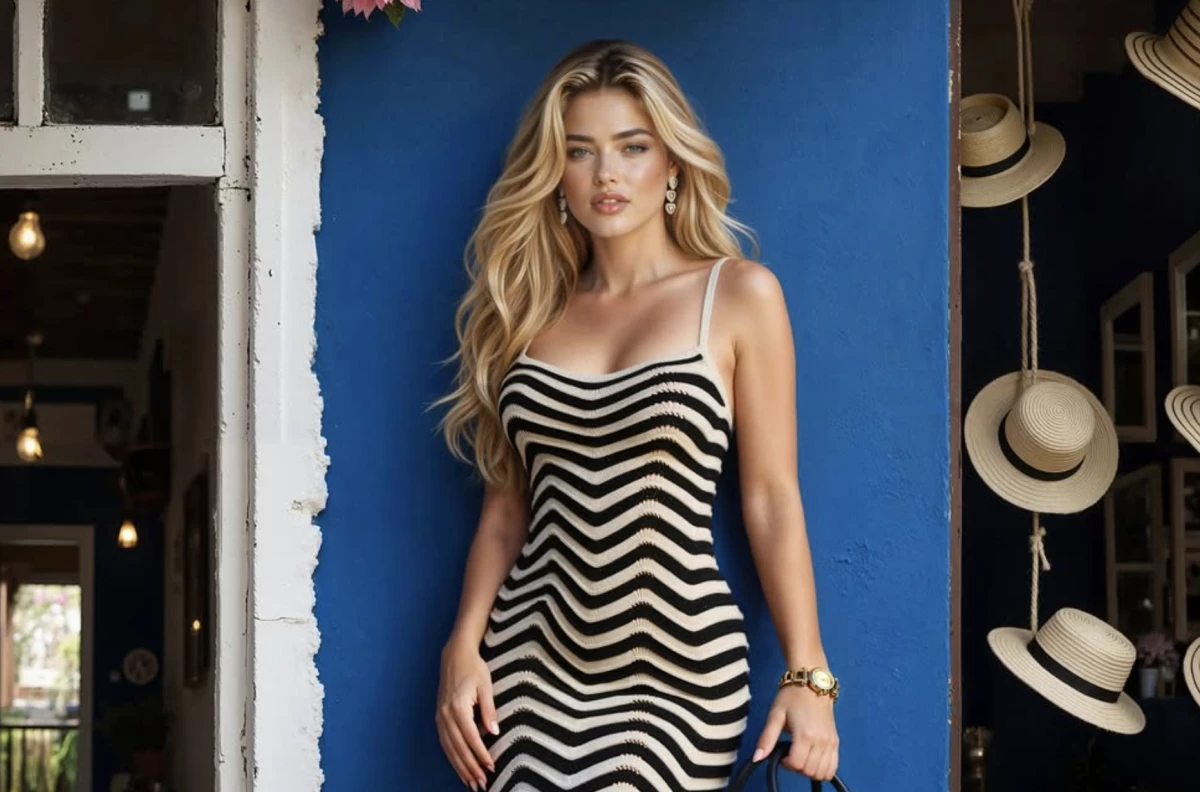
A Guess ad in Vogue's August 2025 issue featured two AI-generated women, making it the center of a heated debate about transparency, authenticity, and the future of modeling.
And the backlash was swift and loud.
“We want to look at real people in magazines,” one TikToker said, echoing hundreds of similar posts that condemned the brand and the publication for showcasing synthetic models without enough transparency.
The ad, which features two hyper-stylized avatars named Vivienne and Anastasia, was created by London-based AI agency Seraphinne Vallora.
But what angered readers most was how real the models appeared, and how hard it was to tell they weren’t.
Although the ad included a disclosure in tiny print that it was “Produced by Seraphinne Vallora on AI,” many missed it entirely.
Vogue later clarified the ad was paid content, not editorial, and maintained that AI models had never appeared in Vogue’s own fashion spreads.
Still, critics felt betrayed.
“The fact that they are using fake women in their magazines — speechless,” said lifestyle creator Payton Wickizer in a viral video.
Some readers also aimed at Guess itself, saying the brand’s move felt like a rejection of the bombshell identity it once built with stars like Drew Barrymore and Eva Mendes.
More Than Just an Ad Controversy
At the center of the controversy is Seraphinne Vallora, the AI agency responsible for the Guess ad.
Its co-founders, Valentina Gonzalez and Andreea Petrescu, told Good Morning America that their intention isn’t to replace anyone.
“The heart of fashion is photography. We will never challenge that,” Gonzalez said.
“We are here to co-exist together.”
Petrescu added that their role is to meet client needs.
“We are not here to change what their brand is. We are here to adapt to their needs and create something beautiful,” she said.
But critics, and even mental health professionals, see deeper implications.
In an interview with GMA, Psychologist Dr. Rachel Hawkins warned that repeated exposure to AI-idealized beauty can skew self-perception.
"The more we're exposed to these images, they become normalized to us, and we start to basically idealize these images that don't actually exist," she explained.
Anc compared to these images, Hawkins adds, there's a tendency for people to feel inadequate.
Damage to Vogue's Credibility
Vogue, often regarded as a gatekeeper of fashion’s creative voice, now finds itself caught between legacy and innovation.
Its quiet inclusion of AI in paid placements may have been a one-off, but it’s reignited an industry-wide debate about how AI fits into a brand identity traditionally built on human craftsmanship.
In response to criticism about the unrealistic beauty standards in the Guess ad, Gonzalez offered a simple explanation.
“What do people respond to? Beautiful women, things that look surreal, things that are very stunning. If you had responded to other types of beauty, we would have done that.”
The bigger question now is whether these experiments are simply trend-chasing or early signals of a fundamental reshaping of the industry.
And while Seraphinne Vallora framed the campaign as serving the client's vision, the lack of clearer disclosure creates confusion.
This is the case not just for consumers, but for the modeling industry where real people are now being quietly swapped out.
This is hardly the first instance of backlash to AI among industry giants.
Earlier this year, Toys “R” Us faced similar criticism for a fully AI-generated brand film, and Coca-Cola’s AI remake of its 1995 holiday spot was widely panned as emotionally hollow.
Without thoughtful execution, AI marketing can easily drift into uncanny or even alienating territory.
On the flip side, brands like Liquid Death have benefited from unofficial fan-made AI ads that captured their tone so well, viewers assumed they were real.
That’s the risk and the opportunity: AI can sharpen a brand’s voice or dilute it completely, depending on how closely it reflects its core.
Our Take: Who Defines What’s 'Real' Now?
To me, this Guess and Vogue ad isn’t just about AI, but also about the erosion of transparency, craft, and trust.
When audiences feel duped by fine print, brands risk more than a few angry TikToks.
They risk diluting their entire message.
I’m not against using AI in fashion marketing, but the execution matters heavily.
If you’re going to challenge norms, at least do it as honestly and respectfully as you can, coming into the industries you’re entering.
Earlier this year, Coca-Cola was also subject to scrutiny when it launched an AI-powered ad that misquoted a classic quote.