
Burger King's AI Assistant Rollout: Key Findings
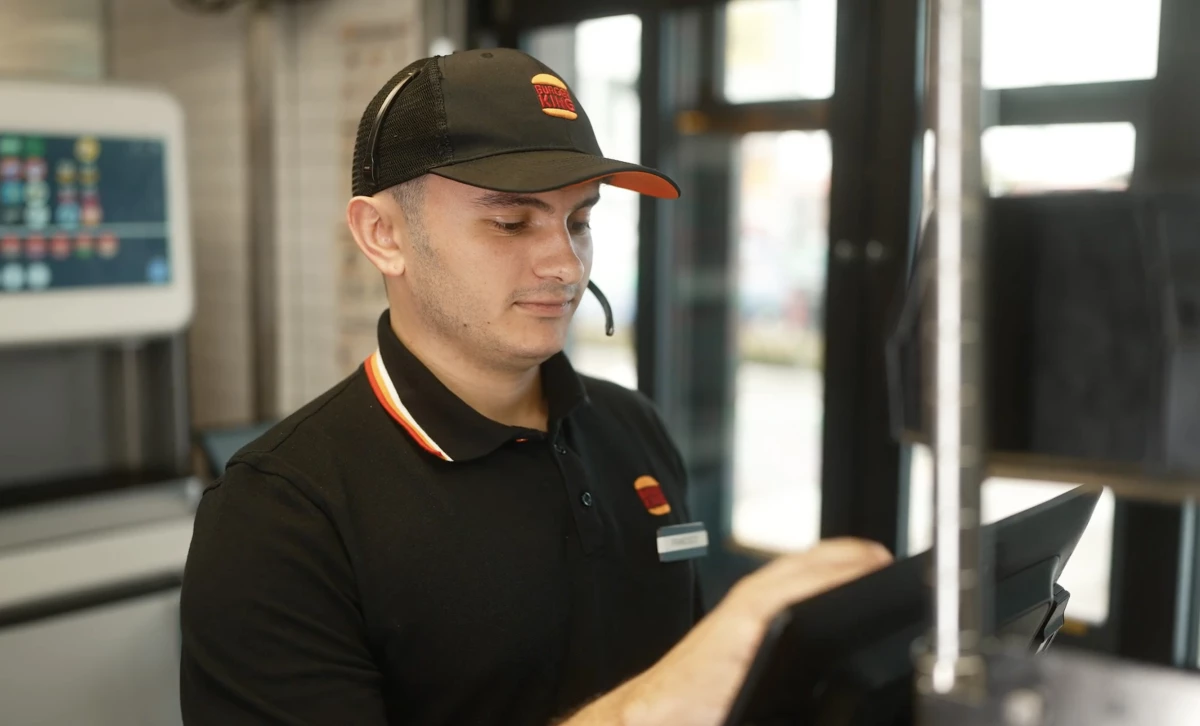
- The fast-food chain is piloting its AI assistant “Patty” in 500 U.S. restaurants, embedding the tool directly into employee headsets.
- The system tracks hospitality phrases such as “please” and “thank you,” giving managers insight into drive-thru service patterns.
- Patty links kitchen systems, inventory data, and cloud POS infrastructure, placing operational alerts and service metrics in one workflow.
Burger King has introduced Patty, an AI voice assistant powered by an OpenAI base model, into employee headsets.
The tool sits within a broader platform called BK Assistant, listening in from the time a vehicle pulls up until it leaves.
The system identifies specific hospitality phrases and compiles aggregated performance data that managers can review.
The company describes it as a coaching tool designed to support teams.
Crew members can also use Patty for practical questions mid-shift, like how many bacon strips belong on a Maple Bourbon BBQ Whopper and how to clean the shake machine.
Because the AI assistant connects to Burger King’s cloud-based POS system, it can also surface maintenance alerts and low-stock issues.
This then prompts menu updates across kiosks, digital boards, and drive-thru screens in near real time.
AI-powered drive-thru ordering remains limited to fewer than 100 locations, while BK Assistant is expected to expand across more than 500 U.S. restaurants by the end of 2026.
Headset Intelligence
The story here is operational visibility. Customer calls have long been recorded.
But embedding analysis directly into restaurant headsets brings a new level of monitoring into live service interactions.
Managers can now see patterns in language use alongside inventory performance and equipment status.
The initiative follows the chain's other digital experiments.
Burger King partnered with Media.Monks in 2024 to let fans generate AI-designed Whoppers, giving them a chance to win $1 million.
Although this recent AI move shows an appetite for automation across the brand experience, Burger King also doesn't scrimp on purely analogue marketing executions.
The chain shared its president’s phone number publicly to invite direct customer feedback.
BK U.S. President Tom Curtis plans to answer as many calls as he can each day, with every message logged and reviewed.
The feedback is intended to be used in operational and menu decisions across the business.
The open phone line and the headset assistant show a brand testing two forms of listening at once, one human and one algorithmic, both feeding into how restaurants run day to day.
As AI agents move deeper into restaurant operations, the advantage will come from how naturally they fit into real service culture and daily workflow.
The Score Behind the Smile
Words that once lived in the flow of a shift now leave a trace, something managers can review, compare, and act on. Here are some practical takeaways:
- Define the service signals you want reinforced. Clarity makes performance measurable.
- Embed tools within existing routines. Technology fits best where habits already exist.
- Position analytics as support. Teams respond differently when data feels developmental rather than disciplinary.
Service culture must be managed with care. Don't make it seem like you're punishing your employees or that they didn't do their jobs well.
Burger King ranked eighth among the top U.S. fast food chains, trailing leaders McDonald’s, Starbucks, and Chick-fil-A.
This standing gives added context to its push into AI agents like Patty, as the chain looks to refine consistency and lift performance across thousands of locations.
When you’re operating at this scale, even small improvements repeated every day can add up and translate into surpassing targets like foot traffic and online sales.
Our Take: What Happens When Friendliness Becomes a Metric?
We see this as a question of stewardship.
Hospitality has always lived in tone, timing, and instinct, the small cues that make a guest's needs feel acknowledged.
If Patty helps crews stay organized during a rush and actually improves service standards, it can reinforce consistency across locations.
But if attention drifts toward chasing phrase counts, the risk is that teams may start performing for the headset instead of the customer.
The system can log words and tally patterns, yet we believe the experience ultimately depends on how these words are delivered in real time.
In other news, Burger King partnered with Gordon Ramsay last year on a Wagyu burger collab, expanding its chef-led menu strategy.
Restaurant brands exploring AI-enabled operations often work with these top agencies specializing in digital transformation to align technology with culture.