
Liquid Death's AI Spec Ad: Key Findings
- AI tools like Veo 3 enable polished spec ads at studio-grade quality, without agency backing.
- The Liquid Death spec ad reflects a broader creative wave: fan‑made ads that go viral risk muddying brand identity, as creators take control.
- Fan-made AI ads give brands free reach and cultural momentum without the overhead of production, tapping into creator energy that feels authentic and native to digital platforms.
- Brands like Kalshi are already embracing AI ad production. Its $2K NBA Finals spot reached 20M+ impressions, signaling a cost structure and speed shift.
Want to listen to an in-depth conversation, instead of reading? Tune in on-the-go here:
Last week, a one-minute commercial for Liquid Death surfaced online.
It was bold, fast, and visually layered. But it didn’t come from the brand.
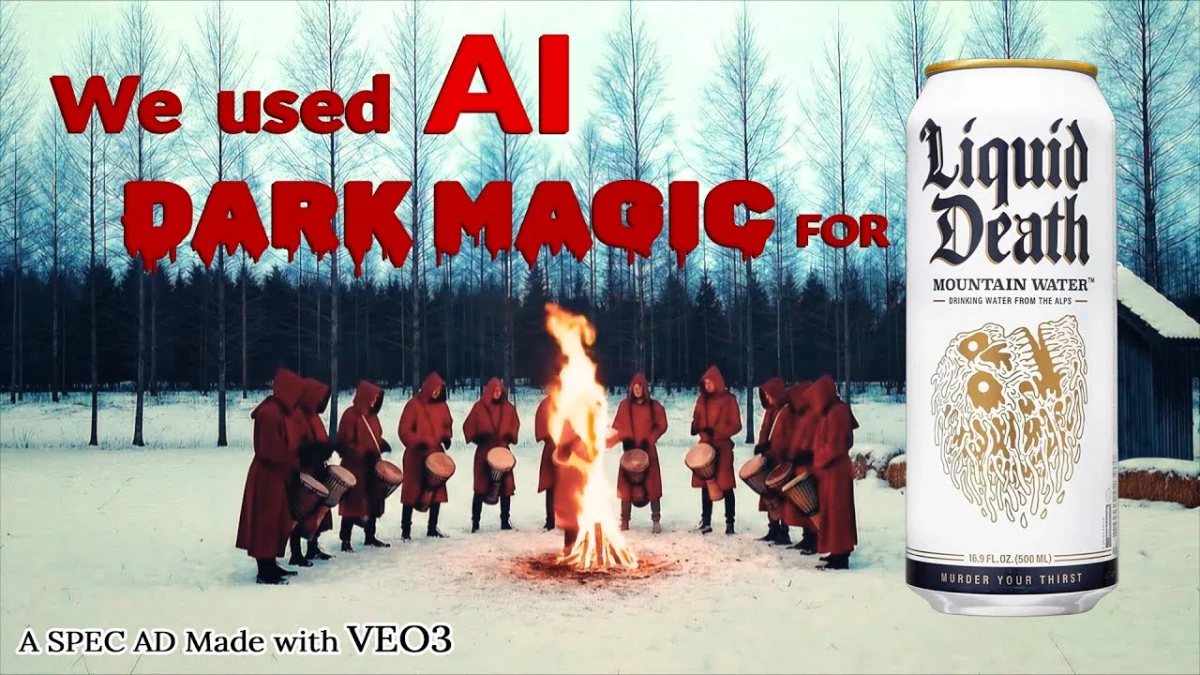
It was produced by writing-directing duo Noam Sharon and Tal Rosenthal of Too Short For Modeling and creative director Amir Ariely, using Google's video generator, Veo 3.
There was no partnership, no budget, and no direction from Liquid Death. It was simply a creative experiment and a show of admiration for the brand.
View this post on Instagram
It quickly got noticed, being reposted on social media and garnering tens of thousands of likes, as well as numerous positive reviews.
"This is an outstanding new spec (aka unofficial) ad pitching Liquid Death, made entirely using AI!
This is perhaps THE best AI-made ad I have seen in recent times (and I have seen a lot!)," communication strategy consultant Karthik Srinivasan wrote in an Instagram post.
What started as a project quickly became a case study of what AI-fueled, speculative ads can do.
It also raises a harder question: When someone outside the company builds the brand’s story, who owns the message?
A New Take on Spec Work
Speculative ads have long been used to demonstrate skill or attract client interest.
What’s different now is the speed, scale, and polish made possible by AI.
With these tools, individuals and small teams can produce ads that look like they came from a full-service agency.
In this case, Too Short For Modeling made the Liquid Death video as a passion project.
The quality caught attention (even of Liquid Death itself) not just because it was clever, but because it looked fully finished.
View this post on Instagram
No traditional shoot. No marketing department. Just creative ambition, well executed.
The one-minute video opens with a police officer pulling over a beat-up red car and asking the scruffy, disheveled driver why he thinks he was stopped.
Looking at his front passenger seat loaded with Liquid Death cans, he replies that it's not what it seems. They're actually sparkling mountain water, giving the officer a can.
He then takes a gulp and says, "Wow, you weren't kidding. That is refreshing. But it's not why I pulled you over."
View this post on Instagram
And so, the guessing game continues, with the driver throwing out increasingly ridiculous answers, including:
- The busted tail light
- The illegal license plate
- The body in the trunk
- The human trafficking
- The roadkill (it was a whale in the middle of the icy road)
- The chemical waste
These are all accompanied by hilarious visuals as the officer continues dismissing them one by one with dry, “Not it” humor.
After saying he gives up, the policeman then gives the real answer, "It's because it's your birthday. Happy birthday, Kevin."
He then pulls out a cake and starts singing, as Kevin exclaims, "You're the best dad ever," closing the ad.
View this post on Instagram
As Srinivasan wrote, "The reason why it works is because of the script and how it fits Liquid Death's carefully built bizarre brand tone perfectly."
Posted on the studio's official Instagram account, it came with the disclaimer:
"This is an unofficial, fan-made spec ad created independently and not affiliated with Liquid Death. All trademarks belong to their respective owners.
No commercial use intended. If you represent the brand and have concerns, feel free to reach out."
This type of user-generated content is becoming more common, and it’s not limited to niche players.
What's Actually Happening on Social Media
YouTube has become a proving ground for AI-driven creativity.
As of May 2025, four of YouTube’s 10 most-followed creators were publishing content made with AI, according to Sherwood News.
These ranged from surreal animated animal shorts to full music videos built with programs like Suno.
Many of the top AI channels follow a consistent theme once they find what works.
For instance, “Masters of Prophecy,” which has 31.1 million subscribers, creates AI-generated synth-pop videos with an ’80s-style sound and aesthetic.
The video above was posted only two months ago and has already amassed 21 million views.
AI-powered video platform Zebracat reported that roughly 63% of original streaming shows now include AI-created visuals or effects, helping studios produce content more quickly.
The increasing use of AI on social media is shown in the following statistics:
- 40% of all video content on major social media platforms is AI-generated.
- 58% of video ads on YouTube are AI-generated.
- About 72% of YouTube creators rely on AI to generate their thumbnails, with many reporting a 38% boost in click-through rates (CTR).
- 52% of TikTok and Instagram Reels short-form videos are generated using AI tools.
- 57% of Snapchat and Pinterest interactive marketing videos are now produced using AI.
The AI-generated video market is expected to grow 35% per year, hitting about $14.8 billion by 2030.
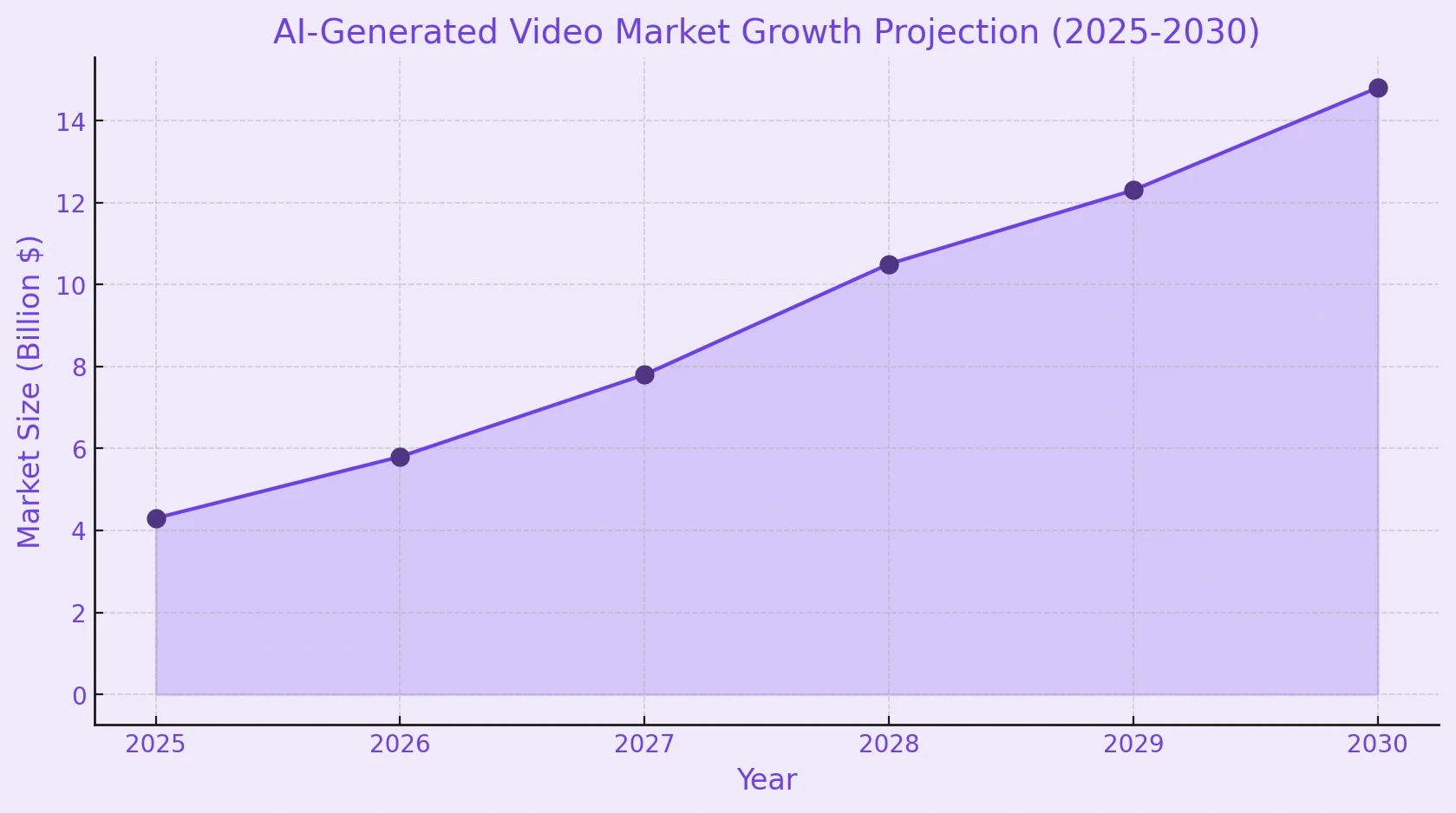
By this time, creators and companies are also projected to produce five to six times more AI videos annually than they do today.
Much of this growth comes from being able to post frequently and at low cost.
These creators don't need studios or film crews. All they need are ideas, basic tools, and the ability to keep pace with the nonstop rhythm of content platforms.
This same pattern is now moving into the world of speculative brand ads.
Why Brands Might Want to Pay Attention
There are real advantages for companies when independent creatives produce content inspired by their products. These include:
- Free visibility when fan-made content goes viral
- Fresh creative energy from outside the brand bubble
- Discovery of new talent through unsolicited work
Kalshi, a financial startup, capitalized on this idea. The company ran a $2,000 AI-generated spot during the NBA Finals, made by an independent filmmaker.
That ad reached over 20 million impressions.
For a small investment (spending about 99% less than a usual commercial), Kalshi earned wide exposure without going through a traditional agency process.
View this post on Instagram
The Liquid Death spec ad didn’t air on national TV, but it reached audiences on social media who assumed it was official.
This kind of impact works in the brand’s favor, driving authentic reach and recognition.
While it was spot on and was even acknowledged by the brand, others of this kind can also create challenges.
AI tools make speculative ads easier to produce, but not all of them benefit the companies they feature. Things could still go wrong, and here are some key risks:
- Mismatched tone or messaging that conflicts with brand identity
- Legal issues related to unauthorized use of trademarks or logos
- Audience confusion over what is or isn’t official
Even brands that have produced their own official AI content have faced backlash.
Coca-Cola reimagined its classic 1995 holiday ad using AI. The result was criticized for feeling flat and unmemorable.
Before that, Toys “R” Us launched a fully AI-generated animated short in June 2024 that many viewers described as off-putting and empty.
In early 2025, Dutch director Joris Noordenbos flagged that an AI-made KFC spec ad had closely imitated his 2019 commercial.
The similarities in camera angles and visual style led to questions about whether the AI model had drawn too heavily from copyrighted material.
"There’s no doubt… AI brings both [excitement] and unease to our industry. I’m genuinely stoked about the new workflows and creative doors it’s opening.
But when it’s used like a Xerox machine and passed off as 'innovation,' something feels off," Noordenbos wrote.
View this post on Instagram
This puts both creators and brands at risk of unintentional plagiarism.
If a brand posts or is linked to content that closely resembles existing work, it can come off as sloppy or even dishonest, whether it was intentional or not.
Audiences may assume the brand copied someone else’s idea, which can lead to lost trust and criticism from the creative community.
There’s also the risk of takedowns. Platforms can remove videos flagged for copyright issues, which can harm a creator’s channel and drag brands into legal trouble they didn’t anticipate.
In a space moving this fast, even honest mistakes carry real consequences.
Our Take: Who Controls the Voice?
The Liquid Death spec ad worked because it felt true to the brand. It captured the tone, humor, and edge that fans recognize, even though it wasn’t official.
But it brings up an important question: What happens when someone outside the company tells your story better than your own team?
In my view, this is less about creative ownership and more about awareness.
When a brand identity is strong (like Liquid Death's), people can easily replicate it. This can be a good thing.
🤯🌊 Blown away by this commercial for @LiquidDeath, made by the Too Short for Modeling team + @GoogleAIStudio Veo 3.
— 👩💻 Paige Bailey (@DynamicWebPaige) July 3, 2025
Incredible consistency, creativity, and variety for each of the segments generated. Awesome work!
Creative Direction: Amir Ariely
Color Correction: Ilan Bouni pic.twitter.com/mlD04XprLG
But when the message gets pulled in directions that don’t fit, it can work against you.
Brands should be ready to respond, not just react. Know what aligns with your voice and what doesn’t.
If someone gets it right, acknowledge it. If something feels off, decide early how you’ll handle it.
The voice of a brand doesn’t live in internal documents. It lives in what people see, hear, and repeat.
Companies that understand this will have an easier time staying part of the conversation.
When your team needs more content without more overhead, these AI creative agencies help fill the gap with clarity and speed: