
Anthropic's Claude Design Launch: Key Findings
- The conversational AI tool built on Claude Opus 4.7 turns prompts into prototypes, decks, and marketing assets.
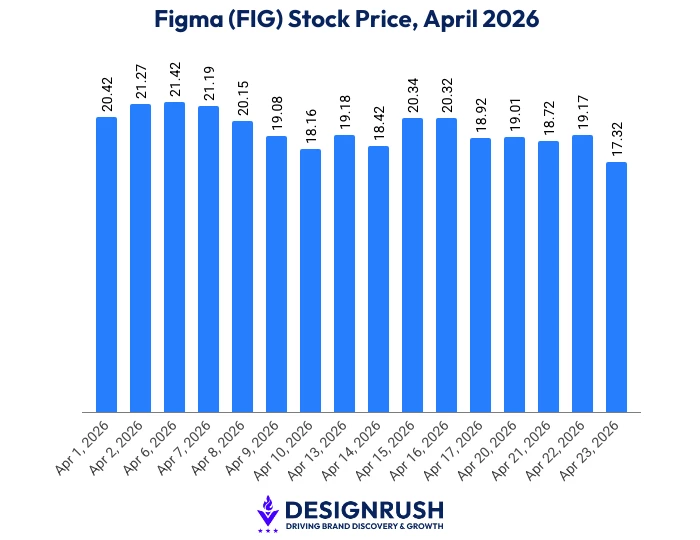
- Figma's stock fell 7% on the day of the launch, three days after Anthropic CPO Mike Krieger resigned from Figma's board.
- Claude Design is available in research preview for Pro, Max, Team, and Enterprise subscribers, with exports to PPTX, PDF, HTML, and Canva.
Anthropic Labs launched Claude Design on April 17, and the effect is near instant.
The impact is immediate, with Figma's stock falling 7% the day it launched.
Three days earlier, Anthropic CPO Mike Krieger had also quietly resigned from Figma's board.
The response from investors shows just how directly Claude Design challenges existing platforms.
Built on Claude Opus 4.7, the tool generates prototypes, slide decks, landing pages, and marketing assets through conversation, with no design background required.
The target user is the founder, product manager, or marketer who needs a polished visual output fast.
Claude Design takes a text description and produces an initial design, which can be refined through conversation, direct edits, or custom sliders.
The system integration reads Anthropic’s codebase and design files to automatically apply existing colors, typography, and components.
Introducing Claude Design by Anthropic Labs: make prototypes, slides, and one-pagers by talking to Claude.
— Claude (@claudeai) April 17, 2026
Powered by Claude Opus 4.7, our most capable vision model. Available in research preview on the Pro, Max, Team, and Enterprise plans, rolling out throughout the day. pic.twitter.com/2BgBGtgYGX
Among the AI design tools available in 2026, Claude Design is one of the few that reads existing brand infrastructure rather than starting from scratch.
Website prototypes hand off directly to Claude Code as a structured implementation bundle, while other outputs can be exported to PPTX, PDF, HTML, and Canva.
For the first time, a single tool covers the full journey from brief to build, and maybe this is why it's become such a threat to major design platforms like Figma.
Automated Design Work
Clients can now generate a first-draft prototype or pitch deck from a prompt, moving the conversation ahead before an agency brief is even written.
A veteran agency owner with over two decades of experience wrote on Reddit that the bulk of design work has always been pattern reproduction.
Structured, logical, and repetitive by design. It was always training data waiting for AI to arrive.
Early users noted that the tool produces competent user interfaces with little effort, but nothing truly unique.
Others hit usage limits within days, raising questions about whether a research preview is the right frame for a workflow replacement.
But whether AI is used for first drafts or more polished marketing materials, experts say the outputs generated still need to meet the standards of the brand using it.
Kevin Randolph, Partnerships Manager at Nutshell, said that human oversight remains essential to making that happen.
"When using AI to produce marketing materials, human involvement is still essential to ensure accuracy and brand alignment," he told DesignRush.
"Guidelines need to be in place to ensure AI stays true to the brand, and humans should always have the final say."
What This Means for Agencies
As our CES 2026 trends report noted earlier this year, the agencies making real progress are those that invest in infrastructure and stay flexible.
This launch shows how this shift is already playing out in real workflows:
- Exploration is no longer billable on its own. Clients now arrive with drafts, so agencies need to anchor work in strategy, not ideation alone.
- Tools now build on existing systems. Platforms that ingest brand assets raise expectations for what agencies contribute beyond execution.
- Early-stage work is being absorbed. Integrations like Canva target ideation force agencies to redefine where their value starts.
Agencies using AI to accelerate iteration while retaining strategic direction are best positioned to absorb this automation trend.
Those who treat the tool as a replacement for thinking will find that clients no longer need them for the parts they were already automating internally.
What remains billable is the judgment that the tool cannot replicate, and that has always been the harder thing to sell.
Our Take: Is Claude Design a Threat for Agencies?
We believe that design work that automation can’t fully replace depends on human decisions around originality, taste, and context.
Pulling a clear brief, spotting when output is technically correct but creatively wrong, and turning ambiguity into direction are some of the most valuable things agencies do.
They just were not always the most billable.
For agencies that only sell execution, Claude Design is a direct threat. For those that sell judgment, it speeds up the work without replacing it.
We think this launch ultimately accelerates a split between agencies that lead with strategic value and those that lead with production capacity.
The gap between these two models is about to get much harder to ignore.
Agencies efficient in design strategy and new tools will be best positioned for success as AI changes the early stages of the creative process.
Explore these top design agencies in our directory to find the right partners for your next project.