
Google Discover AI Summaries: Key Findings
- Google is now showing AI-generated previews in Discover feeds, forcing brands to compete on content clarity, not just headlines or SEO.
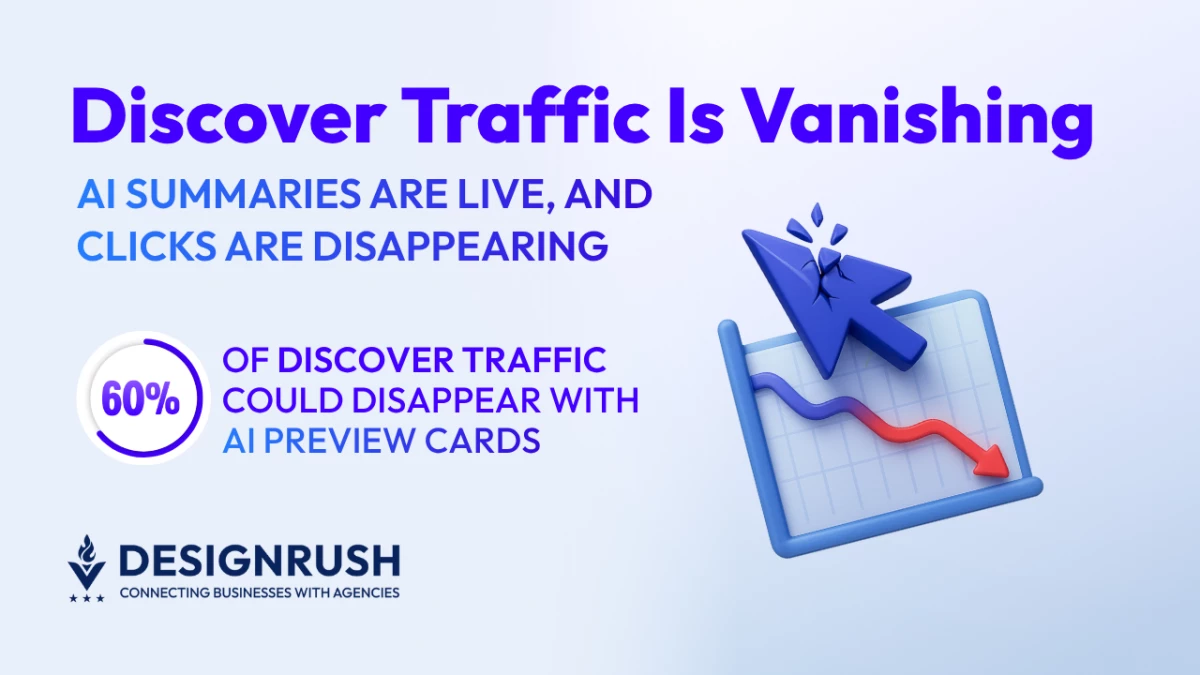
- Publishers could lose up to 60% of Discover traffic as AI summaries replace clicks with in-feed snapshots.
- Protecting visibility now means optimizing for previews, with clear content structure, brand cues, and diversified traffic sources.
Google recently launched the Discover feature after testing it in the U.S. earlier this year.
AI-generated summaries are now appearing in feeds across the U.S., South Korea, and India.
The feature condenses trending content from multiple publishers into a single card, giving readers a snapshot of a story before clicking through.
Though convenient for site visitors, AI summaries may not be good news for publishers.
The change has been met with a lot of uncertainty, with many fearing a significant drop in their Google Discover traffic.
The Deal With Discover
Discover has long been a reliable traffic source.
Chartbeat data shows that some Asian-Pacific publishers derive up to 60 % of their pageviews from the feed, while North American sites see roughly 24 %.
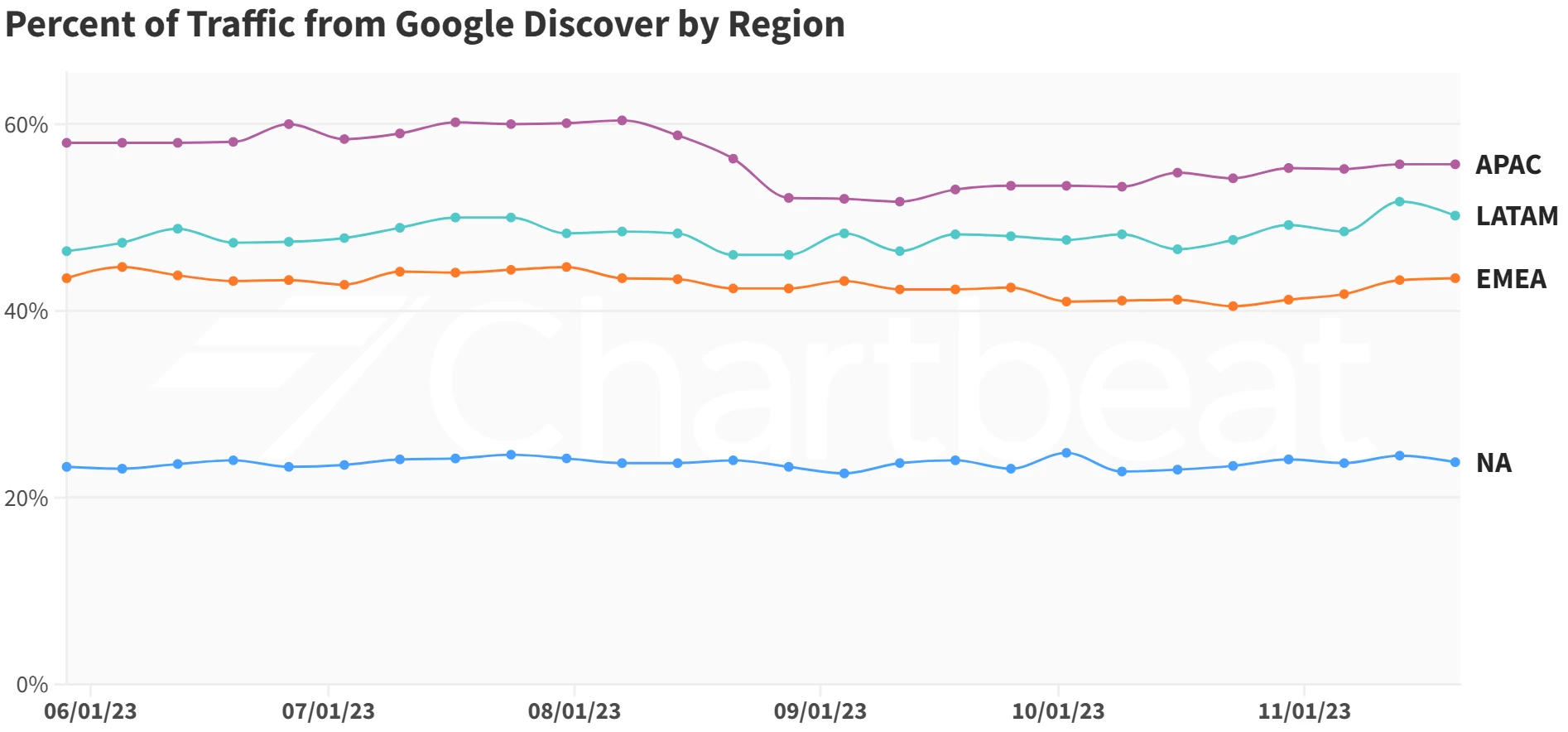
With those numbers, some outlets have reported that up to 60 % of pageviews from Discover could be affected.
The trend mirrors early observations from AI Overviews in search, which reduced referral traffic by 1–25 % over eight weeks for some publishers.
Niche publishers are particularly vulnerable.
Google Discover + Gemini AI
— Damien (andell) (@AndellDam) June 16, 2025
In Google Discover, we find "Trending" cards with an AI Overview, several sources, a news summary, and a main article.
Clicking on the site icons takes us to a new "More" page with a Discover feed for these sites, on which the AI summary is based.… pic.twitter.com/F1aKELghJu
Upscore reports that some European outlets expect up to a one-third drop in traffic from Discover following AI tile rollouts.
Adapting to AI Summaries
Optimize Content for Feed Previews
For WebFX, the foundation of visibility lies in designing content that performs within AI-generated previews.
Brands should structure headlines, opening sentences, and featured snippets so users immediately understand the story, even without clicking through.
Adding consistent brand signals, schema markup, and structured data can also ensure brand recognition in AI summary cards.
This approach helps maintain engagement and encourages users to expand the full story, preserving referral traffic and conversions.
Diversify Discovery and Traffic Channel
Relying solely on Google Discover is increasingly risky.
WebFX recommends treating AI-driven discovery as a catalyst to diversify traffic sources.
This means brands should build additional pathways for audiences, including newsletters, apps, social media, and owned communities.
Each channel provides a direct connection to users, reducing dependence on any single source and safeguarding traffic from AI-driven shifts.
A diversified approach ensures that visibility and engagement continue even if feed previews reduce click-throughs.
Measure, Monitor, Iterate
WebFX stresses that tracking metrics is critical to understanding AI’s impact on audience behavior.
Marketers should monitor click-through rates, engagement depth, and post-click conversions across feed and site content.
Regularly testing new formats and strategies allows brands to adapt quickly as AI previews change user behavior.
Through a proper analysis of results, agencies like WebFX can forecast trends and adjust strategies, ensuring content performs both in-feed and on-site.
“AI-generated summaries aren’t the end of organic visibility but the beginning of a new measurement mindset,” said William Craig, President and CEO of WebFX.
“The brands that will win are the ones actively tracking how audiences interact with these summaries and learning from that data to guide their next move.”
Next Steps for Brands
SEO alone is no longer enough, and for agencies and marketers, content must perform both in-feed and on-site.
One way to reframe your traffic strategy is to treat AI previews like micro-ads.
Deliver the key message upfront, then use deeper content to drive conversions.
Planning for AI-driven behaviors today can help brands protect referral traffic, maintain engagement, and stay visible in an evolving search and discovery landscape.
In the AI era, discovery isn’t lost, just rewritten.