
SEO Trends and Shifts: Key Findings
- 83% of users now prefer AI search, signaling a major shift away from traditional search habits.
- 92% of users who see AI summaries never click through, making brand visibility within AI results critical.
- Brands must start planning for key shifts in how SEO works early, including zero-click and entity-based indexing.
Search isn't what it used to be. For years, businesses chased keywords, backlinks, and page-one rankings.
Now, AI is rewriting the SEO playbook.
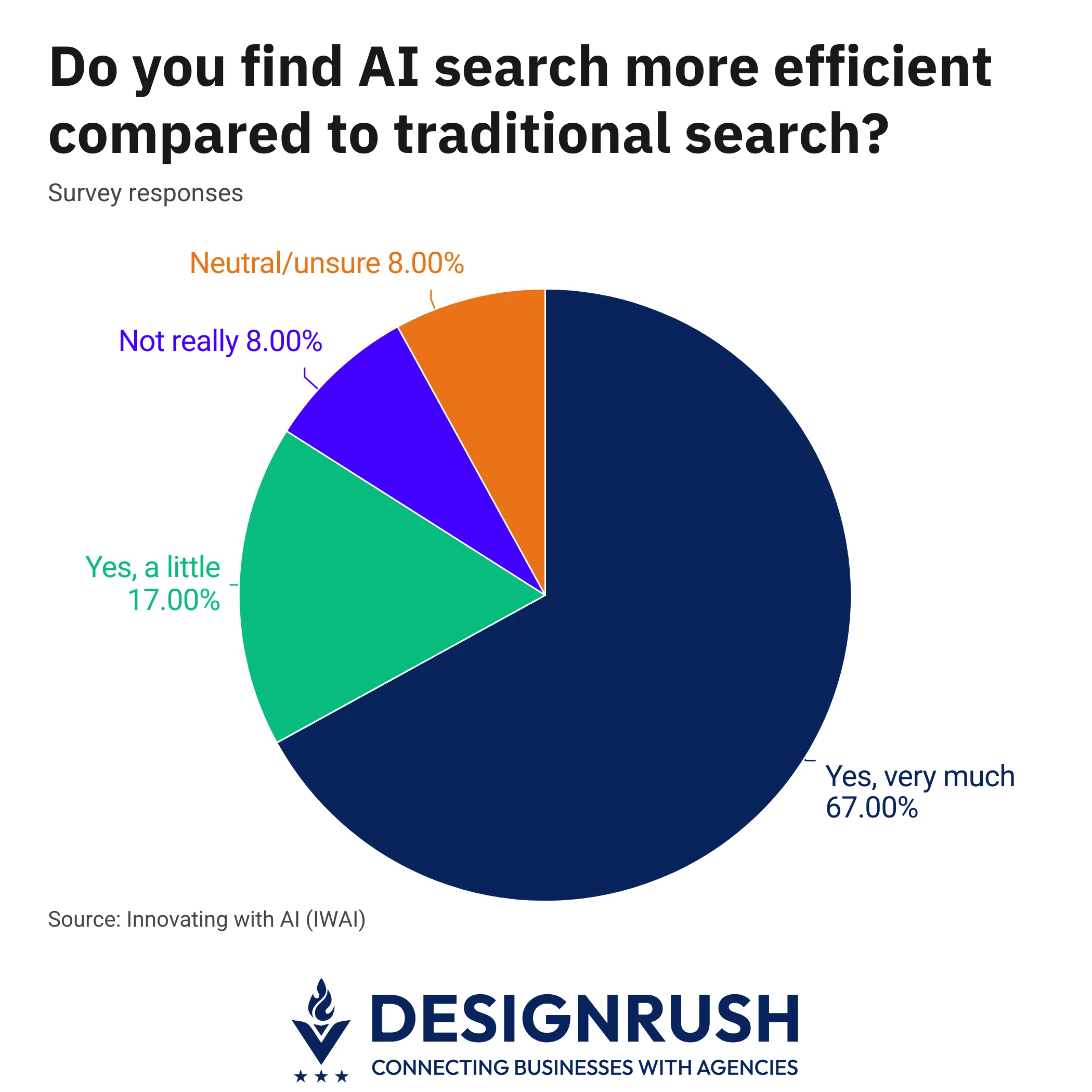
According to a report from Innovating with AI, 83% of users now prefer AI search over traditional “Googling.”
The same report found that a combined 84% of users find AI search to be more efficient than traditional search when it comes to delivering answers to their queries.
That means billions of people are no longer sifting through blue links on the search engine results pages (SERP).
Instead, they’re having conversations with answer engines or relying on features like AI Overviews or AI Mode for their search needs.
This shift offers brands both an opportunity and a warning, as experts claim that online visibility will now be anchored by digital strategies that earn the trust of AI algorithms.
“AI-driven search is collapsing the distance between question and answer. Businesses that fail to show clear expertise or context will simply vanish from the conversation and be forgotten by both man and machine,” said Cody C. Jensen, CEO and Founder of Searchbloom.
5 Shifts to Prepare For Ahead of 2026
As AI systems continue to learn from billions of queries, the way people discover brands will look very different by 2026.
That’s why the smart play here is for brands and agencies to start revising SEO strategies and prepare as early as possible.
This helps build credibility in the signals AI values most, like relevance, authority, and trust, making your brand the one that AI mentions.
But what ones exactly are the ones set to make the biggest changes in 2026?
Here are five shifts in SEO that brands should prepare for:
1. AI Overviews and Answer Engines Replacing Traditional Search
TechCrunch recently reported that Google’s AI Overviews now serves 2 billion monthly users, aligning with the growing preference for AI search experiences.
Instead of sending users to websites, search engines are increasingly answering queries themselves.
“Google and others are pulling information directly into AI-generated summaries,” Jensen explained.
“This means fewer clicks to websites and more emphasis on being cited or referenced by the engine itself. Brands that only optimize for blue links will lose visibility.”
Brands can adapt by:
- Using structured data so that content can easily be interpreted by AI search engines.
- Focusing on clarity and authority in content marketing, as AI favors direct-to-the-point and confident answers to user queries.
- Creating content worth quoting by offering statistics, original research, or expert commentary/thought leadership.
2. Zero-Click and Branded Discovery Redefining Visibility
A Pew Research Center study found that 92% of users who encounter an AI-generated summary never click through to traditional search results.
This easily highlights the inherent trust that users have in the answers delivered by AI.
As such, winning the attention of AI models and ensuring you’re included in the AI search results or in AI Overviews is quickly becoming the key to growth.
To take advantage of zero-click searches, businesses will want to focus on brand recognition, consistent messaging, and experience-driven content, all of which appeal to both humans and AI.
Likewise, brands should also revisit and repurpose old, low-value content to include actionable insights or direct answers to frequently asked questions.
3. Entity-First Indexing Replacing Keyword-First SEO
AI search engines have been trained to respond to the entirety of a user’s question instead of just a few keywords.
As such, search is moving from keyword matching to entity mapping.
“Brands will win by owning topics comprehensively, connecting subtopics with internal links, and presenting clear, authoritative relationships around their expertise. This also supports answer engine optimization or LLM visibility,” said Jensen.
He also recommends that brands do the following to take advantage of entity mapping:
- Build topic clusters instead of isolated keyword posts.
- Use internal linking to connect related subjects and reinforce authority.
- Highlight credentials through author bios, case studies, and transparent sourcing.
4. Reviews and Local Trust as Core Ranking Factors
Reviews and local signals have always mattered when it comes to earning attention online.
However, both have become even more important as proofs of authenticity due to the rise of AI.
This is because AI algorithms increasingly rely on context from user feedback and consistent local data to verify legitimacy.
In light of this, brands will want to ensure their Google Business profiles are optimized well and up-to-date. This includes photos, operating hours, and the like.
Businesses that are thin on online reviews should also reach out to former customers and clients to see if they’d be willing to leave a review.
5. Investments in AI-Powered SEO Tools
A McKinsey report revealed that 92% of companies plan to increase their AI investments.
While many of these investments will likely go towards areas like project management, customer service and experience, or creatives, savvy executives will also want to invest in AI-powered SEO tools.
Searchbloom recommends the following tools as smart investments, particularly for their LLM tracking solutions:
- Profound AI
- SEMRush AI
- Peec AI
Investing in these tools early allows for proper training and AI governance, ensuring tools are used effectively and efficiently by the time 2026 rolls around.
Prepare Ahead to Get Ahead
The rules of search are changing. And while rankings still matter, relevance and being recognized by AI summaries now carry more weight.
This is why businesses must start auditing and restrategizing their SEO playbooks well before these shifts become solidified.
After all, the web may be moving faster than ever, but the advantage still belongs to the brands that prepare and adapt early.