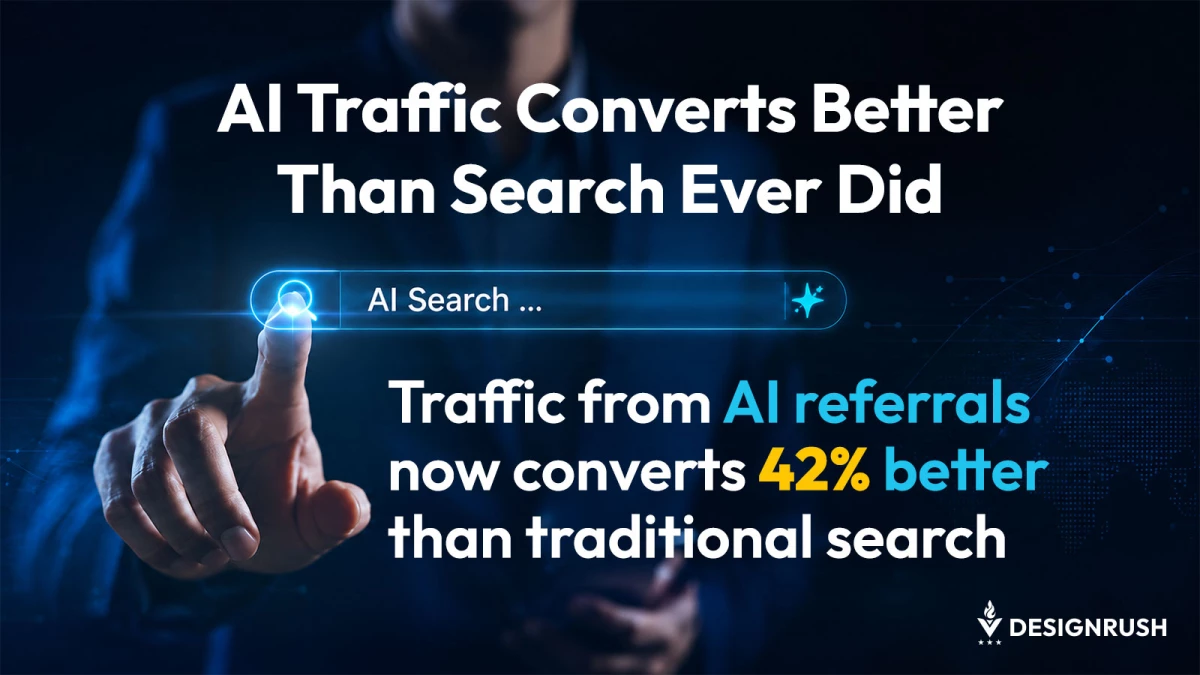

Google's AI agents are no longer a keynote demo. As of June, they are live inside Search for paying subscribers as part of what Google calls its biggest redesign in a quarter century.
Information agents in Search are now available in all AI Mode languages & markets for Google AI Ultra subscribers.
— Robby Stein (@rmstein) June 12, 2026
Just ask AI Mode to keep you updated on any topic, and your agent will work around the clock on your behalf to send detailed updates and links to the web the moment… https://t.co/9AQyOLuZoV
They can now compare options, answer questions and complete tasks without sending users to an actual website.
That means a page can hold its top ranking and still lose the click, or even the booking, to a competitor the AI chooses to cite instead.
The shift has convinced many business owners that SEO is over. It isn't. Still, Google Search itself does not appear to have received that memo.
At a time when many were deeming traditional search obsolete, its global market share increased from about 89.5% a year earlier to over 91% in June.
A high ranking used to mean a better chance of getting the click. That link is becoming less reliable as AI answers more questions directly and decides which sources users see.
Websites Are Becoming Trust and Validation Hubs
For small businesses, fewer website visits do not necessarily mean fewer opportunities.
AI search may concentrate traffic around users who are already evaluating a decision, not just browsing.
Working with small businesses, Sam Vivek, Head of Growth & Customer Success at Doodle N Dash, has seen websites take on a different role in the customer journey.
As AI handles more of the initial discovery, He believes websites increasingly need to validate a business rather than simply help users find it.
"If someone lands on you, they already have intent. The job of the site is to confirm trust and close, not explain what you do," Vivek says.
Google is even building the plumbing for this.
A proposed browser standard called WebMCP lets a site tell an agent directly how to check availability or fill out a form, instead of the agent guessing from a screenshot.
That means the website remains the foundation of the AI-driven customer journey, providing the information agents use to complete tasks.
Proof Now Outperforms Breadth
A service page built to cover everything a business does was designed for a visitor still comparing options. That visitor is a shrinking share of the traffic a site gets now.
Specificity over breadth matters more than ever. Clear proof points, case studies, testimonials and credentials now outweigh broad service pages.
Structured, semantic content does double duty here. It also helps AI systems quote a business accurately when an agent cites it as an answer.
A 2026 preprint analyzing 21,143 AI search citations found that pages with greater influence in AI-generated answers were typically more structured and richer in extractable evidence.
That included definitions, numerical facts, comparisons, and procedural steps.
Meet the Visitor Who Already Decided
The metric changes with the content.
Visibility in AI-generated answers may matter for informational pages, while conversion pathways matter more once a high-intent visitor reaches the site.
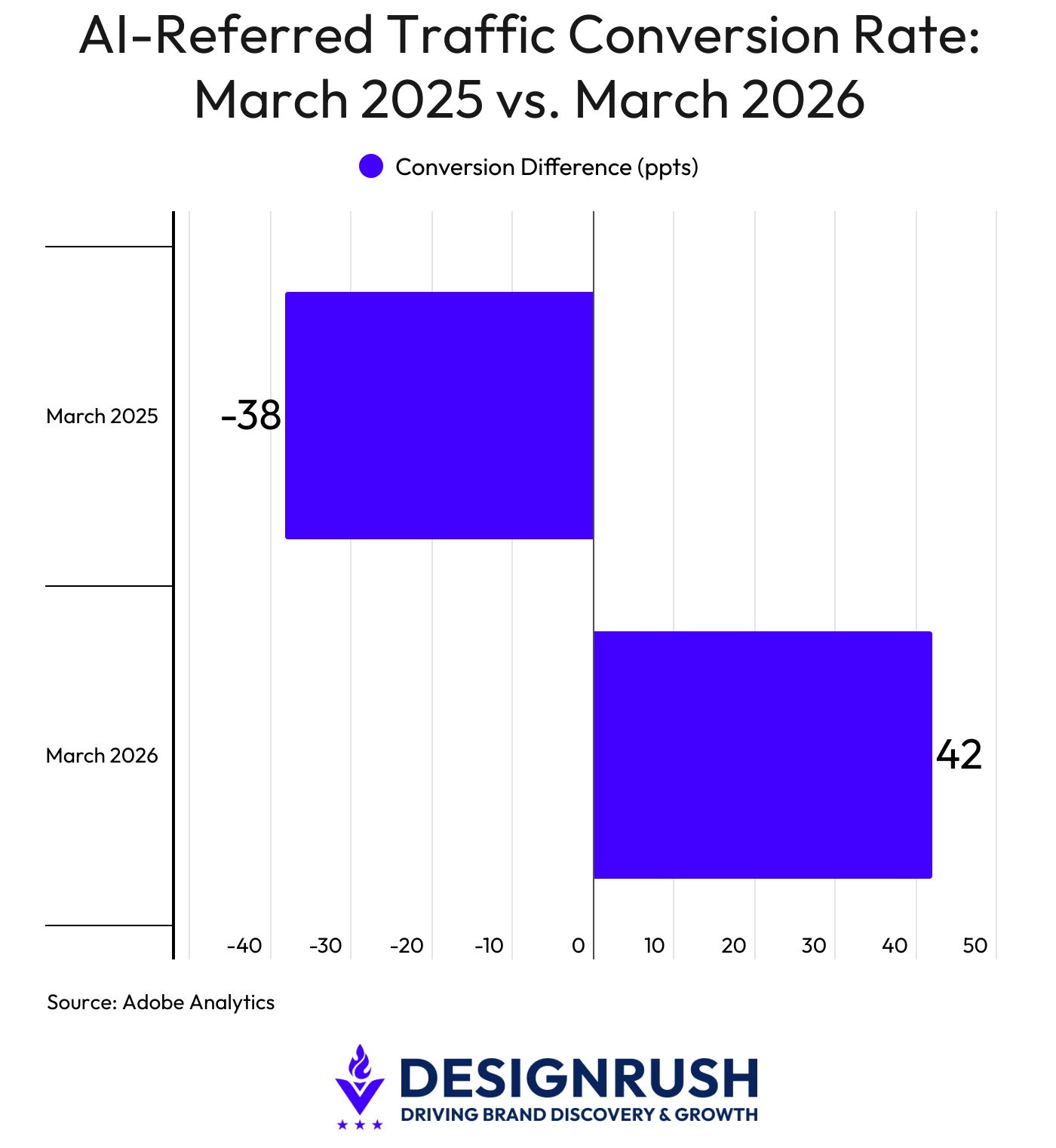
Traffic that arrives through an AI referral now converts 42% better than traditional search traffic, according to Adobe's data, a reversal from converting 38% worse a year earlier.
 The vetting already happened inside the AI conversation, before the visitor ever clicked.
"Conversion pathways, like booking a call or requesting a quote, become the primary KPI. Time on page stops being the number that matters," Vivek says.
A generic hero section explains a business to someone who just arrived and knows nothing about it yet. That visitor is rarer with every agent Google ships.
"Stop designing for crawlers and start designing for humans who already know they want you," he adds.
That means, as Vivek points out, fewer generic hero sections and more immediate answers to why someone should choose you over everyone else.
The Mistake That Costs the Most
Some habits built for the old search era now work against a business instead of for it.
Only about 17% of the sources AI Overviews cite also rank in Google's organic top 10, according to BrightEdge's year-long tracking through February 2026.
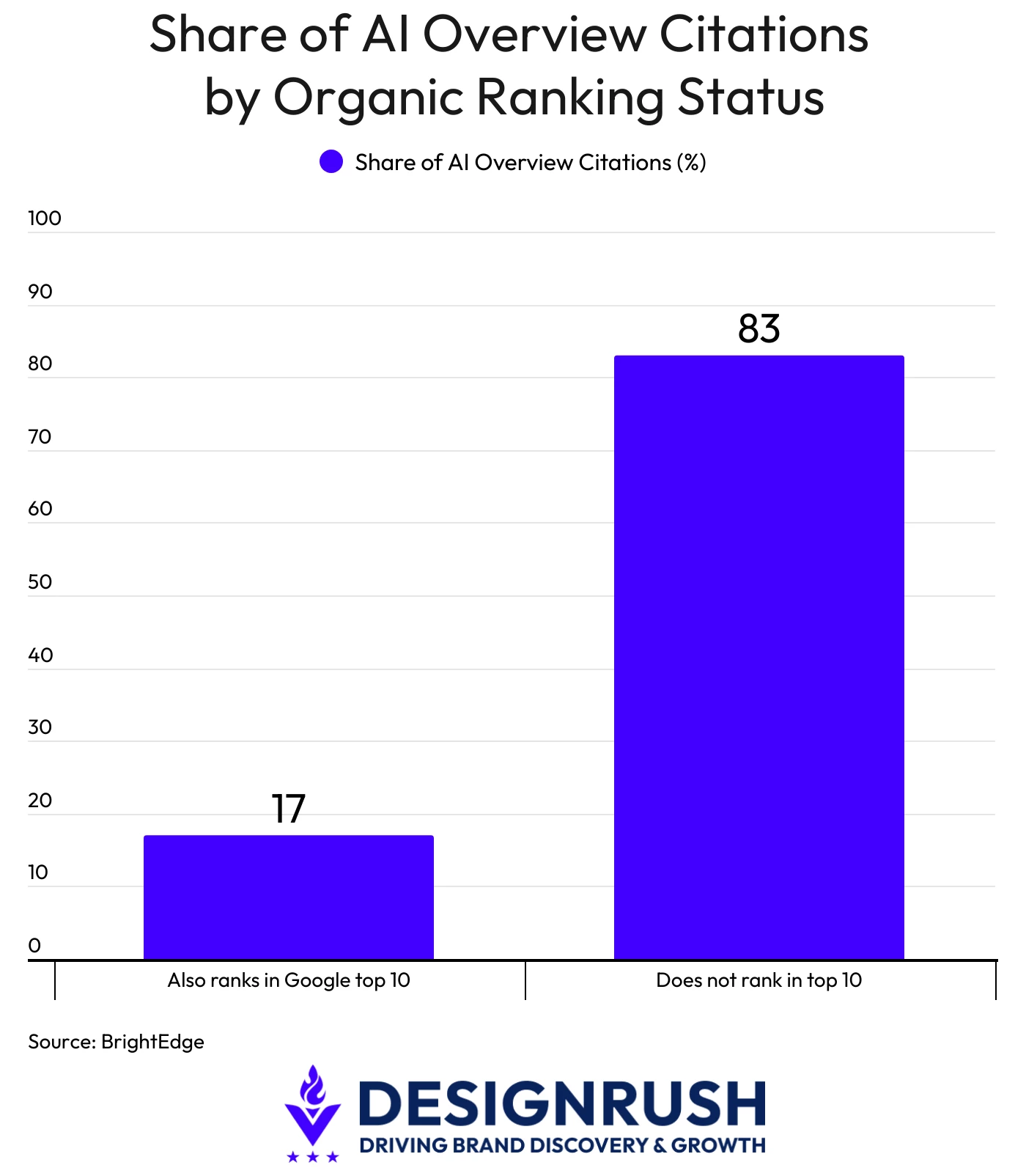 Ranking well and getting cited have become two different jobs, and a lot of SEO effort is still aimed at only the first one.
That's Vivek's biggest concern. Agencies keep optimizing for the volume keywords that win a ranking. Specificity is what earns a citation now.
They stuff pages with information nobody needs a site visit to find anymore.
And they bury the real differentiator three scrolls down, the exact detail that would have made the page worth citing.
"Treating SEO as a traffic strategy is the error. It's becoming a credibility signal instead," he says.
Agents can summarize a business. They cannot originate a perspective that business has never published anywhere else.
"Create content and experiences AI can't replicate. Real perspectives, proprietary methodology, human storytelling," Vivek adds.
Give people a reason to stay. Getting cited is how a brand keeps its place in the answer.
Small Just Stopped Being a Disadvantage
For years, a bigger marketing budget bought more pages. More keywords. More ways to out-rank a smaller competitor on volume alone. Being small meant starting that race already behind.
That race is over now. A different one replaced it, and this one runs on specificity. A named process. A real reviewer. An answer nobody else has published.
Any one of those gets quoted in an AI answer, and that matters because a quote is the closest thing to a recommendation an AI can give.
A competitor's twentieth generic page never earns that.
A small business no longer has to outspend a rival's content budget to compete for that recommendation. It just has to say something the rival hasn't.