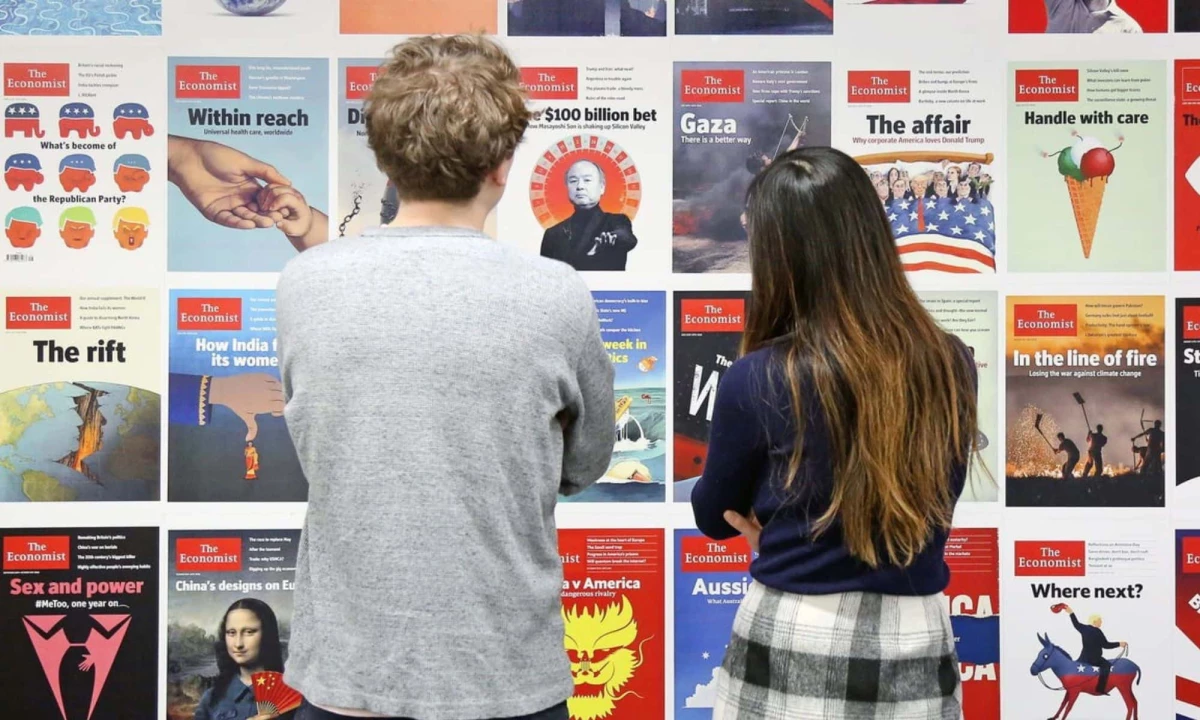

The Economist is preparing for a version of the internet where AI agents become the first stop for discovery.
According to Digiday, the publisher is restructuring public-facing content so AI tools can extract and surface information more easily.
For now, the experiments target marketing and B2B sales material that can surface in AI-generated research and recommendation flows.
The Economist is testing agent-readable versions of content that already sits outside its paywall, as it prepares for "two versions of the web." https://t.co/EROkatPSJapic.twitter.com/Rk6CKjD5b3
— Digiday (@Digiday) May 18, 2026
Josh Muncke, VP of Generative AI at The Economist Group, told Digiday that the publisher is preparing for "a world with two versions of the web."
Agents, he said, want "clear structure, questions and answers, ideally text," not carousels and feature art.
"The real opportunity with AI is not to replace human judgment, but to make it more accessible and more adaptable to how people increasingly consume information," Muncke added.
This shows how publishers are beginning to treat AI agents more like a separate audience layer.
Discovery Has a New First Stop
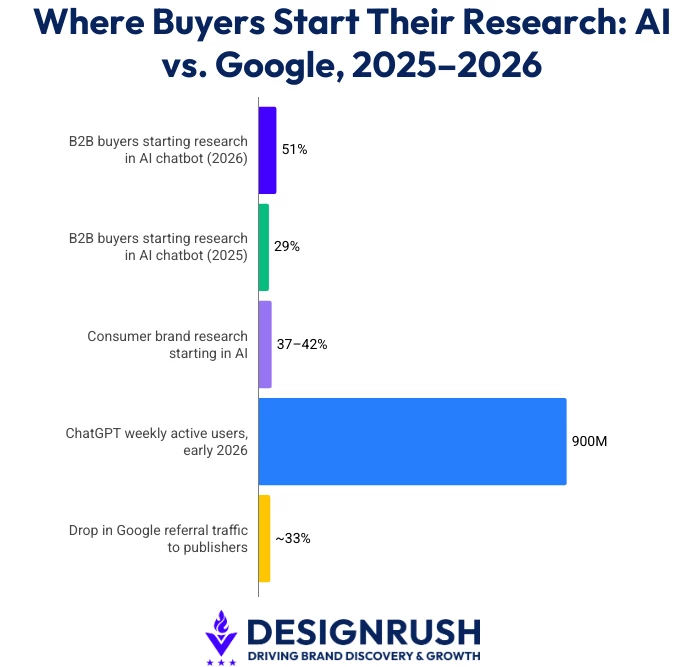
More than 50% of B2B buyers now start research in ChatGPT, Gemini, or Claude rather than Google, according to the 5W First-Stop Index.
A year ago, the percentage was just 29%.
The Economist's sales and marketing pages need to surface cleanly in AI-generated answers or risk disappearing from the consideration set entirely.
As publishers risk losing up to 60% of Google Discover traffic to AI summaries, the pressure to build agent-readable content is no longer theoretical.
The Economist's response is a two-track content structure.
Human readers get comparison-heavy, visually rich pages, while AI agents get stripped-back Q&A formats designed for machine extraction.
As a subscription publisher, The Economist is carefully weighing how much agent-readable content it can expose without eroding the value of a paid subscription.
The economics of the agent layer will collapse without reader trust, regardless of how well the content is structured for machines.
What Publishers and Brands Can Take From This
Major publishers are already treating agent optimization as an active infrastructure decision. The Economist is among the first to say so publicly.
As GEO continues to replace traditional SEO, content structure is becoming a competitive signal rather than a technical checkbox.
This experiment highlights three infrastructure changes publishers now need to prepare for:
- Content structure is becoming a competitive signal. Publishers that build agent-readable formats now will surface in AI answers where others won't.
- Marketing and sales content is the safest starting point. Public-facing pages carry no paywall risk and match how B2B buyers now research.
- Discovery layers are becoming platform-dependent again. Publishers should reduce reliance on traditional search referrals as AI agents increasingly control visibility.
As AI agents absorb more discovery behavior, publishers may now need to treat machine readability as core distribution infrastructure.
Our Take: Is Agent Optimization the New SEO?
Quite possibly, but the comparison may already be too small for what publishers are preparing for.
Traditional SEO was designed to bring readers onto a publisher’s site.
Agent optimization accepts that discovery may increasingly happen without the publisher controlling the visit itself.
This changes the role of content structure from a traffic tool into part of the publishing product.
The bigger risk is economic. AI agents can surface information efficiently, but they don't automatically create loyalty, habit, or subscription value.
Publishers may eventually find themselves widely cited across AI systems while struggling to convert this visibility into sustainable audience relationships.
The challenge becomes deciding which parts of a publisher’s value should remain exclusive once AI turns information into a freely surfaced layer.
Which part of your content strategy needs the most work for AI agent visibility?
Find these top content marketing agencies in our directory that understand how to build editorial authority in an AI-first discovery environment.