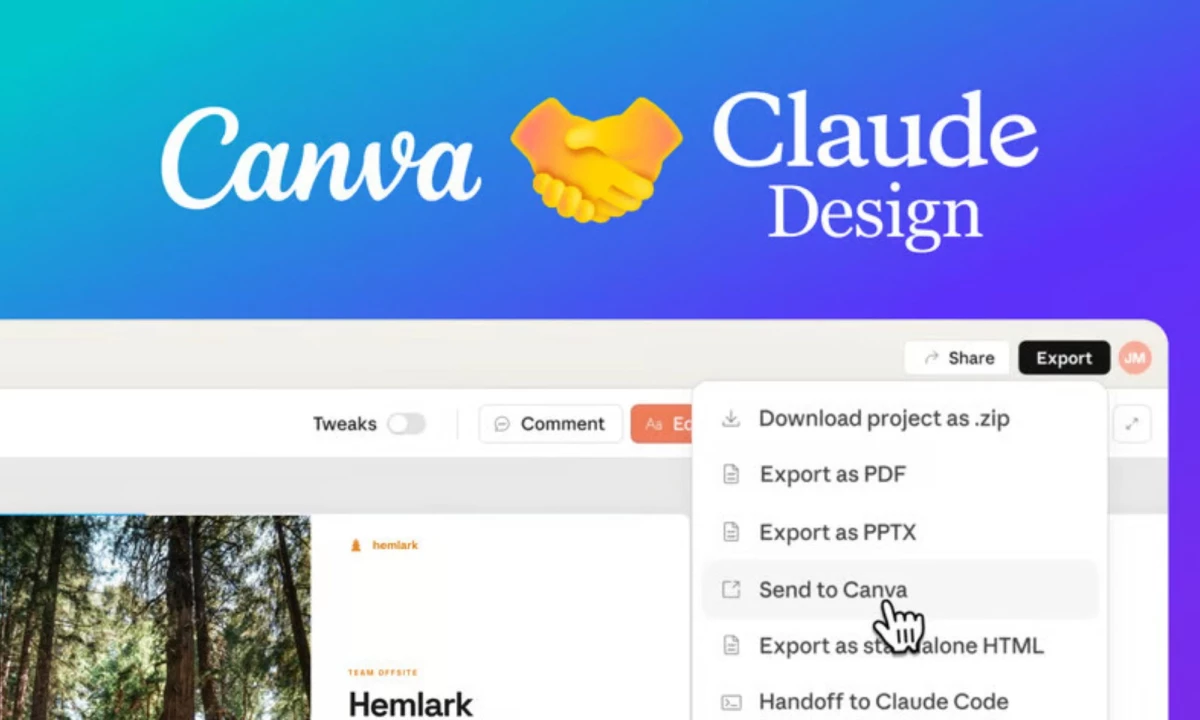

Canva and Anthropic have launched an integrated campaign-creation workflow in Claude for Small Business.
Available through Claude Cowork, the tool pulls sales data from a connected CRM, drafts a campaign strategy, and generates assets through Canva.
The platform produces editable Instagram posts, Facebook ads, and email creative that automatically follow each user’s saved brand guidelines.
The integration also connects to QuickBooks, PayPal, HubSpot, and DocuSign.
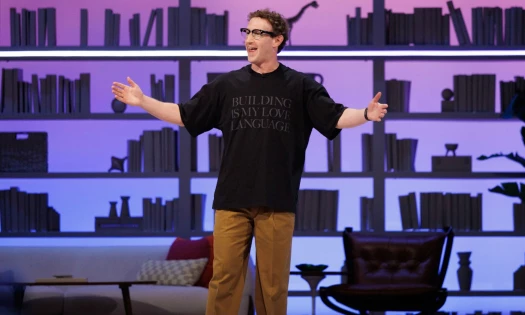
Canva GM Anwar Haneef told DesignRush that Canva's role in this partnership signals that AI-assisted design for small businesses is about the entire creation process.
"As the creative layer of the internet, we leverage AI to unlock access to this large market that already relies on Canva's tools," he said.
"We take care of brand visuals so business owners can focus on generating revenue, growing their business and providing value to their customers."
Small business owners consistently name on-brand visual creation at scale as one of their biggest pain points.
This latest integration addresses it by building on the brand assets they already have in Canva.
The Marketing Gap
Small businesses make up 44% of U.S. GDP but have lagged in AI adoption.
Most owners are already handling marketing, finance, and operations themselves, which leaves little time to learn AI tools that add setup complexity.
Haneef pointed out that ease of use is the single biggest barrier that small business owners face when it comes to using new tools.
Most AI tools hand off output and leave users to piece together the rest across scattered brand materials, data, and team conversations.
"Canva places AI tools directly into actual workflows, and it's all connected, while most other tools are fragmented and siloed," he shared.
AI usage on Canva has more than tripled in the last year.
The platform recently crossed $500 million in B2B revenue and is now the third most-used AI platform in the world.
The partnership started with the Canva MCP for Claude in July 2025 before expanding into on-brand design generation and Claude Design this year.
Haneef described that Claude brings the intelligence, analyzing business, identifying opportunities, and generating the strategy, while Canva is the engine that makes it real.
"We're the creative layer that transforms ideas, regardless of where they begin, into finished, on-brand work that's ready to ship across every channel," he added.
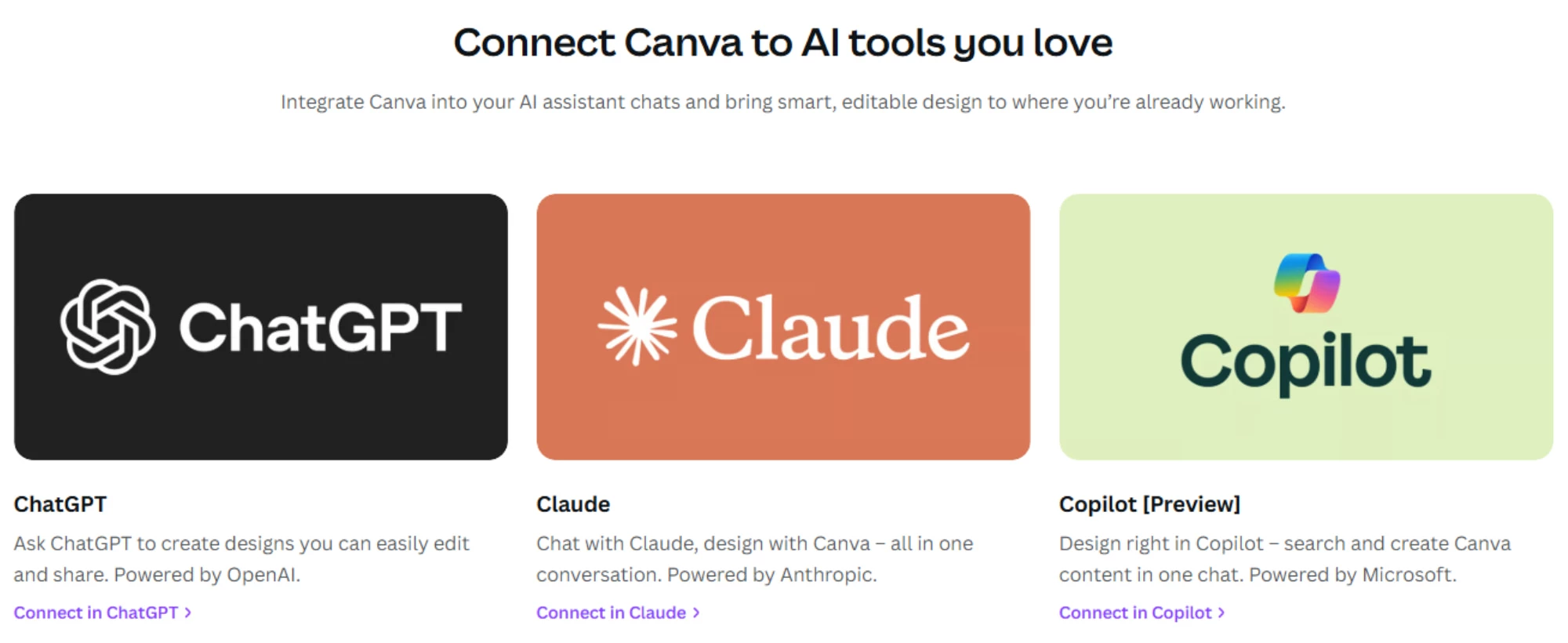
The Canva MCP is now available across Claude, ChatGPT, and Microsoft Copilot.
AI-powered marketing automation is moving toward integrated workflows.
And the platform's position as the creative layer inside Claude represents a structural shift in how campaigns are produced.
The Execution Bottleneck
Small business marketing most often stalls between ideation and execution.
AI in digital marketing is already compressing campaign timelines by up to 50% for early adopters.
Canva and Claude formalize this into a single connected system for a segment that has had no access to it.
Canva AI 2.0, announced at Canva Create in April 2026, reimagines the platform as an agentic, conversational platform for the entire creative workflow.
Haneef said that reducing the gap between ideation and execution was the core problem the product was built to solve.
"[Canva AI 2.0] takes any idea that you speak or type, and turns it into a usable output," he noted.
"Our role in Claude for Small Business similarly addresses a key need for businesses to create and publish insight-based, on-brand content at scale."
This integration connects campaign creation more directly to business insights and performance data.
Here are three things marketing teams should watch as AI-assisted campaign creation scales to small businesses:
- Design is moving inside the AI workflow. Brands that are still producing assets in silos should audit their processes now.
- On-brand output at the prompt level changes briefs. Marketers should reassess how much governance work AI handles automatically.
- AI tools are compressing production work. Agencies should reassess which creative tasks still require manual execution versus strategic oversight.
When a solo business owner can generate a two-week campaign from a sales insight in minutes, the dynamics of outsourced creative work shift across every market segment.
Our Take: Who Loses When AI Writes the Campaign Brief?
Entry-level agency work is the first casualty of AI-assisted campaign creation, and the timeline is shorter than most agencies expect.
We think the more uncomfortable implication is what this removes from the creative services conversation entirely.
When brand consistency is enforced automatically and assets are generated from a data insight, the case for paying someone to manage this process becomes harder to make.
We believe that the brands that survive this compression will be the ones whose voice is distinctive enough that no prompt can replicate it.
Canva's Design Model produces work that is on-brand by definition, but on-brand is not the same as differentiated.
The agencies that adapt will be the ones who stop selling execution and start selling the thinking that makes execution matter.
Looking for agencies that can navigate AI-assisted campaign creation? Find these top digital marketing agencies in our directory.