
SEO to GEO in AI Search: Key Findings
- Search behavior has moved beyond clicks, as users now rely on generated answers to make decisions faster.
- Visibility is now driven by credibility, because AI systems prioritize trusted, well-structured sources over keyword-optimized pages.
- Brands must shift from SEO to GEO strategies by structuring content for machine understanding, authority signals, and consistent credibility and storytelling.
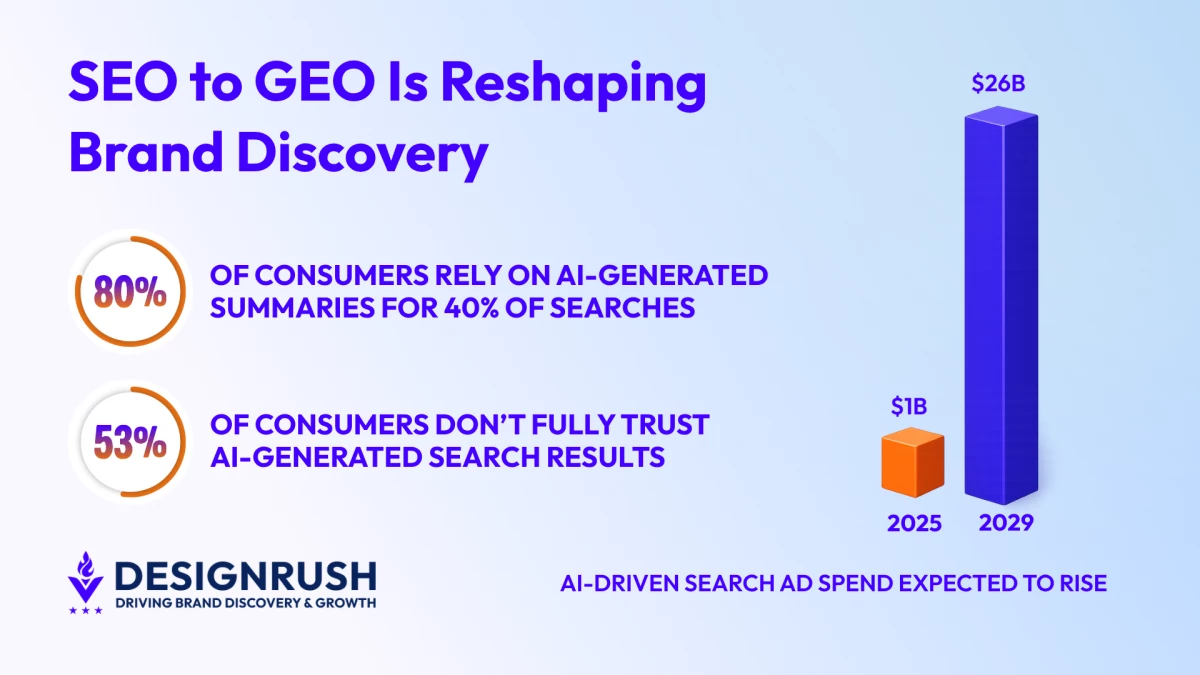
80% of consumers now rely on generated summaries for at least 40% of their searches, according to Bain & Company.
This data indicates that users are bypassing traditional browsing, relying on single-response answers instead of multiple links.
Brands need to show up in the answers people are reading, not just in the list of blue links.
This is where the experts at Brandi AI, a platform focused on Generative Engine Optimization (GEO), AI Visibility, and Brand Intelligence, are starting to see the impact take shape.
GEO is the practice of optimizing digital content to increase visibility within AI-generated search summaries and responses. It works by structuring information so that large language models (LLMs) can easily identify, synthesize, and cite a brand as a primary source.
Leah Nurik, CEO of Brandi AI, explains that search has moved from retrieval to synthesis, leaving brands that aren’t structured to be understood at a disadvantage.
“That distinction matters. Being listed is one thing, but being selected, interpreted, and presented as part of an answer is something else entirely.”
In the post below, Brandi AI shares its guide to help SaaS companies get the brand mentions they deserve:
Why Traditional SEO Rankings Matter Less Today
The old model of SEO ranking was straightforward. Rank higher, earn the click, bring people in.
Now, that journey is often over before it properly begins.
The same Bain & Company release adds that around 60% of searches now end without a user going any further, which means a large share of decisions are made before a brand ever gets a visit.
“Ranking still matters, but it’s no longer the moment of influence. The decision is happening earlier, inside the response itself,” Nurik says.
That changes how brand awareness and visibility work. If a brand isn’t included in what's presented upfront, it’s easy to miss altogether.
Why SEO Strategies Are Falling Behind
The issue with SEO strategies isn’t a lack of effort, but more so, intentional focus.
What worked before was built around helping search engines index and rank pages according to keyword matching. But what matters now is whether a system can interpret what a brand is, connect it to known entities, and rely on it as a source it can confidently reuse.
“Most content today is being written to be found, but very little of it is structured to be understood,” Nurik says.
GEO shifts optimization from helping content get found to helping it get understood and reused by AI systems.
At a practical level, this means:
- Structuring content with schema markup so entities are clearly defined
- Reinforcing author identity and expertise signals across platforms
- Ensuring brand mentions are consistent across high-authority sources
- Building internal content that answers questions directly, not just targets keywords
The pressure on older SEO models is already showing.
Bain & Company estimates that organic web traffic could drop by 15% to 25% as more users rely on generated summaries instead of clicking through.
However, building content to be understood is only part of it. Once a brand is surfaced, it still has to be trusted.
Why Brand Credibility Now Drives Visibility
As this new behavior settles in, trust starts to carry more weight.
According to Gartner, as many as 53% of consumers don’t fully trust AI-generated results. This adds another layer to the challenge. Being included isn’t enough. The information has to hold up.
“In this environment, credibility isn’t just a brand asset but a ranking signal,” Nurik says.
Nurik adds that this is where execution becomes tangible. Brands that perform well here are:
- Publishing under real, attributable experts
- Earning citations from trusted third-party sites
- Maintaining consistent data across directories, media, and owned platforms
- Avoiding conflicting or vague positioning that systems cannot reconcile
The result of this isn’t just visibility, but acceptance and market leadership.
AI Search Growth Is Reshaping Marketing Spend
That growing emphasis on trust is already starting to show up in how budgets are being allocated.
According to Reuters, AI-driven search advertising is projected to grow from just over $1 billion in 2025 to nearly $26 billion by 2029.
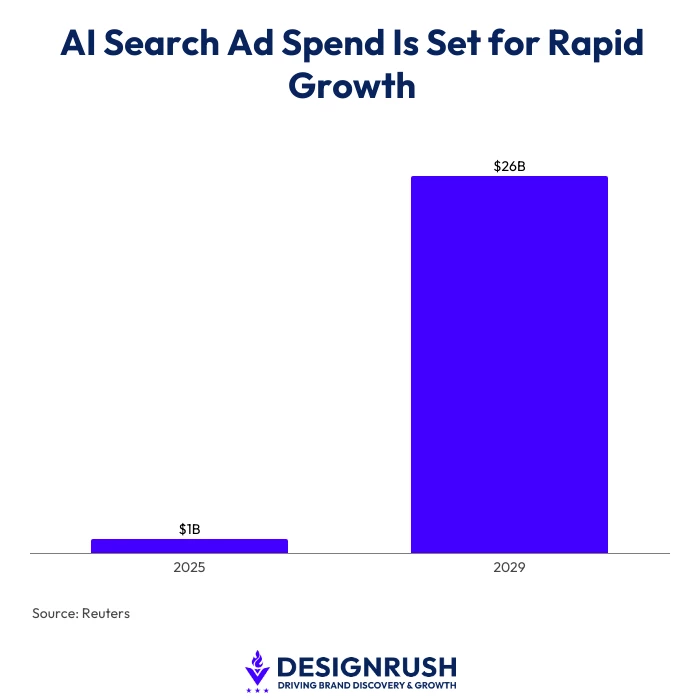
That kind of growth usually points to where attention is moving.
“Budgets follow outcomes. And right now, the outcomes are being shaped before the click even happens,” Nurik says.
What Business Leaders Must Do Next
For leaders, this is less about abandoning SEO and more about widening the lens.
“The brands that win here aren’t the loudest, but the ones that systems can interpret quickly and trust without hesitation,” Nurik says.
That calls for a different approach to execution.
Content must be treated as a knowledge asset, not just a traffic lever. That means:
- Structuring pages so key information is explicit, not implied
- Aligning messaging across every channel so there is no ambiguity
- Investing in authority signals beyond owned media, including PR and partnerships
- Building content that answers real questions in clear, direct language
It also calls for a change in mindset. Not how do we rank higher, but how do we become the source that gets used.
Because in this environment, the real question isn’t whether your brand can be found, but whether it’s trusted enough to be chosen before anyone even starts looking.
Want to know more about SEO, GEO, and everything in between?
Take a look at our list of the Top SEO Agencies of 2026.