
Secure UX Design: Key Findings
- Data from IAPP shows that a lack of perceived security leads to app deletions, opt‑outs, and abandoned purchases, proving that trust now drives revenue as much as design.
- True secure UX happens in the background — fast load times, smooth logins, subtle trust cues — while bulky scripts, pop‑ups, or laggy encryption erode confidence and trigger abandonment.
- Modern websites need layered, frictionless security that anticipates risks, signals safety only when needed, and turns confidence into conversions.
What happens when a website looks sleek but feels unsafe? Unfortunately for businesses, most consumers run and don’t come back.
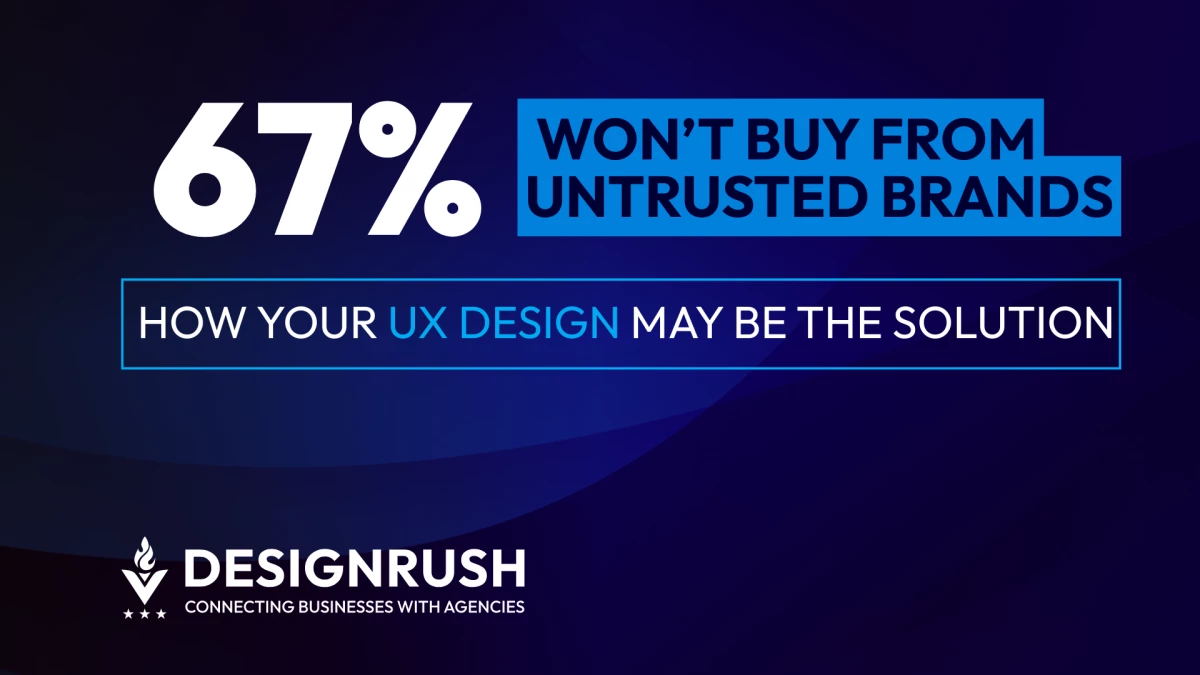
When consumers lack trust in a company’s data practices, 85% delete apps, 82% opt out of sharing data, 78% avoid the website, and 67% decide against making an online purchase, according to the IAPP Privacy and Consumer Trust Report.
-content-large-webp.webp)
When combined with the fact that websites only have a few seconds to make a good first impression, this data from the IAPP report highlights the importance of having great UX.
Or more specifically, the concept of secure UX.
Secure UX is the invisible intersection of engineering, design, and psychology, where performance and protection converge to create a website that feels trustworthy without ever having to announce it.
Because in the digital economy, trust is now a direct revenue driver, a retention strategy, and a brand’s first real impression all at once.
Trust Becomes a Growth Engine
Security and user experience have merged into a single continuum. Consumers don’t parse “IT” from “UX.” They simply decide whether to stay or leave.
That gut reaction has a direct impact on your bottom line.
For example, shaving a mere tenth of a second off mobile load times lifts retail conversions by 8.4% and average order values by 9.2%, according to research from Deloitte.
-content-large-webp.webp)
Those gains aren’t driven by any kind of novelty. Far from it.
It comes from removing tiny moments of uncertainty that, when left unchecked, whisper “stop” in the customer’s mind.
“To users, security is an emotion, not a feature,” said Caleb Bradley, CEO at Bighorn Web Solutions.
“They won’t notice perfect encryption, but they will notice a broken login, wonky layout issues or a laggy checkout. Those moments instantly translate to ‘unsafe,’ and the customer is gone. This is especially true for eCommerce website users.”
Brands that treat secure UX as an afterthought risk slipping into what feels like a slow drift rather than a decisive move.
A login form that stalls for a second can potentially set off alarm bells and have users second-guessing:
- “If this can’t manage my credentials, can it manage my payment?”
- “Is my personal data really protected here?”
- “What else might go wrong after I click ‘Buy’?”
When Encryption Slows the Signal
Encryption may be nonnegotiable today, but go overboard with heavy‑handed implementations and users will feel like it’s a roadblock.
Bulky scripts, synchronous calls, and the like often translate into stubborn load times and stuttering interactions — moments that users instinctively interpret as risk.
Forward‑thinking teams now embed asynchronous encryption, edge caching, and zero‑trust session tokens into their architectures.
“The real challenge is architecting encryption so that it amplifies trust rather than friction.
True innovation comes from shifting heavy cryptographic work off the main thread, so users experience seamless interactions while benefiting from enterprise‑grade protection,” said Vedran Furlan, Cybersecurity Engineer at Infinum.
Beyond offloading cryptographic tasks, teams are also re-architecting data flows to minimize client‑side overhead.
By rotating session keys without page reloads and validating each request with streamlined tokens, they eliminate the common pitfalls like long form submissions interrupted by re‑authentication or embedded videos halted mid‑stream.
In this model, encryption becomes the quiet guarantor of safety, never the source of uncertainty.
Signaling Safety Without Shouting It
Cluttered security badges and intrusive pop‑ups used to be the default. Now, they feel like panic buttons.
Overemphasizing protection can, paradoxically, undermine confidence. That’s because human psychology craves subtle reassurance over repetitive, grand announcements.
A microinteraction — say, a lock icon that animates as a password is accepted — already speaks volumes.
Progress bars that indicate secure connections, gentle color shifts on form validation, and brief context bubbles (“Your data is encrypted end‑to‑end”) create moments of calm without disrupting flow.
"Users don’t want to think about security every second — they just want to feel safe. Context‑driven microinteractions quietly reinforce that safety at critical moments, while heavy‑handed signals risk drawing attention to problems that aren’t there," said Jeff Nordstedt, Director of User Experience (UX) at eDesign Interactive.
As such, timing is everything.
Signalling trust only at critical junctures prevents alert fatigue and reinforces the notion that each step has been considered.
In other words, highlighting security only when users might feel uncertain helps maintain overall design clarity.
To do this, teams must conduct rigorous user testing of these cues in the form of A/B experiments that measure both emotional response and completion rates.
This ensures that trust design is grounded in real human behavior, not design dogma.
The Hidden Layers of True Protection
Secure UX about keeping threats out without slowing the experience down.
Think about it as something similar to plainclothes security at a museum with priceless artifacts and artwork. You never really notice them, but you know they’re there, quietly scanning every corner for trouble.
That’s the promise of secure UX, defending your site with intelligence rather than imposing checkpoints.
Of course, this entails forging a multilayered defense that anticipates threats without interrupting the user’s journey.
Technologies like VPN tunneling and traffic obfuscation hide data in transit, while session masking ensures each login and request remains unique, so stolen tokens can’t be reused.
Beyond these perimeter defenses, modern secure UX relies on an internal “immune system.”
Application‑level sensors track unusual patterns like failed logins, rapid API calls, and suspicious IP addresses. Meanwhile, machine‑learning models flag and isolate risks in real time.
"A single security lapse can undo years of brand building," said Arqam Zafar, marketing director at Astrill VPN.
"VPN‑backed architectures reduce that risk dramatically by keeping sensitive traffic invisible to attackers while remaining frictionless for users. When every transaction is shielded and every session masked, users feel an instinctive confidence, even if they can’t explain why."
Turn Trust Into a Competitive Edge
Many brands still approach security as an afterthought. They see it as a technical requirement or cost center rather than a core part of the user experience.
In reality, every choice in performance, encryption, and interaction shapes whether a user feels safe enough to engage or quietly abandons the experience.
For agencies, this mindset creates opportunity.
By framing security as part of the user journey, they can help clients reduce silent drop‑offs, strengthen brand equity, and future‑proof revenue streams against the next wave of digital threats.
Because in today’s digital market, aesthetics may win attention, but trust wins the transaction.
And in a world where 67% of consumers refuse to buy without it, brands and agencies alike should seriously consider making secure UX their silent signature.