
Flat, scrolling websites are starting to feel dated as brands look for digital experiences that capture attention and communicate products in richer ways.
3D websites and interactive experiences are becoming more common among brands in gaming, consumer goods, and design-focused industries where visual storytelling plays a major role.
Eighty percent of organizations say highly personalized experiences that anticipate customer needs in real time will define breakthrough customer experiences over the next two to three years, according to Adobe’s AI and Digital Trends 2026 customer engagement research.
Consumer familiarity with interactive digital environments is also increasing, giving brands more reasons to explore 3D and interactive web experiences.
Zero Negative, a digital studio focused on creating 3D web experiences, works with brands to build interactive websites that combine visual impact with usability through projects such as Advida and Roberts Communications.
Why Brands Are Turning to 3D Website Design
Traditional websites have largely relied on familiar patterns: navigation menus, product pages, images, and text.
“Those formats remain effective for many businesses, but brands with visually complex products or strong design identities are looking for new ways to communicate value,” says Giovanni Dafa, Senior Designer at Zero Negative.
Consumer goods companies, game studios, and creative brands can use 3D websites to demonstrate:
- Products
- Create interactive experiences
- Give audiences a deeper understanding of what they offer
A product that benefits from scale, movement, customisation, or spatial context can communicate more through interaction than through static images alone.
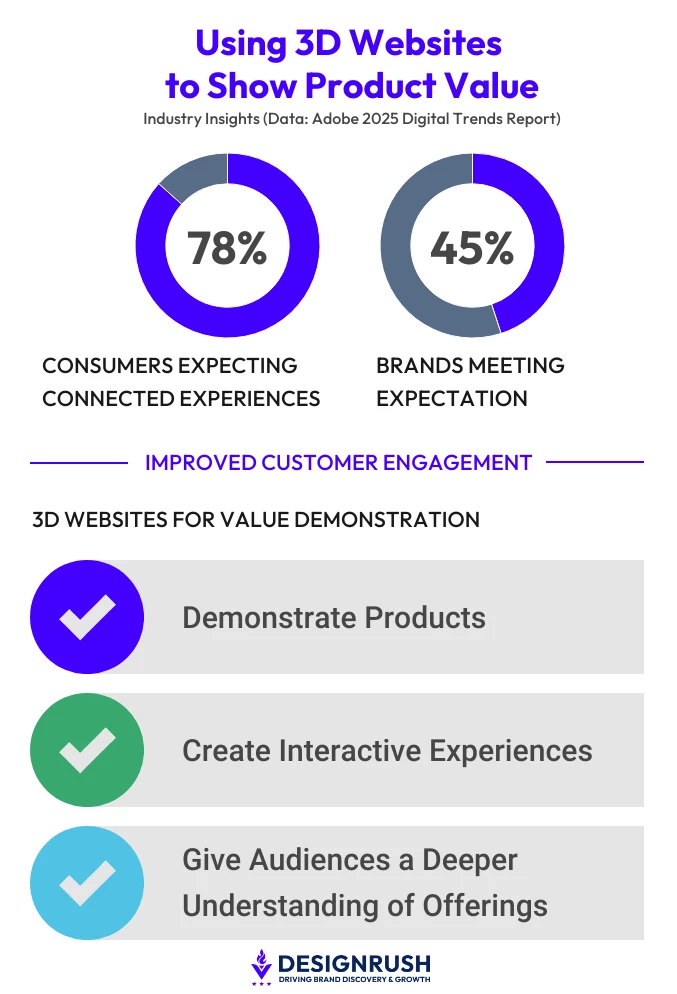
In fact, 78% of consumers expect connected experiences across digital and physical channels, while only 45% of brands currently meet that expectation, according to Adobe’s 2025 Digital Trends Report.
“The gap suggests that consumers increasingly expect brand interactions to feel consistent across different touchpoints, creating demand for digital experiences that connect more closely with real-world products and services,” Dafa notes.
These expectations are influencing how brands use interactive environments that give users more ways to engage with products and information.
It is predicted that 20% of people will have a weekly experience with persistently anchored, geospatial content by 2028, compared with less than 1% in 2023, according to Gartner’s 2025 Top Strategic Technology Trends report.
It reflects a wider consumer familiarity with interactive digital environments.
“For brands considering 3D websites, the main question is purpose,” Dafa notes.
“A visually impressive interface may attract attention, but the experience still needs to help users understand a product, navigate information, or engage with a brand in a meaningful way.”
What Makes a 3D Website Effective
Interactive elements need to support the reason a visitor arrives on the website.
Deloitte Digital’s 2026 B2C commerce research highlights this challenge.
Only one in four brands surveyed believe they deliver excellent online shopping experiences.
The finding highlights a difference between how brands assess their digital experiences and how consumers experience them.
“A virtual product demonstration, interactive configuration tool, or 3D environment can provide value when it helps users make decisions or better understand what a brand offers,” Dafa explains.
Zero Negative’s approach reflects this balance between creativity and function.
The studio’s 3D web work focuses on creating experiences where design elements support communication rather than exist as standalone visual effects.
Its projects for brands including Advida and Roberts Communications demonstrate how interactive web design can be applied across different industries and brand objectives.
The design approach also needs to account for the technical requirements of interactive websites.
Brands need to consider how quickly pages load, how easily users can navigate the experience, and whether the interactive elements serve a clear role.
What Brands Should Consider Before Building a 3D Website
Brands exploring 3D websites should begin with the experience they want to create rather than the technology they want to use.
A product launch, digital showroom, educational experience, or brand story may each require a different approach.
“Agencies working with clients on interactive projects can focus on the connection between design and business goals,” Dafa says.
“The strongest experiences give users a reason to interact, whether that means understanding a complex product, exploring a brand world, or making a purchase decision.”
Brands evaluating 3D websites should focus on where interactive elements add value within the customer journey.
The strongest implementations give users clearer product understanding, more engaging ways to explore information, or a stronger connection with a brand’s identity.