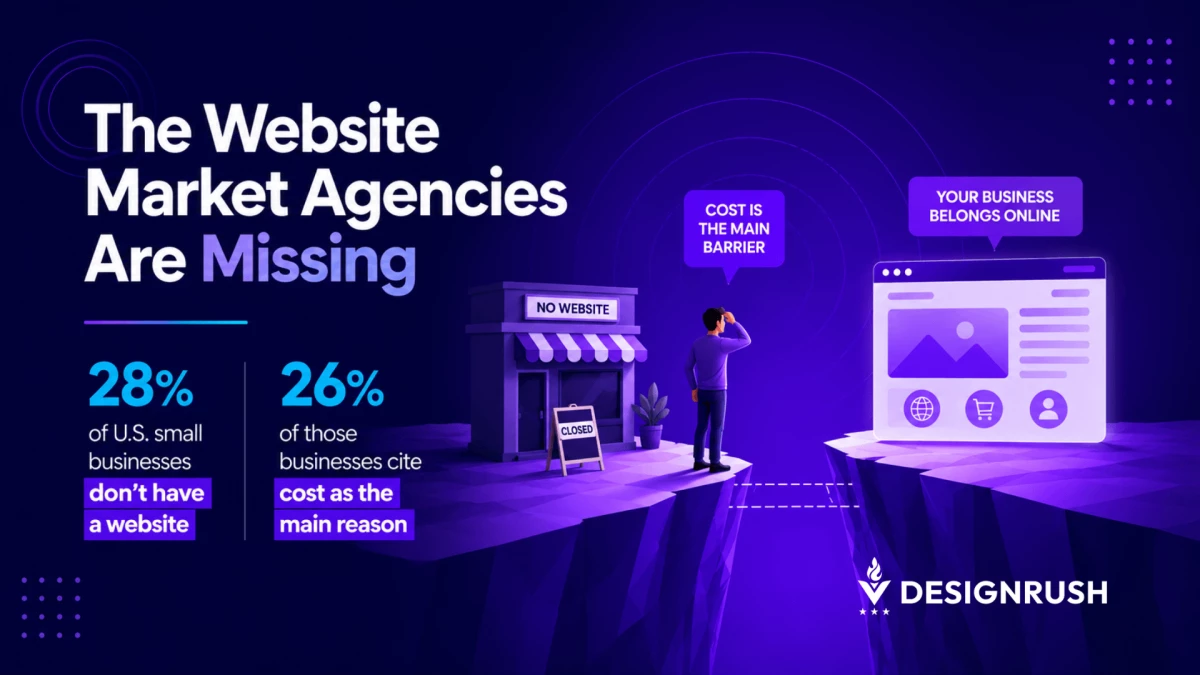

As many as 28% of U.S. small businesses still don't have a website, with 26% of those businesses citing cost as the main reason, according to Marketing LTB.
For agencies that work with small businesses, this creates a challenge when clients want a professional website but don't have the budget or need for a full custom build.
A smaller package can make more sense, though the work can still add up. There’s onboarding, content collection, page planning, revisions, testing, launch, hosting, and support to account for.
For agencies, the answer isn't simply to charge less for the same workflow. A smaller website offer needs a different production model, clearer boundaries and a faster path to the first usable version.
It's a problem Brizy is tackling from the production side, using AI to create the first website draft before agencies take over the design and refinement.
The company's CPO and Co-founder, Bogdan Condurache, says problems start when the project price drops but the agency's workload doesn't.
"Agencies need to treat this as a separate service by giving it its own scope, workflow, and boundaries from the start,” Condurache says.
“That way you can keep the professional standard clients expect without putting every project through a full custom process."
Why Small Website Projects Hurt Agency Margins
A five-page website may be a smaller job, but there’s still plenty for the agency to do. It needs to collect content and assets from the client, build the first version, manage feedback, and get the site live.
And a few extra rounds of revisions can quickly add hours to the project. At the same time, so can additional pages, missing content, late asset changes, or requests the client assumed were part of the original price.
"Scope creep usually doesn't arrive as one big request. It's another page here, another revision there, or something the client assumed was included," Condurache adds.
"Agencies need to make those boundaries easy to understand from the start and put a price on anything outside them."
A fixed onboarding checklist can establish what the client needs to supply before work starts, where agencies can also set the number and type of pages, limit revision rounds, and define which requests require a separate quote.
Launch, hosting, handoff, and support can follow a standard process across projects in the package.
That gives the agency a defined workload without reducing the professional review that goes into the finished website.
The goal isn't simply to produce the website faster. It's to make the amount of agency time invested predictable.
Once onboarding, deliverables, revision rounds, launch and support are defined, the agency can price the package against a known production process rather than discovering its real cost after the project has started.
How Agencies Can Productize Small Website Projects
Agencies can structure smaller website projects around different levels of service, depending on how much of the process they handle and how much responsibility the client takes on.
To achieve this, Condurache proposes three models that can help:
1. Fast-launch / done-for-you
One option is a fast-launch service where the agency handles the project from setup through publication. The first version is created quickly, then refined, branded, checked, and published by the agency.
2. Done-with-you
Another gives the client more responsibility for content and visual decisions while the agency handles setup and professional finishing.
"Some clients want the agency to handle everything, while others are comfortable doing more themselves but still want professional help when they need it," Condurache says.
"The service should reflect how much help that client actually needs."
3. White-label DIY & professional services
Agencies can also give clients access to a website builder under their own brand and sell setup, customization, SEO, content, design, and support around it.
Brizy White Label supports that model by letting agencies replace Brizy branding across the builder, domain, and support experience. Agencies can manage multiple client projects within the web platform or keep the production process internal.
That allows the agency to remain the visible provider of the website platform and keep the customer relationship attached to its own brand rather than sending smaller clients to a third-party DIY product.
AI can shorten the work required to get those projects started.
Brizy AI uses details about the business, its content, pages, colors, and typography to create the first version of the website.
From there, the agency can adjust the design, copy, responsive behavior, calls to action, and other details in Brizy's visual editor.
"Starting from scratch takes time, especially when agencies are doing much of the same setup work across smaller projects," Condurache explains.
"AI can get you to something useful faster, where the designer can spend more of that time improving the site and making the decisions that need professional judgment."
For agencies handling multiple smaller sites, the same workflow can be repeated across clients without requiring the finished websites to look or function the same.
Which Website Projects Still Need Custom Web Development?
Complex ecommerce, custom applications, deep business-system integrations, specialized UX, unusual compliance requirements, and projects with extensive stakeholder discovery don't fit a standardized website package.
"If the client needs custom functionality, complex integrations, or a lot of discovery, treat it as a custom project," Condurache says.
"Qualification protects the smaller service because you're only putting the right projects through it."
But agencies need to make that call before production starts.
A prospect should fit the service the agency has designed rather than requiring exceptions from the outset.
Leaders also need to decide what support is included after launch and when additional work requires a separate quote.
That keeps the entry-level service separate from the agency's custom offer and gives each a defined role.
How Small Website Clients Can Lead to More Agency Work
The initial website doesn't necessarily represent the full commercial value of a smaller client.
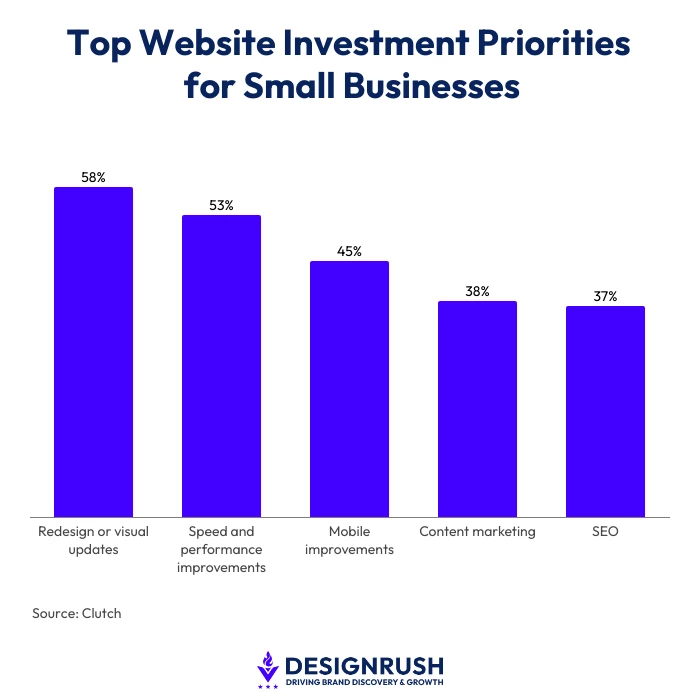
Industry insights found that 90% of small businesses planned to invest in their websites over the next 12 months.
The top five priorities include redesigns or visual updates at 58%, followed by speed and performance improvements at 53%, mobile improvements at 45%, content marketing at 38%, and SEO at 37%.
For agencies, that can lead to more work in areas such as branding, copywriting, SEO, content, paid advertising, analytics, maintenance, integrations, and future redesigns.
Rather than viewing the smaller website as a one-off low-budget project, agencies can treat it as the first step in a broader service ladder.
The initial website establishes the relationship, while services such as SEO, content, advertising, maintenance, integrations, and eventually a larger redesign can expand the engagement as the client's needs grow.
The first project still needs to make commercial sense on its own. Any work that follows adds to the value of the relationship.
"A smaller website can be the start of a much longer client relationship," Condurache says. "Once the site is live, you start to see what else the business needs and where the agency can continue to help."
"If that first project works well for both sides, there's a good reason to keep working together."
A well-defined website package can open a relationship with businesses that previously sat outside the agency's traditional custom model.
The opportunity isn't to sell a cheaper version of the agency's custom service. It's to build a separate, well-defined website offer with its own scope, production process and economics.
AI can reduce the work required to reach the first version, while professional editing, clear boundaries and the right service model allow agencies to serve a market they may previously have had to turn away, without devaluing their premium work.