

A YouGov survey found 34% of likely Black Friday and Cyber Monday shoppers plan to use AI to help them buy, up from 16% last year.
This year, retailers appear to be answering with a wide range of member perks and price guarantees.
Sales at Walmart, Target, and Best Buy now span most of November, with early deals starting weeks before Black Friday.
With a calendar this long, retailers are competing on confidence as well as price.
To top things off, Adobe forecasts $12.9 billion in online Black Friday sales, up 9.2% year over year.
Here, we'll break down five trends driving the sales and how brands can respond when shoppers' tools can check whether a deal is worth pursuing.
1. Memberships Reward Loyal Shoppers
Walmart has reserved select online-only deals for Walmart+ members during the first 24 hours of both Early Black Friday and Black Friday.
Member access began at 12:01 a.m. ET on Nov. 12 and again on Nov. 23, with the remaining items opening to all customers a day later.
Target's Circle 360 members also received 24 hours of early access to select deals beginning Wednesday, Nov. 25.
The retailer also brought back its first-100 giveaway at every store on Black Friday.
This year's prize was a gift card worth $25 to $100, with a $1,000 card going to one shopper per store.
Last year's tote bag version filled stores early and drew backlash from shoppers who waited hours and left empty-handed.
Either way, memberships and in-store prizes are giving shoppers a reason to commit to one retailer before the sales begin.
2. Price Matches and Longer Returns Ease Doubt
Best Buy's Holiday Price Match Guarantee covers most products bought between Oct. 30 and Dec. 31, with matches available through Jan. 15.
The guarantee applies to new products sold by Best Buy itself, with Marketplace sellers excluded.
Most purchases made in the same window can also be returned through Jan. 15, 2027, and My Best Buy Plus and Total members get until Jan. 31.
Target's Holiday Price Match Guarantee runs from Nov. 1 to Dec. 24 and matches its own prices if they fall later in the season.
The retailer also extended returns on purchases made in this window, with most electronics and entertainment items returnable until Jan. 24, 2027.
Each guarantee tells early shoppers that a later price drop at that store will be matched.
3. Shoppers Now Use AI to Verify Deals
YouGov's report names ChatGPT and Google Gemini as the most popular tools, with 29% of Black Friday and Cyber Monday shoppers selecting each.
The same research also found that 35% of likely shoppers feel it is challenging to determine whether a discount is legitimate.
Amazon's Alexa for Shopping lets customers check up to 365 days of price history right on a product page.
Customers can set auto-buy to have Alexa complete the purchase once the price hits their target.
Meanwhile, Alexa+ deal tracking sends instant notifications when watched items go on sale.
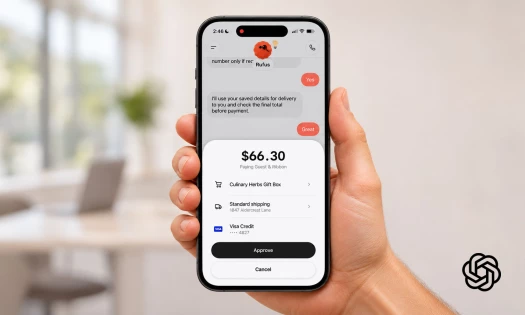
OpenAI also launched ChatGPT Wallet on Nov. 13 for a limited number of U.S. Pro subscribers, with agents paying on the merchant's own checkout page.
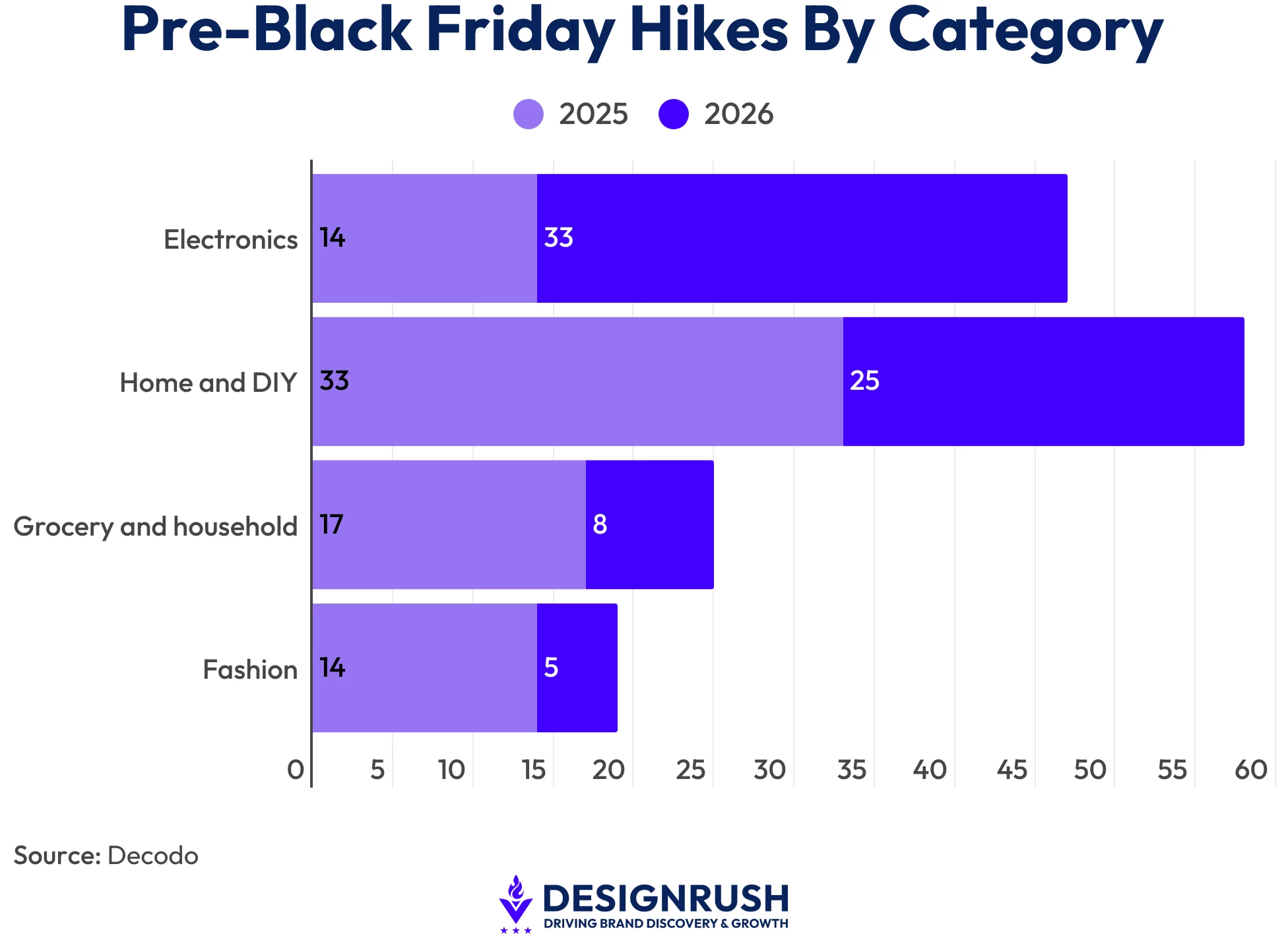
Meanwhile, web data company Decodo tracked more than 1 million prices at 37 U.S. retailers ahead of the sales.
It found that one in eight products got more expensive between early September and late October.
Decodo's data from last year showed that six in 10 products marked up before Black Friday sat at or above their September price on the day itself.
Adobe also expects AI traffic to U.S. retail sites to rise 130% this season, with growth on Black Friday forecast at 95%.
Every markdown now has to hold up against a price history that shoppers can pull up in seconds.
4. BNPL and Mobile Spending Keep Rising
Adobe forecasts $21.3 billion in buy now, pay later (BNPL) spend for November and December, up 6.6% year over year.
Mobile devices will account for 82% of the BNPL spend and make up 57.4% of overall online spend this season, up from 56.4% in 2025.
Adobe also projected $807 million in BNPL spend on Black Friday.
BNPL is set to clear $1.09 billion on Cyber Monday, its second straight year above a billion dollars.
Cyber Week is forecast at $47.5 billion online, up 7.4% year over year.
A pay-later order on a phone puts the final decision on the same screen that shoppers use to compare prices.
5. Holiday Campaigns Sell Shopper Confidence
Akeneo's survey of 1,000 U.S. consumers found that only 32% completely or mostly trust retailers to offer a fair or competitive price.
However, several retailers have already launched holiday campaigns ahead of Black Friday and Cyber Week to instill confidence in customers.
Target's "Academy of Giftology," created with agency Mythology, stars D'Arcy Carden as Chief Giftologist.
The campaign aims to help guests feel confident that they've found the right gift at a great value.
JCPenney and agency Mischief aimed their holiday campaign at deal fatigue, featuring shoppers from Crown Point, Indiana, and weekly deal guides.
The retailer even cited Akeneo's 32% trust figure in its launch release.
It set this against its own survey, where 92% of budget-conscious shoppers said they felt confident they got a good deal at JCPenney.
Meanwhile, Walmart's Muppet-inspired "A Who Knew Carol," created with Publicis shops including Fallon and Leo New York, stars Walton Goggins as Scrooge.
The campaign links the holiday assortment to a promise to help customers discover more and spend less.
Each campaign sells peace of mind along with its discounts.
The perks and guarantees above make the promise believable, so creative agencies need the price-match dates and exclusions in the brief from day one.
Brands can take these steps before Cyber Monday:
Audit Each Markdown Against September Prices
Teams can check each promoted product's September price and trim any markdown that follows a recent hike, or swap it for a gift with purchase.
Decodo found a RYOBI starter kit at Home Depot go from $79 in September 2025 to $203.94 in October before selling for $99 on Black Friday.
Publish Policy Dates on Product Pages
Retailers with price adjustment policies can place the eligible dates and exclusions on each product page and in the order confirmation email.
Best Buy excludes Marketplace sellers from its guarantee, while Target matches only its own price drops through Dec. 24.
Run a Phone Checkout With Pay-Later
Agencies can place a trial order on a phone at each client's checkout and note every step that stalls, starting with the pay-later button.
Adobe expects mobile devices to account for 82% of BNPL spend this season.
Our Take: Does Black Friday Still Feel Like an Event?
One big question that appears to hang over this Black Friday is whether it still counts as an event at all.
Bank of America's holiday survey found 29% of consumers plan to do most of their holiday shopping in early to mid-December, up from 19% last year.
We'd still call Black Friday an event, though shoppers now treat it as the day to cash in on deals they've tracked for weeks.
With a season this stretched out, loyalty perks and price protection are what bring shoppers back after the first deal.
Any trust earned this weekend should stick around after the deal is over, and we expect shoppers to remember which retailers were straight with them.
Our recent report on ChatGPT Wallet and Cyber Week shows agencies how to match product feeds to live prices.
Retailers that run a trial order before Cyber Monday will find where AI shopping agents stall before their customers do.
Brands preparing for shoppers with AI deal checkers need agencies that can plan offers, policies, and checkout flows.
Explore these top eCommerce marketing agencies in our directory.