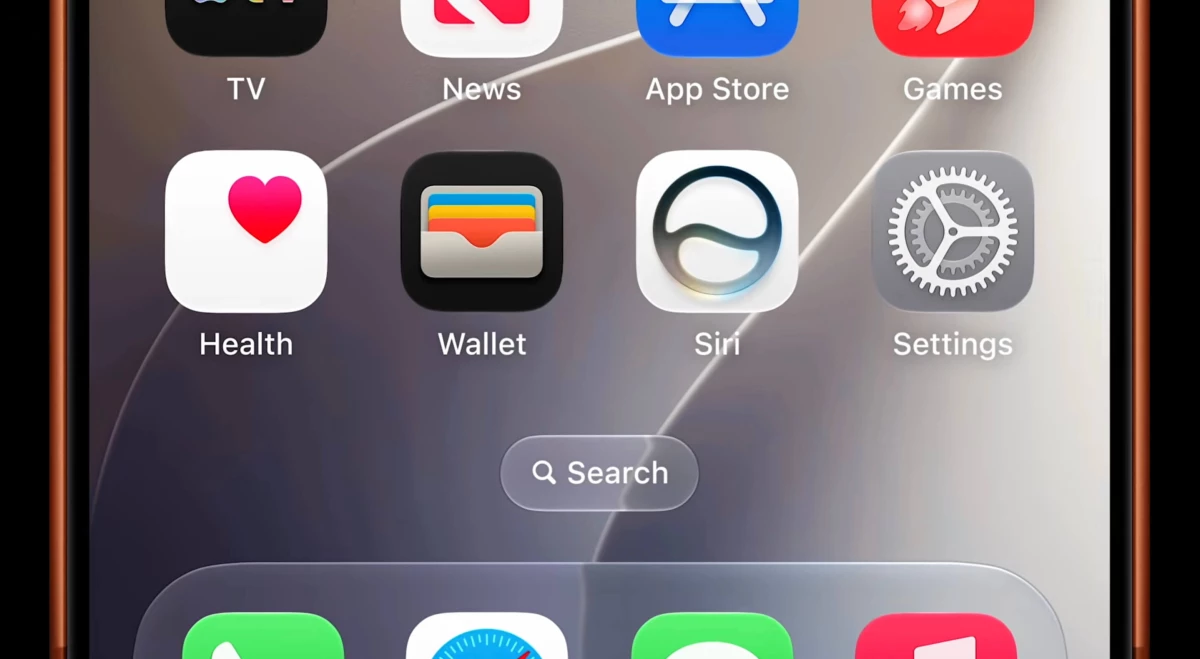

Apple finally gave Siri the overhaul it promised two years ago.
At this year's Worldwide Developers Conference (WWDC26), the tech company revealed Siri AI, a rebuilt assistant powered by Apple Intelligence.
It also runs on Google Gemini under a multi-year deal reportedly worth around $1 billion a year.
The new Siri can now understand personal context, analyze on-screen content, search the web, and complete tasks across apps.
The update arrives alongside new parental controls, writing tools, photo editing capabilities, and Apple's lineup of devices.
"We're excited to introduce Siri AI, a dramatically more capable and conversational assistant designed to help users find information and get things done throughout the day," Craig Federighi, Apple's senior VP of Software Engineering, said in a statement.
The announcement is Apple's most significant AI move yet, but investors stayed skeptical anyway.
Shares turned negative after the keynote, dropping by 1.9%.
Analysts pointed to one specific gap to explain the drop.
Apple launched Siri AI in beta with no date for when users would actually get it.
Public betas arrive in July, with a full launch set for the fall of 2026.
The company is wagering that a smarter Siri can close the gap with rivals and convince people to upgrade their iPhones to get it.
Siri Becomes Apple's AI Cornerstone
Apple rebuilt Siri AI from the ground up, moving it closer to competitors such as ChatGPT, Claude, and Gemini.
The assistant now searches messages, emails, photos, calendars, and third-party apps for relevant information.
It also has a dedicated app, persistent conversation history, improved writing assistance, and visual intelligence features that read the world through device cameras.
The redesign spans Apple's full lineup, including iPhone, iPad, Mac, Apple Watch, and Vision Pro.
Siri AI also moves into the Dynamic Island interface on newer iPhones, creating a more prominent role for it on the homescreen.
Apple also added a feature its rivals can't match on their own hardware. iOS 27 Extensions let users set a third-party AI model as their default assistant.
The $250-Million Lesson
Apple's AI strategy is under scrutiny because competitors established an early lead while it struggled to deliver promised features.
It first announced major Siri AI upgrades in 2024.
But many capabilities slipped, which led to the departure of senior executives and skepticism around its AI roadmap.
The company agreed to a $250 million settlement in May for claims that it overstated Siri's AI capabilities.
It's a costly lesson in announcing features before they ship.
Competitors spent the last two years training users to reach for AI assistants every day.
Apple spent this time building Apple Intelligence and pushing Siri AI back.
The company now has a thin margin for error as it works to convince consumers, developers, and investors that it belongs in the AI conversation.
Apple reaches $250M settlement over Siri delays, users could get up to $95 per device
by u/pdfu in apple
There are a few things this saga makes clear for any brand racing into AI development:
- Trust matters as much as capability. Brands should avoid promising future functionality before products are ready to maintain credibility.
- AI adoption follows usefulness. Companies should connect new features to everyday tasks to encourage habitual use and justify upgrades.
- Ecosystem advantages create staying power. Businesses should integrate new tech across products and services to increase long-term engagement.
Remember that whoever owns the AI assistant people reach for by reflex controls the most valuable real estate in tech.
Our Take: Is Apple's Late AI Start a Benefit or Deterrent?
Apple built its reputation on arriving late and winning through refinement, from the iPod to the Apple Watch.
AI breaks this pattern, and the late start looks more like a liability here. We think the clearest evidence sits inside Siri AI itself, which runs on Google Gemini.
Apple spent decades controlling its own tech stack, and now it's paying a rival to power the feature meant to prove it belongs in AI.
People have spent three years building daily routines around ChatGPT and Gemini, and a polished Siri has to break these habits to matter.
Apple's one advantage is the 2.5 billion active devices already in people's pockets, which gives Siri AI a captive audience as soon as it ships.
The question is whether default placement can outweigh years of muscle memory, and the answer won't arrive until the betas land next month.
Siri AI highlights how product experience and artificial intelligence are becoming inseparable.
Browse these top generative AI companies to find partners that can help create smarter digital products that customers will use.