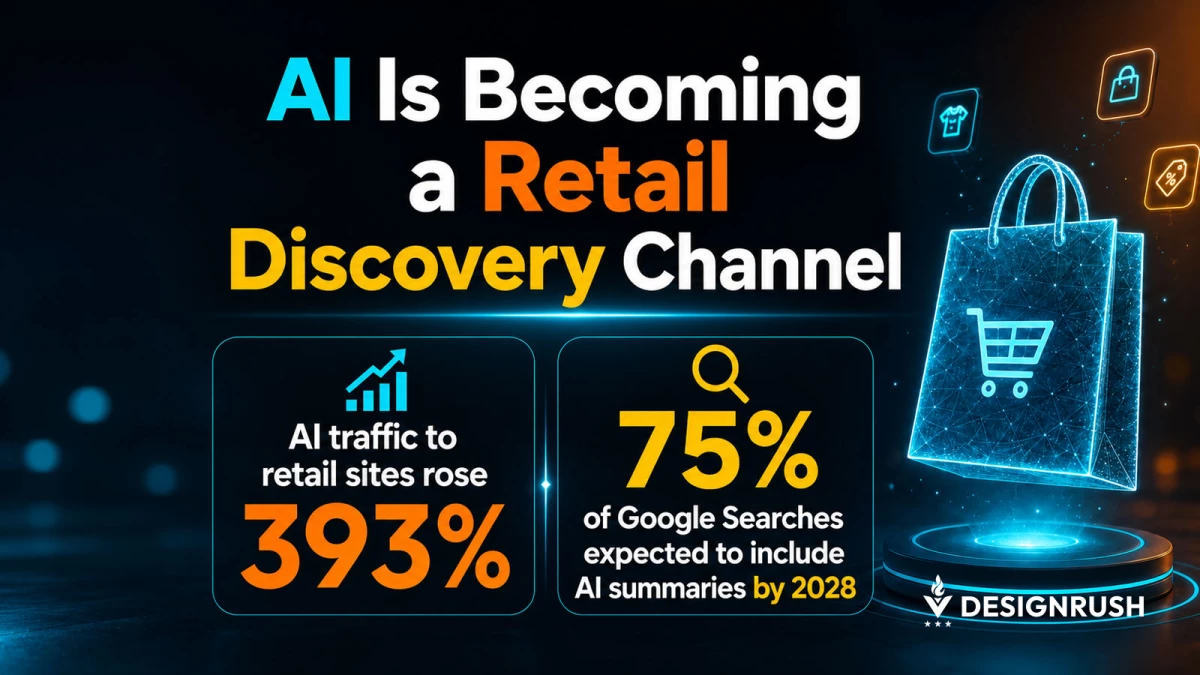

Traffic from AI tools to U.S. retail websites increased 393% year over year during the first quarter of 2026, according to Adobe.
This suggests that buyers are turning to AI assistants to compare options, summarize reviews, answer questions, and recommend products before ever visiting a retailer's website.
As such, modern websites serve two functions.
Not only are they meant to promote a brand's product and services, but they're also sources that AI systems read, interpret, and draw from when generating answers.
The only issue is that the same Adobe report found that many retail websites remain only partially machine-readable, making it harder for AI systems to interpret and surface their content.
As more consumers rely on AI to research products and compare options, websites must communicate clearly with both humans and the AI systems that summarize, recommend, and evaluate information.
The challenge now is understanding what makes content easier for AI systems to interpret.
How Can Websites Improve AI Visibility?
Visuable, a Squarespace web design and SEO agency focused on website strategy and search visibility, says businesses need to pay closer attention to how information is organized across their websites.
“Clear content structures, technical foundations, and semantic signals can help AI systems better understand a brand’s content and relevance,” says Stefania Grosso, SEO copywriter specialist at Visuable.
Adobe’s findings suggest this isn’t a future problem.
The company reported that AI-driven traffic to retail websites increased 693% compared with the previous year, showing that consumer adoption has continued into 2026.
This means that businesses are competing for visibility across another layer of digital discovery.
But AI assistants don’t simply return a list of links.
They interpret information, summarize pages, and recommend brands based on the information they can access and understand.
That places greater importance on website structure than many organizations realize.
Visuable says AI systems evaluate websites based on factors such as content clarity, topical depth, consistency between pages, trust signals, and how effectively information is connected.
"Our approach focuses on strengthening existing website foundations rather than treating AI visibility as a separate discipline from search optimization," Visuable Founder and Brand Strategist Lidia Drzewiecka adds.
One area Visuable highlights is content hierarchy.
"Pages with a clear structure, including descriptive headings and logical sections, make it easier for AI systems to identify topics, relationships, and important information," Grosso says.
"A page that jumps between unrelated ideas or buries answers under long introductions gives both users and machines more work to do."
Help AI Understand the Bigger Picture
Topical authority is also an important factor.
Visuable says brands should move beyond pages designed around single keywords and create content that provides broader context around a topic.
Related information, clear explanations, and answers to common questions can help AI systems identify what a page covers and when it may be useful in a response.
That aligns with Adobe’s finding that many websites remain only partially machine-readable.
When AI systems struggle to interpret website content, they have fewer signals available when generating answers or recommending businesses.
Internal linking is another area where traditional SEO practices continue to play a role.
Visuable says connecting related pages helps AI understand how information is organized across a website.
A service page supported by relevant articles, FAQs, and related resources provides clearer context than a standalone page with limited connections.
That context is becoming more important as AI search continues to influence how people find and evaluate information online.
How Websites Can Support AI Search
McKinsey reported in 2025 that about half of U.S. consumers intentionally use AI-powered search, with most of those users identifying AI search as their primary digital resource when making buying decisions.
The consultancy also expects AI-generated summaries to appear in more than 75% of Google searches by 2028.
This means website content needs to work across more search environments.
Clear website organization can make it easier for AI tools to identify the subject of a page and use that information in relevant responses.
Structured data and semantic markup provide additional signals about products, services, and page relationships that search systems can read.
"These technical elements allow search systems to better identify information such as relationships between pages, content categories, and specific details within a webpage," Drzewiecka says.
The agency also highlights FAQs as a useful format for addressing specific questions directly.
Pages that answer common customer questions in clear language give AI systems more direct information to work with when responding to conversational queries.
Visual content also requires attention. Visuable recommends treating image alt text as more than a basic description.
"When written with relevant context, alt text can help systems understand how images relate to the surrounding content rather than viewing them as disconnected elements," Grosso adds.
Likewise, the hierarchy and layout of a page's visuals also play an important role in maintaining a consistent message throughout.
Overall, many of these practices overlap with established SEO principles.
Regular technical SEO audits, structured data, internal linking, clear page organization, and authoritative content continue to support search visibility.
The difference is that AI-driven discovery places greater emphasis on how easily systems can interpret and summarize information.
Adobe’s data suggests businesses have little time to treat AI discoverability as a secondary consideration.
AI-driven product research is placing more importance on website content that is clearly organized and easy for systems to interpret.