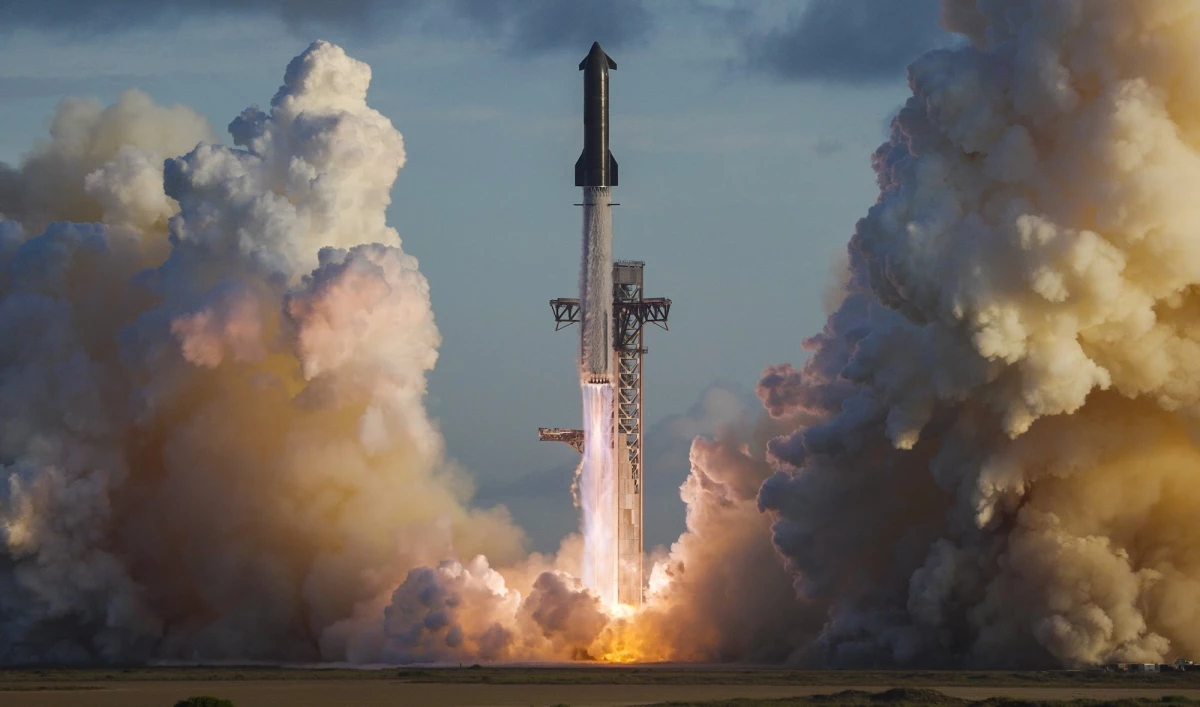

On September 28, SpaceX's Starship reached orbit for the first time on its 14th flight.
The vehicle deployed 26 Starlink V3 satellites at about 275 kilometers.
Major outlets, including Reuters, NPR, Axios, Bloomberg, and Space.com, all covered the mission on the same day.
A Raptor engine shut down early during ascent, and SpaceX cut the planned 10-hour mission to roughly three.
SpaceX paid nothing for any of that coverage, which is how the company has promoted itself for two decades.
In February, SpaceX bought its first Super Bowl ad, a 30-second Starlink spot in a year when slots averaged $8 million to $10 million.
The company spent the money to sell home internet to households that already have a provider, four months before its IPO.
Free coverage put Starship in front of investors and NASA.
Eight million dollars put Starlink in front of the customers that SpaceX had to buy its way to.
Elon Musk paid only for the audience his company couldn't reach any other way, while most brands spend their budget on people who already follow them.
Two Decades of Rocket Launches
For most of its history, SpaceX has built brand awareness through rocket tests, booster catches, and Musk's own public presence.
Business Insider describes this approach as typical of Musk's companies, which have usually avoided advertising and relied on public persona.
Tesla and SpaceX have both run ads on social platforms in recent years, including on Musk's X.
The first 13 Starship flights all stayed suborbital, and each one handed reporters a new milestone to track.
Flight 14 hit orbital speed of about 17,500 mph and carried a 26-satellite payload.
These satellites were the first operational batch of a new Starlink generation.
Reuters and Axios both put the shortened flight in their headlines, so the milestone and the early ending ran together.
The plan called for about six orbits and a Pacific splashdown west of Chile.
SpaceX ended the flight after roughly three hours and brought Starship down north of Hawaii.
Several outlets called it Starship's first commercial flight, since the V3 satellites will enter service in the coming weeks.
A test flight earns coverage once, while a working product creates it on every flight that delivers satellites.
SpaceX now has a launch calendar doing the work that other companies fund with a media buy.
The Super Bowl Ad and the IPO Timeline
In February, SpaceX ran its debut Super Bowl ad, a 30-second Starlink spot set to archival Arthur C. Clarke audio from 1964.
The footage showed Falcon 9 and Starship boosters returning to Earth and Starlink operating in remote locations.
Its tagline was "fast, affordable internet, available everywhere."
Starlink had spent years selling to rural households with no other option.
The February ad went after suburban customers who already pay Comcast or Spectrum.
It was the first Super Bowl ad from any Musk-led company, and before this, Starlink had only appeared in spots paid for by partners like T-Mobile.
The ad ran ahead of a potential record-breaking IPO that could value SpaceX at as much as $1.5 trillion.
SpaceX had also closed its acquisition of xAI six days earlier, on February 2.
The four months in between turned a consumer ad into an investor pitch, since Starlink revenue is the number investors were asked to buy into.
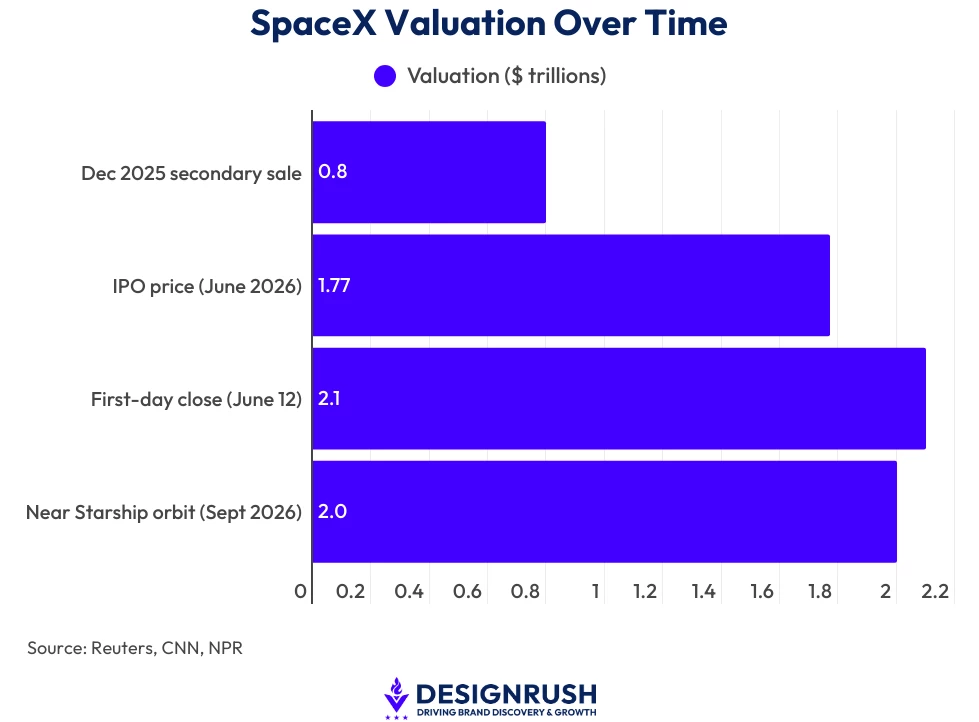
SpaceX priced its IPO at $135 a share and began trading on June 12, raising $75 billion.
Underwriters then exercised their option for extra shares, which lifted the total to $85.7 billion.
SpaceX closed its first day of trading at over $2 trillion, a figure that rests on Starship flying often enough to fill the sky with Starlink satellites.
Starlink reported 9 million customers across 155 countries in December, two months before the ad aired.
It had passed 12 million customers in more than 160 countries in June, three months before Flight 14.
And the Super Bowl ad put this pitch in front of a national audience. The IPO four months later put the same story in front of investors.
Paid campaigns go further when the brand story is already familiar to the people watching.
Starlink V3 and the Capacity to Sell
Each Starlink V3 satellite has 10 times the downlink and 22 times the uplink capacity of a V2, which gives the service more capacity to sell.
At full scale, one Starship is meant to deploy 60 V3 satellites, which is roughly the network capacity of 20 Falcon 9 launches.
Only Starship can launch the larger V3 satellites, according to NPR, which makes the orbital debut the start of this capacity build-out.
SpaceX operates more than 11,000 Starlink satellites today.
The company also asked the FCC in July for authority to fly as many as 100,000 third-generation satellites.
Three of the 26 satellites have cameras installed, and Space.com published a view of Starship's upper stage captured from a just-deployed V3 satellite.
The added capacity gives Starlink room to sign up more subscribers, and subscriber growth is exactly what a consumer ad is bought to deliver.
The Earned and Paid Budget Split
The launch coverage builds credibility with three audiences: investors, NASA, and a tech-following public.
NASA is counting on Starship as its Artemis lander.
The Super Bowl spot spoke to the households picking an internet provider, with a pitch about speed and price.
Musk wrote on X that Starship is two to three years from hourly flights, so launch coverage stays on the calendar whether or not SpaceX buys another ad.
A paid placement runs on a date the company picks, which makes it the easiest part of the mix to time to a business milestone.
Any brand can list the decisions it wants to influence, then match each audience to the channel it already follows.
Starship is 2 to 3 years away from hourly flights
— Elon Musk (@elonmusk) September 27, 2026
Three habits follow from how SpaceX has split launches and its one Super Bowl ad, and each applies at much smaller budgets:
- Record a customer baseline before paid spend begins: Totals captured ahead of a campaign let a team credit paid media for growth that earned coverage would otherwise absorb.
- Clear usage rights for earned content early: Footage, quotes, and press clips often need permission before they can run in paid placements.
- Write one brand-owned message and repeat it: A single company-written line used across ads and owned channels gives earned coverage a steady reference point.
Applied together, these habits make it easier to tell what paid media added to a brand that already earns coverage.
Our Take: Did SpaceX Change Its Brand Strategy?
SpaceX sells two completely different products under one name.
We think that the strategy never changed, because the rocket brand still runs on earned coverage, and only Starlink got an advertising budget.
The Super Bowl footage of returning boosters was the one place the two met, and SpaceX has barely reused it since.
Super Heavy liftoff powered by 33 Raptor 3 engines pic.twitter.com/fwfd1qpw1a
— SpaceX (@SpaceX) September 29, 2026
An $8 million to $10 million slot equals 0.01% of the $85.7 billion the IPO raised.
That's $1 of ad spend for every $10,000 SpaceX took in.
By our math, Starlink spent less on reaching a Super Bowl audience than SpaceX's stock gained in the first minute of trading on June 12.
Companies without a rocket can point paid messages back at whichever asset already earns attention, such as a flagship product or an annual event.
We would watch how often launch footage turns up in Starlink ads after Flight 15, since that reuse is where the two brands meet.
Brands planning the split between earned and paid media need agencies that understand which audience each channel influences.
Check out these top advertising agencies in our directory.