

Apple's first answer to a product flaw usually opens with a compliment.
On October 26, it acknowledged an issue with the inner display on a "small number" of iPhone Duo units.
The company's first foldable phone hit stores three days earlier, with prices starting at $1,999.
Early owners reported cracked inner screens with bright horizontal lines running from the hinge.
Apple's official statement opened by calling the response from early users "incredibly positive."
Only then did it acknowledge the display issue and tell affected owners to contact AppleCare for a replacement.
Apple ran the same sequence in 2014, when iPhone 6 Plus owners reported phones bending in their pockets.
Its Bendgate statement talked up the durability of the $749 phone before saying that only nine customers had actually complained.
The stakes run higher this time, since fixing an iPhone Duo inner display out of warranty costs $999, more than a whole iPhone 6 Plus did.
This time, fixing an iPhone Duo inner display out of warranty costs $999, more than a whole iPhone 6 Plus did in 2014.
Apple still sent the same praise-first statement to CNBC, Bloomberg, The Verge, and 9to5Mac, which makes the order a planned choice.
"The response to iPhone Duo from early users has been incredibly positive, and we are seeing exciting things from developers who are rapidly updating their apps to take advantage of its unique form factor," the official statement read.
Leading with praise keeps the product's launch story intact wherever the statement runs in full.
And if you're holding a cracked $1,999 phone, the fix only comes after Apple's pat on its own back.
Apple responds to reports of iPhone Duo's inner display cracking https://t.co/dySnKPMsGC by @ChanceHMiller
— 9to5Mac (@9to5mac) October 26, 2026
Every foldable rises or falls on its hinge, which makes product design the first thing that buyers question when a phone screen cracks.
Right now, iFixit is the one explaining the hardware problem to buyers, which leaves a repair shop telling Apple's design story.
Antennagate Set the Template in 2010
The pattern goes back to the iPhone 4, when owners complained about dropped signals in June 2010.
Steve Jobs even replied to one user by email with "just avoid holding it that way."
Apple's open letter to iPhone 4 owners on July 2 then opened by calling the phone its most successful product launch ever.
Two weeks later, Jobs called a press conference, said that every smartphone had the same issue, and handed out free bumper cases.
After four years, Apple's Bendgate statement leaned on engineering, citing stainless steel and titanium inserts and "the strongest glass in the smartphone industry."
The iPhone Duo statement sizes the problem at a "small number" and sends affected owners straight to AppleCare.
Apple spokesperson Alex Kirschner told The Verge that most units aren't susceptible and that the defect shows up quickly when present.
"We are aware of an issue impacting the inner display on a small number of iPhone Duo units.
If users experience issues with their iPhone Duo display, they should contact AppleCare for a replacement," Kirschner shared.
The why came from iFixit, whose teardown points to the hinge, where the folding screen may press against a center bar.
And according to CEO Kyle Wiens, there's barely any room for error in there.
"A manufacturing variance or grain of sand can kill the fragile display panel it protects," he posted on X.
Apple solved both problems eventually, in hardware that only reached people who bought the next iPhone.
The iPhone 4S got a redesigned dual antenna, while the iPhone 6s switched to a tougher 7000 series aluminum.
And of course, Apple sold both as shiny new features.
Still, brand reputation only bounces back once someone tells customers what actually broke.
Foldables Near 100 Million Lifetime Shipments
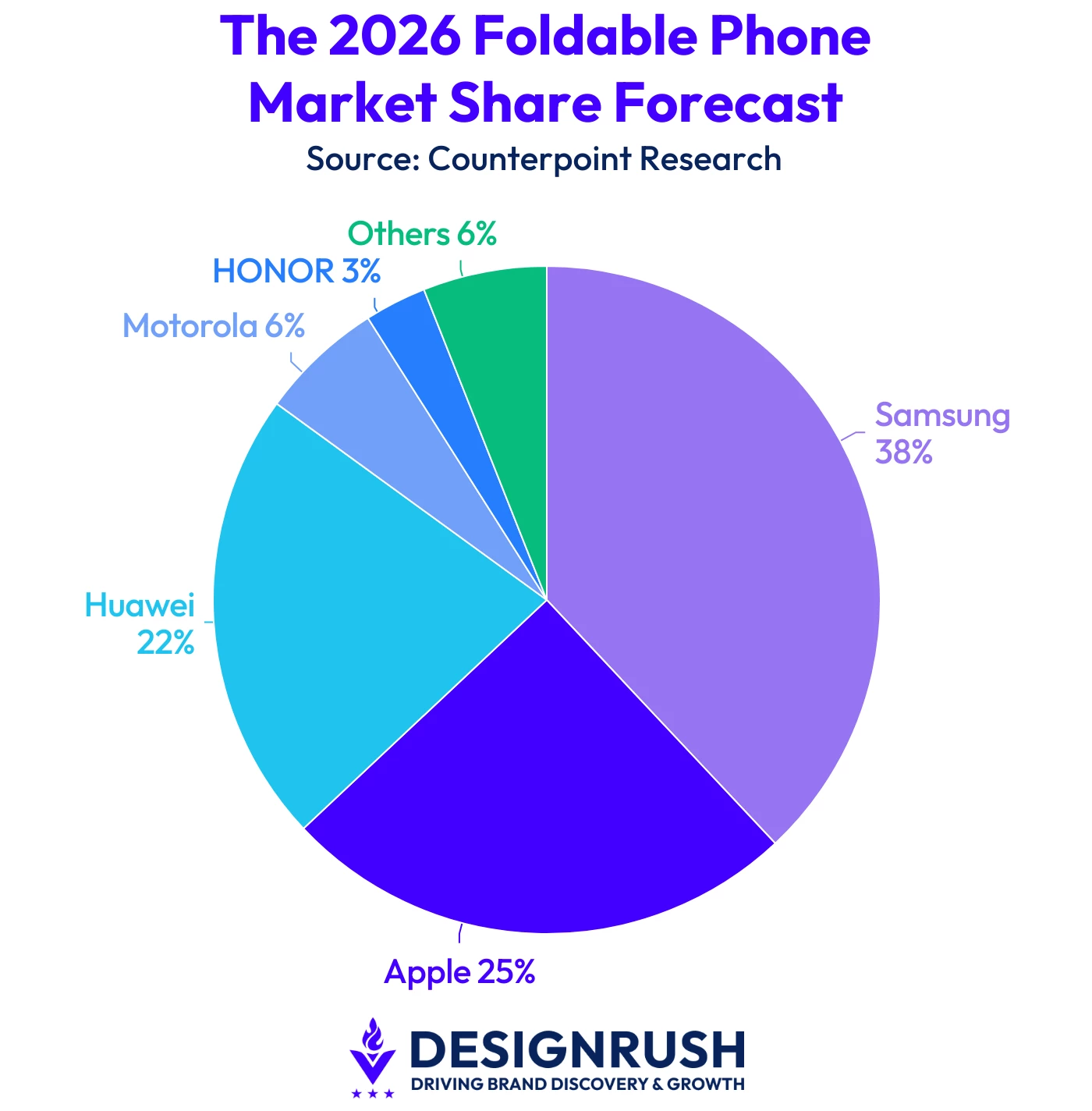
Counterpoint Research expects cumulative foldable phone shipments to pass 100 million by the end of 2026.
It forecasts up to 6 million foldable iPhones this year, enough for a 25% share behind Samsung.
Screen durability has dogged the category since 2019, when reviewers found Samsung's first Galaxy Fold cracking during normal use.
Apple is a big reason the category is growing this year, so a shaky Duo hinge puts the whole growth forecast on the line.
Brands can learn these three things from Apple's response when a product launch goes wrong:
- Open with the fix: People reading about a defect want to know what to do next, so the replacement steps belong ahead of any good news.
- Say how exactly many: Give a real count of affected units, because forums will fill the silence with a bigger number of their own.
- Price repairs upfront: Buyers who skip a protection plan take a broken screen a lot better when they see the repair bill before checkout.
Antennagate is still being mentioned 16 years later, which tells us how long the internet remembers a launch-week flaw.
Our Take: Should John Ternus Explain the Hinge Himself?
Apple's new CEO spent years running hardware engineering before he took over on September 1.
We'd love to hear about the hinge design from Ternus himself, since this is exactly the kind of problem he made his name on.
And you only get one first bad week as a new CEO.
Right now, all buyers have is a three-sentence statement from a spokesperson.
Jobs cut his Hawaii vacation short in 2010 to face reporters about the iPhone 4 himself.
We think that a quick video of Ternus walking buyers through the hinge would put an engineer's face on Apple's response.
If you paid $1,999 for his first big launch, you deserve to hear about the defect and what's being done to correct it from the CEO himself.
Ternus has a software headache waiting, too, with Split View squeezing retail apps into half of the Duo's inner screen.
Need a team that keeps your brand steady when launch week goes sideways?
Find your match among these top public relations firms in our directory.