
Samsung just fired its strongest shot yet in the foldable phone race, and the timing is no accident.
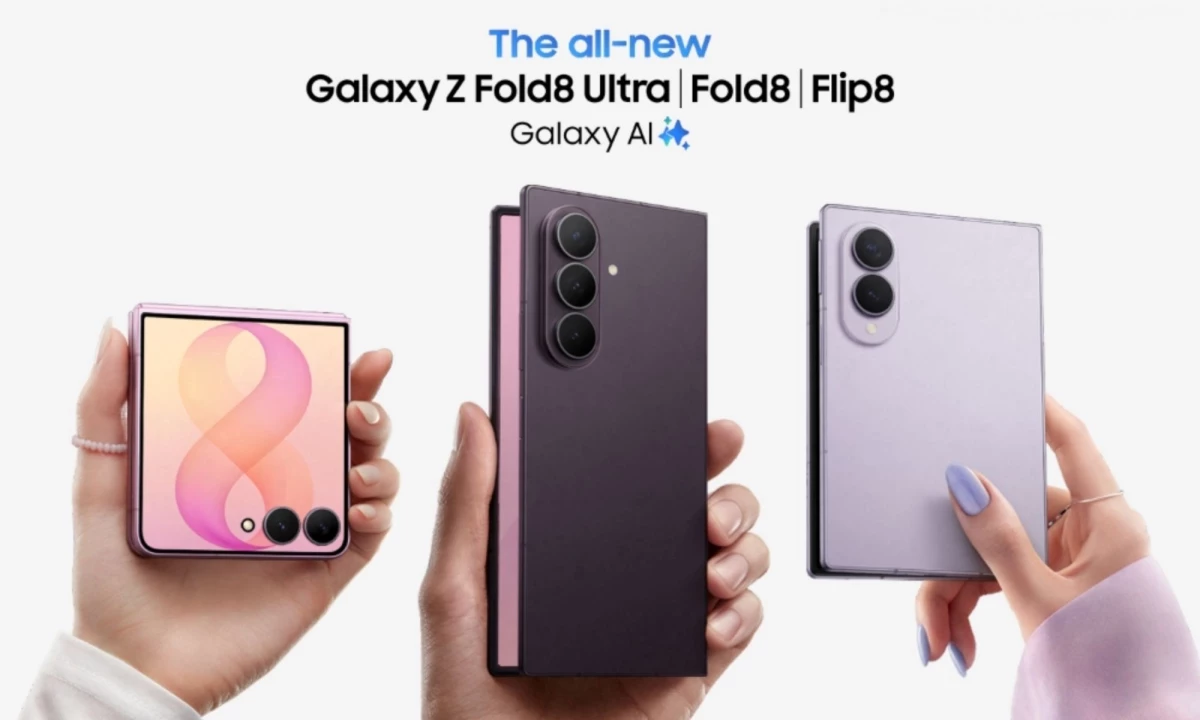
At Galaxy Unpacked, it unveiled the Galaxy Z Fold8, Galaxy Z Fold8 Ultra, and Galaxy Z Flip8.
The arrival of these new models gives consumers three distinct foldable devices aimed at entertainment, productivity, and self-expression.
The announcement comes just weeks before Apple is widely expected to unveil its first foldable iPhone in September.
It sets up one of the biggest hardware battles the smartphone industry has seen in years.
The new range also doubles down on Galaxy AI, with features optimized for each form factor, including:
- Google's Gemini Intelligence
- AI-powered multitasking
- Personalized workflows across Samsung's ecosystem.
Samsung CEO and Device eXperience Division Head TM Roh cast the foldables as the most tailored UX in a new era of agentic AI.
"As AI becomes more agentic, mobile devices will become the most personal entry point to experiences that understand and adapt to each user," Roh said in a company statement.
"By setting a new standard for foldables, we are once again advancing the premium mobile experience and opening the next era of intelligence to more people."
It's obvious that Samsung wants to own the next smartphone era before Apple steps in.
It's using software, AI, and hardware design together to set the terms in the foldable category while it's still leading.
Book-Style Fold Headlines the New Models
Samsung's biggest hardware story is the decision to split its foldable design strategy into three clearly defined products.
The standard Galaxy Z Fold8 now has a wider aspect ratio that taps into the book-style aesthetic.
It remains optimized for reading, gaming, and video viewing.
Samsung also reduced the weight to 201 grams and added its new Flex Titanium display structure.
This change improves durability while reducing crease visibility.
The Galaxy Z Fold8 Ultra targets creators and professionals with enhanced multitasking capabilities.
Meanwhile, the Galaxy Z Flip8 focuses on portability with its expanded FlexWindow display.
It provides a more capable AI interface for quick interactions and hands-free content creation.
The tech company also simplified switching from competing devices.
Smart Switch now allows iPhone users to migrate wirelessly through a QR code while supporting passwords, eSIM transfers, and accessibility settings.
According to CNN, Samsung believes Apple's rumored foldable could actually accelerate consumer awareness of the category.
"People now kind of know what a foldable is, but many consumers in the US have never touched or even felt one," Samsung senior executive Drew Blackard said.
This positioning gives Samsung something that Apple can't replicate with one launch.
Years of refining foldables in public have given Samsung a valuable trust advantage as competition in the category intensifies.
Samsung Defends Its 40% Foldable Share
AI features are becoming standard, and manufacturers need new ways to convince consumers to upgrade.
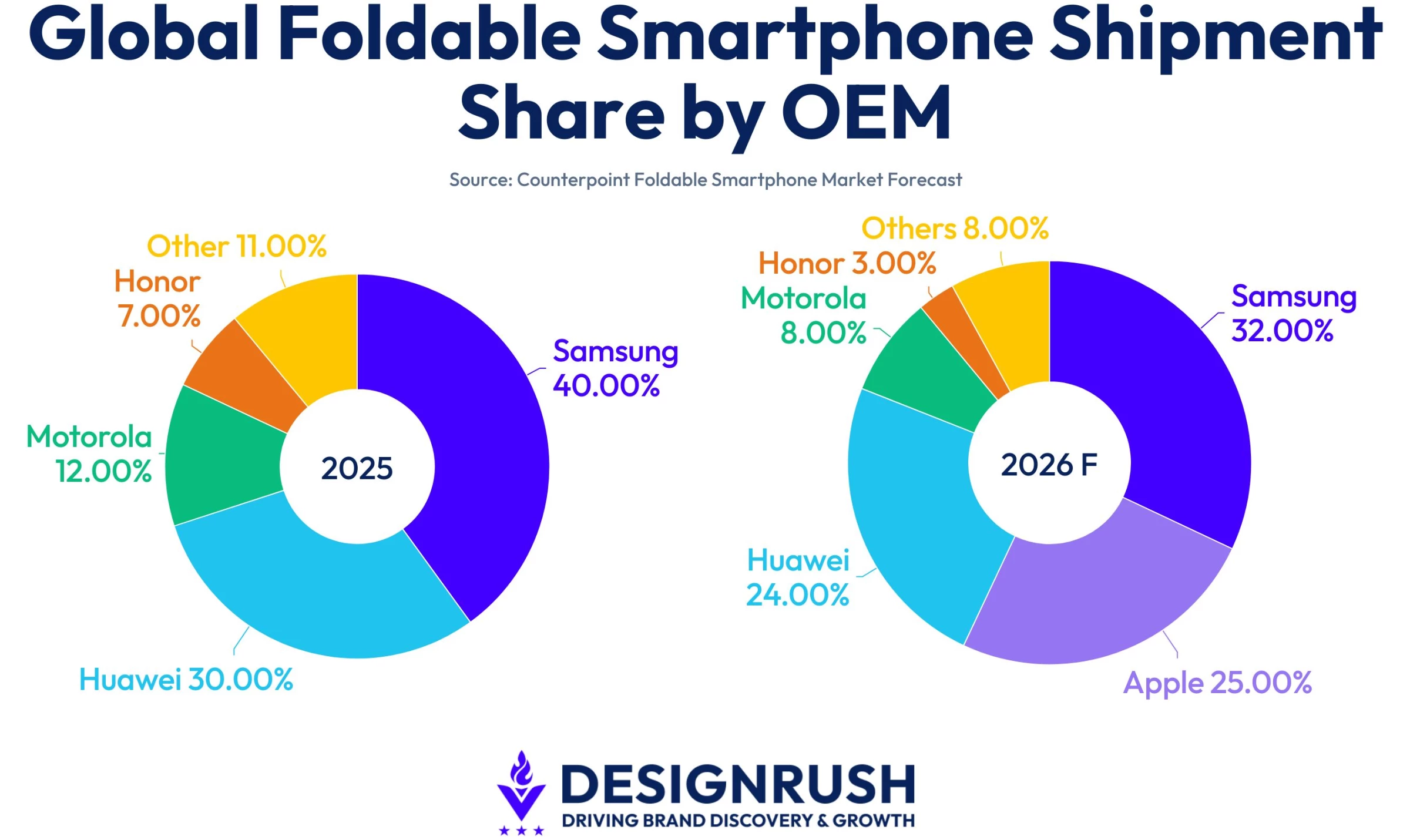
According to Counterpoint Research, Samsung accounted for 40% of the global foldable smartphone market in 2025, maintaining its lead against Huawei.
This dominance could soon be challenged, with Apple's first foldable iPhone expected to capture roughly 25% of the market this year.
A quarter share on Apple's first attempt would rank it second in foldables almost immediately, forcing Samsung to defend a lead it has held for years.
Samsung is also placing AI at the center of its strategy.
Galaxy AI now works across more than 40 supported apps and services, with Gemini Intelligence helping users complete tasks from a single workspace.
For creative professionals, the combination of larger displays and AI-assisted workflows positions foldables as productivity devices.
This distinction matters as vendors search for reasons to justify devices priced above $2,000.
The numbers point to a category that may finally be approaching mainstream relevance.
The growth of foldables reflects changing expectations on premium smartphones as hardware innovation regains importance alongside AI.
- AI is no longer the differentiator. Brands should pair software advances with meaningful hardware innovation to create reasons for consumers to upgrade.
- Early category leadership creates lasting advantages. Companies should refine emerging products over multiple generations to strengthen customer trust.
- Premium devices need distinct identities. Marketers should communicate clear user benefits for each product tier to encourage faster purchase decisions.
As AI becomes table stakes across flagship phones, product design and specialized experiences may once again be the strongest competitive advantage.
Our Take: Are Phones Becoming Interesting Again?
We've spent the past decade watching smartphones become carbon copies: a flat slab with slightly better cameras, a faster chip, and updated AI features.
Samsung's latest lineup suggests the industry may be entering a new cycle where physical design once again becomes part of the buying decision.
This possibility grows stronger if Apple follows through with its own foldable later this year.
History suggests Apple rarely enters a category simply to participate.
It validates markets, encourages developers to optimize experiences, and gives consumers confidence that a new form factor is here to stay.
If both OEMs continue investing in distinct hardware designs, we could see smartphones regain the personality they lost during years of incremental upgrades.
We think this would create new opportunities for brands, developers, and agencies designing experiences around hardware that finally feels different again.
Foldable devices are creating new possibilities for product experiences.
Connect with these top product design companies to bring your next hardware or digital product to market.