
Apple's NASA Artemis II Moment: Key Findings
- Astronauts photographed Earth from space on iPhone 17 Pro Max, the first time a smartphone has been fully qualified for use in orbit.
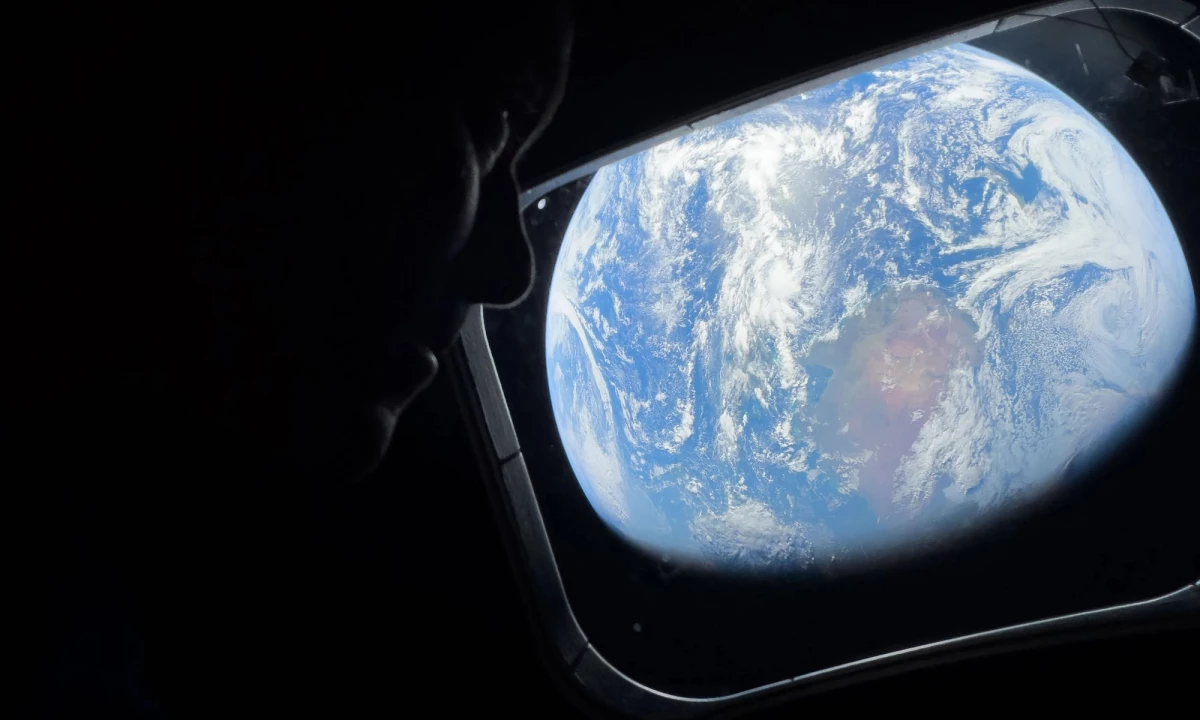
- The photos were taken on by Christina Koch and Reid Wiseman as they looked back at Earth through the Orion spacecraft's window.
- Apple had no involvement in the device being selected, making this an entirely unsolicited product endorsement.
NASA's Artemis II mission launched on April 1.
And by April 2, astronauts were already photographing Earth from space on an iPhone.
Two photographs released by NASA show Mission Specialist Christina Koch and Commander Reid Wiseman looking back at Earth through the Orion spacecraft's cabin window.
They were captured on the iPhone 17 Pro Max's front camera and published on NASA's Flickr account, where EXIF data confirmed the device and the date.
Artemis II is the first crewed NASA mission to travel toward the Moon since 1972.
The crew reached the far side of the Moon on April 6, breaking the record for the farthest distance from Earth traveled by humans.
For brands and agencies, what happened here is worth paying close attention to. Apple did not engineer this moment. NASA did.
How the iPhone Ended Up on Artemis II
In February 2026, NASA formally qualified the iPhone for extended use in orbit, clearing the device for crew use during missions.
Each of the four Artemis II crew members carries an iPhone 17 Pro Max for personal photos and videos.
The onboard iPhones are configured specifically for the mission with no internet connectivity and no Bluetooth accessories, meaning they only function as cameras.
Apple had no part in the planning or selection of the devices, according to reporting by Macworld.
All other photos from the mission have been captured on professional hardware, including the Nikon D5, Nikon Z 9, and a GoPro HERO4 Black.
The iPhone images sit alongside that equipment's output, and they've captured the moment authentically.
The Earned Media Value of an Unplanned Endorsement
Apple has run "Shot on iPhone" campaigns for over a decade, adding user photography to billboards, store posters, and across digital channels.
The first campaign was originally conceived to promote the iPhone 6, and has continued running to show what everyday users can capture using their devices.
However, none of the campaign's history has produced photos quite like the ones delivered from Artemis II.
What makes this unique is the fact that Apple played no role in manufacturing it.
NASA actually selected the device, qualified it through its own processes, and then the astronauts used it.
This decision chain is independent of Apple's marketing operation, which is part of what makes the imagery so commercially useful.
Three things stand out about how this moment functions as a brand event:
- Unsolicited use builds credibility. Third-party selection signals product trust without brand involvement.
- Let real-world performance speak. Authentic use cases can demonstrate capability more effectively than staged campaigns.
- Leverage independent validation. External contexts strengthen product narratives when they align with proven performance.
When real-world use makes the case, the marketing team doesn't have to.
Our Take: Is This the Most Valuable 'Shot on iPhone' Ever?
We think so, and the fact that Apple wasn't behind it makes it all the more memorable.
Apple's name appears in the same sentence as a NASA lunar mission and in actual coverage that was decided entirely by the space administration.
Christina's face when Reid thanked the NASA Administrator for the iPhone's 😆 pic.twitter.com/lOgUonwRy8
— Owen Sparks (@OwenSparks) April 7, 2026
The company just spent its 50th anniversary launching nine products and staging concerts with Paul McCartney.
But none of these produced a brand event as memorable as two astronauts photographing Earth from orbit using the iPhone 17 Pro Max.
It just goes to show that sometimes the best product strategies are the ones the brand didn't write the brief for.
Brands looking to build credible product narratives need agencies that understand how to identify and amplify real-world proof points.
Explore these top brand strategy agencies in our directory.