
AI Discovery and GEO Visibility Gaps: Key Findings
- AI discovery is now central to brand visibility, as more consumers rely on direct answers rather than traditional search journeys
- CMOs are investing in GEO without clear measurement, leaving a growing gap between visibility and provable performance
- Brands must shift how they measure visibility, as tracking presence inside AI-generated answers becomes critical through citations, share of voice, sentiment analysis, and competitive positioning
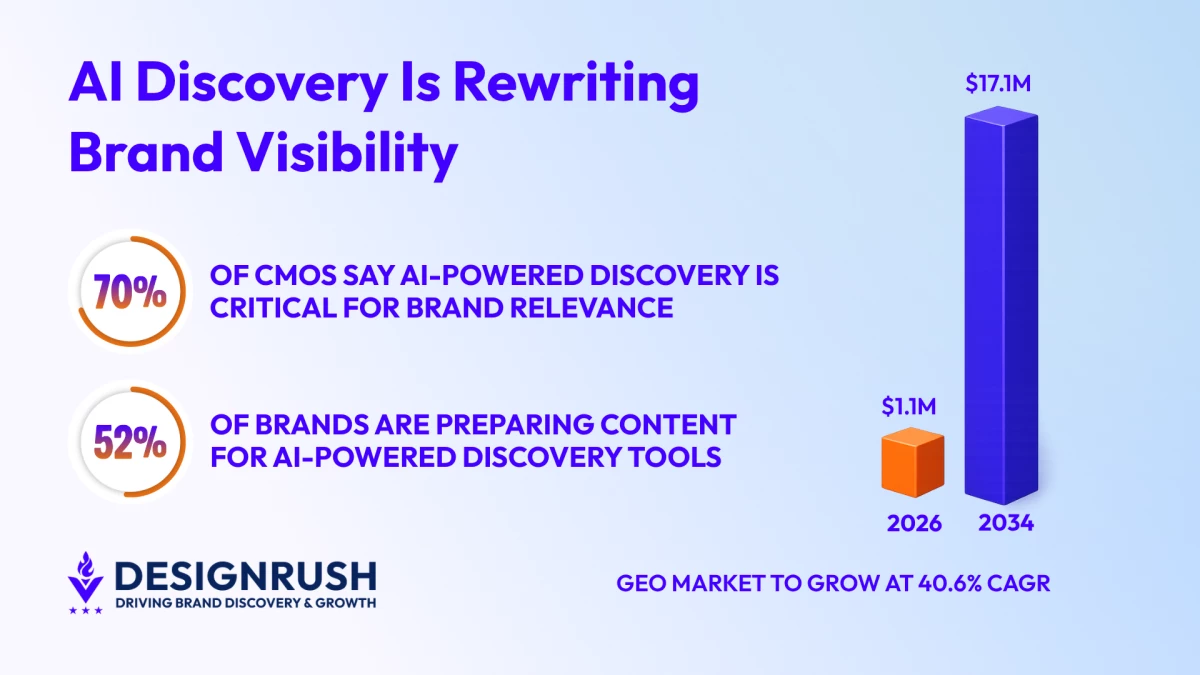
As many as 70% of CMOs now say AI-powered discovery platforms are critical to their brand’s relevance, according to new data from Adobe.
Yet a large majority of them still can’t say whether that visibility is delivering measurable results.
What’s changing isn’t just where people search, but also how they decide.
More consumers are turning to AI tools to ask direct questions and get immediate answers, skipping the step of comparing links altogether.
For brands, that compresses influence into a single moment, where you’re either part of the answer, or you’re not considered at all.
And brands are starting to take notice, with the same Adobe report adding that 52% of organizations are already preparing content for AI-powered discovery tools.
YouTuber, Cyriac Lefort, explains why Generative Engine Optimization (GEO) is the new SEO, and why brands must act now or risk falling to the bottom of search pages:
Why Brands Are Rushing into Measuring AI Discovery
That level of activity is hard to miss, and it’s a sign that brands understand that how potential customers find them is changing.
But while GEO has become more of a focus among marketing leaders, that alone won’t move the needle.
This is why marketers are starting to use like Brandi AI, an AI Visibility and Brand Intelligence platform for GEO, to monitor, track, and optimize:
- How often their brand shows up in AI-generated responses
- How they compare against their competitors
- Whether they are positioned negatively or positively
- Where that visibility may be influencing outcomes
“Just like with SEO and advertising, it’s important for brands to keep track of how their GEO efforts are evolving,” said Leah Nurik, co-founder and CEO of Brandi AI.
“Measurement is only part of the equation. Once a brand knows where it stands in GEO results, the key is to optimize its activities around earned media, structured content, and other activities unique to its market.
“Brandi AI helps companies see where, how, and why they and their competitors are showing up and what actions are needed to improve their performance,” said Nurik.
In the post below, Brandi AI shows why SEO alone is no longer enough, and what SaaS teams need to do to stay top of mind when it comes to AI brand mentions:
But the problem is that AI visibility is hard to measure.
That’s because AI-driven discovery doesn’t leave behind the same trail marketers are used to.
When someone gets what they need from a single response, there’s no click to follow, no visit to log, no clean way to connect that interaction to revenue.
More Investment, Less Visibility
And yet, investment is rising.
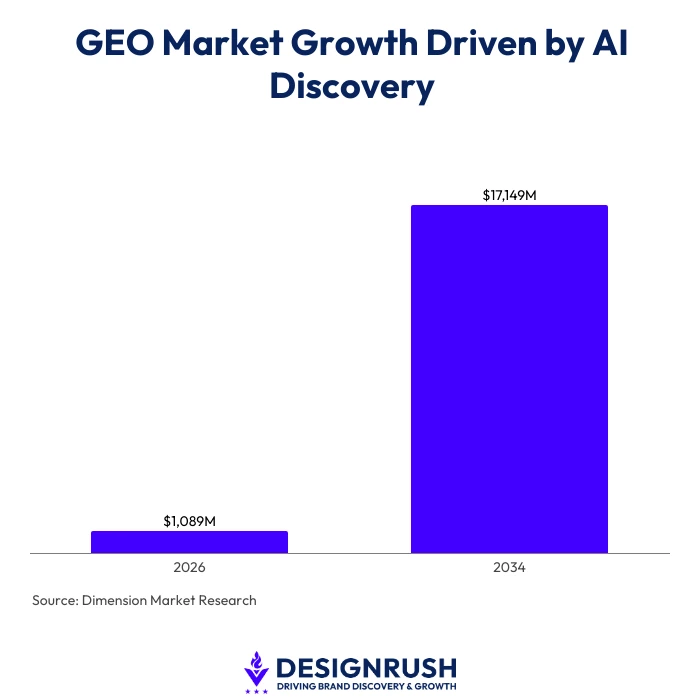
Dimension Market Research notes that the global GEO market is expected to grow at a compound annual rate of 40.6%.
By 2034, the market is projected to reach $17,148.6 million as brands put more budget behind AI-led discoverability.
At the same time, user behavior is moving in the opposite direction of what marketers can easily measure.
Insights from Marketing LTB suggest that around 80% of consumers now rely on zero-click results in at least 40% of their searches, contributing to estimated organic traffic declines of between 15% and 25%.
So brands are spending more to be seen, while seeing less of the interaction they used to track.
“Brands are gaining exposure in environments that traditional analytics don’t fully capture, which means a portion of their impact is effectively invisible,” Nurik says.
That disconnect carries risk.
If performance can’t be clearly shown, it’s harder to defend the budget, harder to scale what’s working, and easier to underestimate channels that are quietly driving influence.
Nurik explains why AI discovery is pivotal for elevating brands across all sectors, particularly public relations:
How Brands Are Measuring AI Visibility Today
In response, marketers are starting to look beyond traffic and rethink what visibility actually means.
The focus is shifting toward signals that reflect presence inside the answer itself, not just what happens after. These include:
- Citations, which show whether a brand is being used as a source and are a strong signal of trust and authority
- Share of voice, which reveals how often a brand appears compared to competitors in the same responses
- Sentiment, which speaks to how your brand is reflected, positively or negatively, accurately or incorrectly
- Referral traffic from AI interfaces, even if it arrives in smaller volumes
- Competitive visibility, highlighting which brands are consistently being surfaced together
- Conversions influenced by AI discovery, even when the path isn’t linear
That means tracking how often your brand appears in AI-generated responses for high-intent queries, how that visibility changes over time, and which competitors are consistently showing up alongside you.
Over time, patterns start to emerge, not just in where you appear, but where you don’t.
“For CMOs, the shift is less about finding a single metric and more about building a composite view of visibility and AI sentiment across these signals,” Nurik says.
In the post below, Nurik breaks down the GEO shifts driving visibility in AI answers:
Why AI Visibility Now Drives Decisions
These metrics don’t follow the old rules, but they point to something just as important, if not more so, influence at the moment a decision is being shaped.
You really see what’s at stake when you look at who isn’t showing up and where AI is getting its information
Marketing LTB adds that in some cases, 26% of brands have no presence at all in AI-generated overviews, effectively removing them from a growing share of discovery.
“If you want to capture momentum, you first need to measure and then impact where decisions are being shaped,” Nurik says.
In a recent TechIntelPro feature, Brandi AI’s AI CRM Market Universe Visibility Index revealed how AI answer engines shape buyer perception through sourced, contextual answers:
How CMOs Can Stay Visible in AI Search
For executives, this isn’t about chasing another channel. It’s about adjusting how visibility is understood.
AI discovery sits closer to decision-making than traditional search ever did. That alone changes how it should be measured and managed.
To achieve visibility, Nurik advises brands to do five things:
- Expand performance frameworks to include brand presence in AI answers
- Review how often the brand appears in AI-generated responses regularly
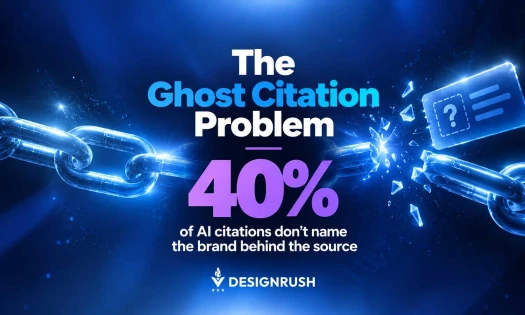
- Determine where AI is getting its information from (AI citations)
- Test content for inclusion, not just ranking
- Track which competitors are showing up in the same answers
“The brands that gain an advantage won’t be the ones with the best dashboards, they’ll be the ones that recognize where influence is moving and adjust faster,” Nurik says.
Most teams are still applying familiar models to something that no longer behaves the same way.
Now, visibility is handed to users on a silver platter.
And in a system that decides what gets seen, invisibility can quickly evolve from a ranking problem into a revenue problem.